Walter Idris Cannon
Fictional. Generated by AI — not a real person, and no likeness of one is intended.
65, tow truck driver in New York · rolled by @colin.hasbrook · card — no film
History
who has worn him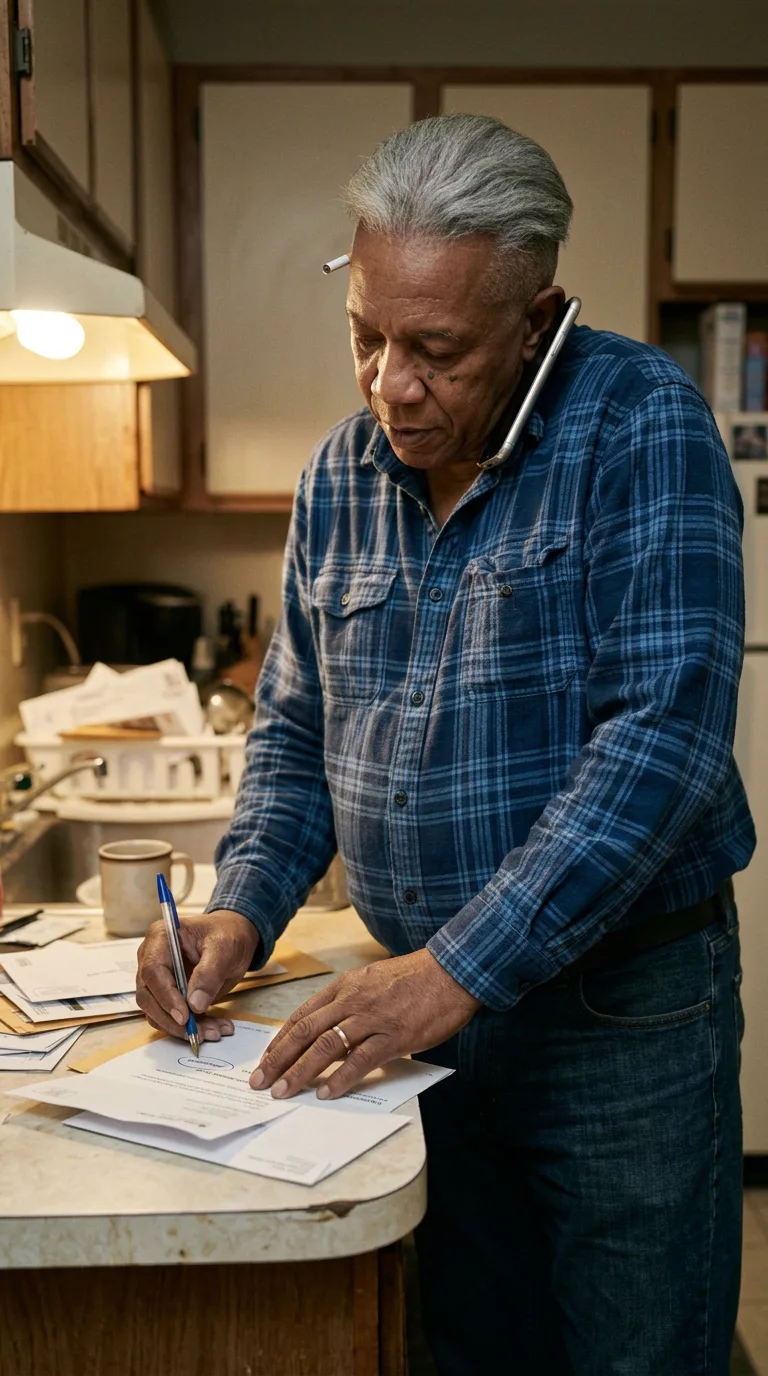
Rarest thing about him: An undercut — rare, 1 in 220
Season 0seed 984840630 · engine v10
Character card
lineage 2NZHHJ
His body-swap story
@colin.hasbrook, wearing Terrence Odell Baptiste, rolled the wheel on and woke up as Walter Idris Cannon, spent under a minute in him, then spun the wheel and woke up as Marcus Deleon
You are still Terrence when the decision makes itself. Big man, bald head catching the fluorescent bar over the flat-top, fifty-four years old and every year of it in the knees. The line closed twenty minutes ago and you're standing in the walk-in with the door propped, the cold going through the thin cook whites, and your hand — his hand, you've had it less than a minute and you already know its ache — won't stop closing around nothing, around the ghost of a chain you were holding when the wheel first put you here. You wore him for less time than it takes to make a sandwich. There was a hook in his hand and a chain paid out to the pavement and something enormous canted at the wrong angle behind him, and then there was you, wearing it, and no memory of ever having lifted anything. It didn't fit. It's Friday, service is dying down, and there's a phone in your apron pocket that isn't yours in any sense that matters, and the site loads the same on it as it does on anything. You don't decide so much as notice your thumb is already on the wheel.
The kitchen goes sideways and comes back as a man on hold.
The phone is warm against your shoulder, tacky-warm, an old kind of warm, and there is a pen in your hand pressed to an envelope and a small circle drawn around the third digit of a claim number and you are this man now, standing at a counter that smells like coffee gone bitter in the pot. The hold music loops back to its first four notes. Your shoulder — his shoulder, wide and a little stooped — drops the phone into your palm mid-loop, an old reflex, done ten thousand times, and the pen simply stops. It does not finish the second digit. Somewhere behind your eyes there was a whole minute of a life still running and now there is only the counter, the envelope, the small tinny music going nowhere.
The shirt gives it up first — flannel, blue and worn translucent at the elbows, and putting it on this morning comes back whole and unasked: him buttoning it one-handed in the bathroom mirror with the light still yellow and sleep-swollen, his other hand finding the ring on the sink edge without looking because it is always on the sink edge overnight, an old habit from nights he came in smelling like brake fluid and diesel and didn't want it near her while she slept. Marion. The name arrives with the ring, not the other way around. Thirty-one years married to Marion, and before her, four with a woman named Denise who is not gone from him even now, who calls sometimes about their son's court dates and their daughter's baby and stays twelve minutes exactly on the phone before either of them says something wrong. He loves Marion the plain, worn-in way you love a chair that fits you. He does not think about Denise so much as he carries her, the way you carry a low ache in a joint you stopped noticing years ago except when the weather turns.
The counter under your palm brings the kitchen — twenty-two years in this house, a brownstone with a stoop that ices over every February and a landlord who finally sold it to them outright in '09 after they'd stopped believing he would. The envelope is from the insurance company about the truck, his truck, the flatbed, and the memory of it comes up through the pen still in your fingers: forty years hauling wrecks off the Belt Parkway and the BQE at three in the morning, the chain's weight so familiar in his palm it has its own name in his body, a two-handed set that his shoulders do without him. There was a night — 1994, maybe '95 — a car folded around a guardrail and a boy inside it breathing when Walter got there and not breathing by the time the ambulance did, and he has never told Marion the whole of it, only the shape, and it is not a thing he'd bring up, only a thing that sits in him on nights the hold music plays too long. His knees are shot from forty years of climbing in and out of the cab. His back knows exactly how far it can bend before it complains. He quit drinking the year his daughter was born and never missed it once he was past the missing it. Church on Sundays when he can, Mount Zion, third pew from the back, a faith worn soft with use like the flannel.
The ring is the last thing, warm from his own hand a second before yours. Twenty-nine years on that finger, turned over and over on slow nights at the wheel of the flatbed, a habit his fingers do without asking permission, doing it now even though there's no wheel, no chain, no night — just a countertop and a phone gone quiet against your ear because the hold music, wherever it was going, has stopped mattering.
You look down. The hand turning the ring is broad, dark, the knuckles a little swollen, a plain gray-silver curl of hair at the wrist where the flannel sleeve has ridden up. You turn it once more, deliberate this time, feeling out whether it's still yours to turn.
"Marion?" you say into the dead phone, to no one, to see if his voice still answers when you call it.