Marcellus Deering
Fictional. Generated by AI — not a real person, and no likeness of one is intended.
51, nurse in New York · rolled by @everett.dabney · card — no film
History
who has worn him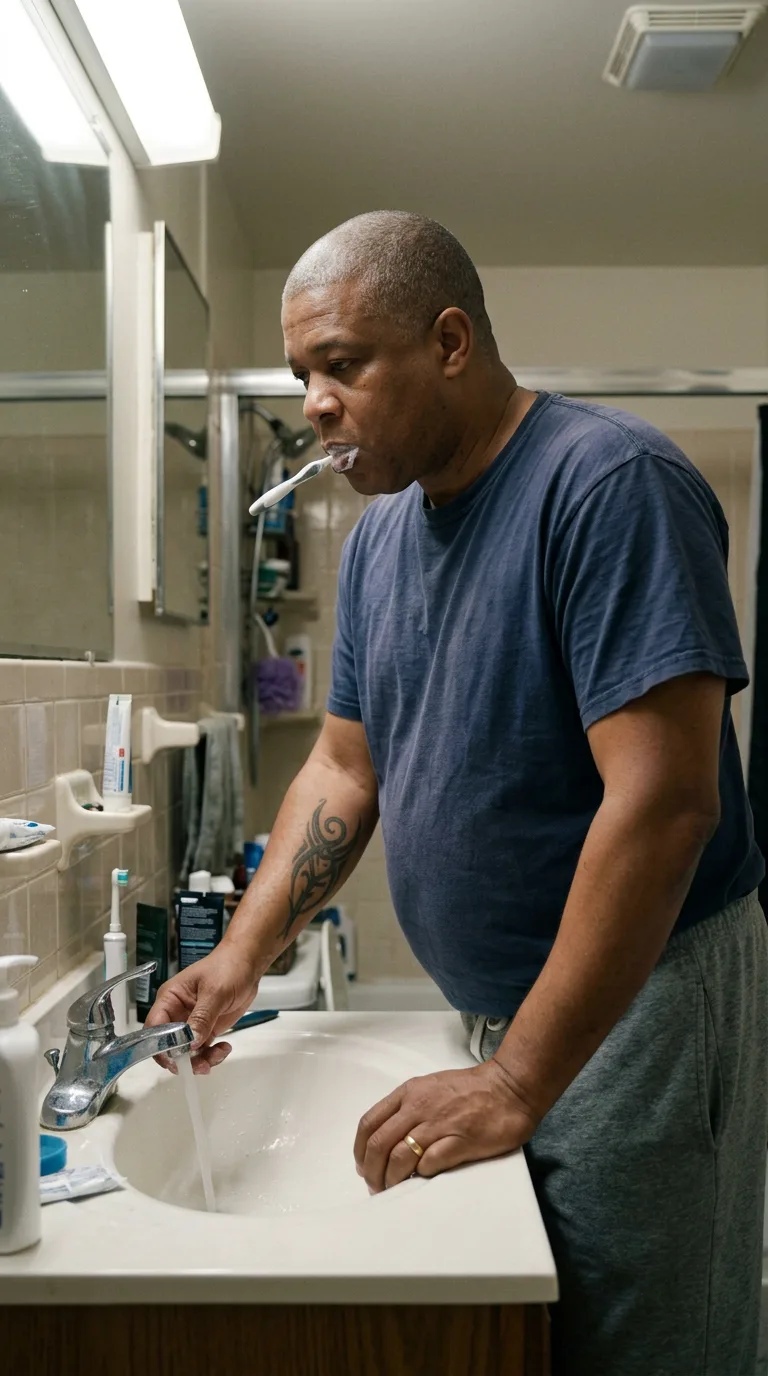
Rarest thing about him: Pipe smoker — epic, 1 in 143
Season 0seed 1178062721 · engine v10
Character card
lineage 79CGDV
His body-swap story
@everett.dabney, wearing Trevor Hasenour, rolled the wheel on and woke up as Marcellus Deering
You are Trevor Hasenour for the second minute of your entire life, and already you know it was a mistake.
Not because of anything wrong with him — the freckles, the light brown hair, the wiry runner's build that isn't yours and never will be — but because he is standing in his own dark kitchen in his socks, in a town so small the diner closes at eight, and there is nothing here. No weight to him. No history worth the trouble of learning it in flashes off a coffee mug and a set of car keys. You spun for a nurse and you got a nurse, but a small one, a young one, a nobody's-heard-of-him one, and the boredom set in around second forty. His hand finds his phone on the counter without you telling it to — muscle memory, some rented reflex — and the screen throws blue light up into a face you are only borrowing. You do not want this one. You never really wanted this one. You want somebody with some miles on him, somebody the years have actually done something to.
So you go back to the site with his thumb.
vessel.cards loads the way it always does, a wheel and a wash of gold, and you pay with his money for the seventh time in your life, whatever life this now is, and spin.
—
The bathroom light is the kind that hums, a long fluorescent tube throwing everything a shade too white, and the man in the mirror has foam on his lip and a toothbrush going slow and mechanical against his back molars. His arm is heavier than any arm you've had. His gut sits low and settled under a faded blue T-shirt, and his knee — you notice this before you notice almost anything else — his knee is bouncing, has been bouncing this whole time, a small percussive thing against the cabinet below the sink that his mind clearly isn't tracking.
You finish the stroke he started. You switch sides. You are careful with it, the way you are always careful in the first seconds, testing the borrowed machinery before you trust it with anything. He spits, rinses, rinses again — twice, out of some habit that isn't a decision, just a groove worn into the doing of it — and sets the brush bristles-up in a glass that has held brushes this way for longer than you've been anyone.
—
The T-shirt is what opens first. Not a memory exactly — a temperature. Worn-soft cotton against skin that carries thirty extra pounds it didn't used to carry, and under that, faint, the ghost-ache of a lower back that complains on the twelve-hour shifts now in a way it never used to. Then the shirt gives you more: a Sunday, church clothes laid out on the bed, his wife Renata calling up the stairs that they are going to be late, actually late, and him standing in his boxers with this same T-shirt balled in his fist because he couldn't find the ironed one, and the low familiar irritation of it, and her laugh through the door when he finally came down in a wrinkled dress shirt anyway. That laugh. Twenty-six years of that laugh, on and off, mostly on.
The tap water on his hand gives you the night shift itself — not tonight's, but a composite of a thousand of them, the particular fluorescent flatness of a nurses' station at three in the morning, a chart open under his palm, his handwriting gone loose and fast from doing it so many times, the smell of the break room's bad coffee, a patient in 4B who cried and how he sat with her twenty minutes past when he should have moved on because nobody else was going to. He is good at this. Or — Marcellus is good at this. The name arrives with the job, the way names do, riding in on the thing they're attached to.
The wedding band on his left hand, cool and thin, gives you the wedding itself, briefly and completely: a church basement reception, his mother alive then, three kids not yet born, Renata's dress catching the light wrong and looking perfect anyway. Then it gives you the kids — three of them, grown enough now that the house has gone quiet in a way that still surprises him some mornings — a daughter's graduation, a son's voice breaking on the phone over money, the youngest still calling him Daddy at twenty-two just to see him smile.
The tattoo on his inner forearm — tribal black, done in a shop in Bed-Stuy at twenty-three, done with a friend who isn't around anymore, for reasons nobody talks about at the family cookouts — gives you nothing but a flash of pain and pride, the specific ache of a needle and the specific pride of a young man who thought this meant something permanent about who he was.
The pipe, unlit, sitting somewhere off to the side of this bathroom in a drawer he doesn't open at 2 a.m., gives you the smell of it anyway, phantom and particular, and under that the doctor's voice from eight months ago talking about his blood pressure like it was a verdict. And under that — this one comes in low and unwilling, the way real shame does — the bottle he knows is behind the cereal in the kitchen cabinet, and the last time Renata found one hidden and didn't yell, just looked at him, which was so much worse than yelling.
His body holds all of it at once, the way bodies do: fifty-one years old, six-three, the dad-bod weight settled comfortably around a frame built originally for something more athletic, hair he keeps dyed dark because gray at the temples felt, this year, like a door closing. High blood pressure ticking somewhere behind his sternum, unhurried, unbothered, waiting. A leg that won't stop bouncing even now, even empty, even with nobody driving it who knows why.
—
You look down. His hands are dark and broad and older than any hands you have ever worn, the left one carrying its plain gold band, a bead of tap water still caught at the base of the ring finger. You turn the hand over slowly, palm up, palm down, watching the tendons move like you invented the concept of tendons.
Then you lift your eyes to the mirror — his eyes, brown, tired around the edges in a way the fluorescent light does nothing to flatter — and you say, to no one, to the glass, to the empty house around you where a wife and however many of the kids are still asleep down the hall:
"Whole different weather up in here."
You don't know how long you'll keep him. You never do.