Hector Villareal
Fictional. Generated by AI — not a real person, and no likeness of one is intended.
43, teacher in Dallas · rolled by @brian.okafor.lynch · card — no film
History
who has worn him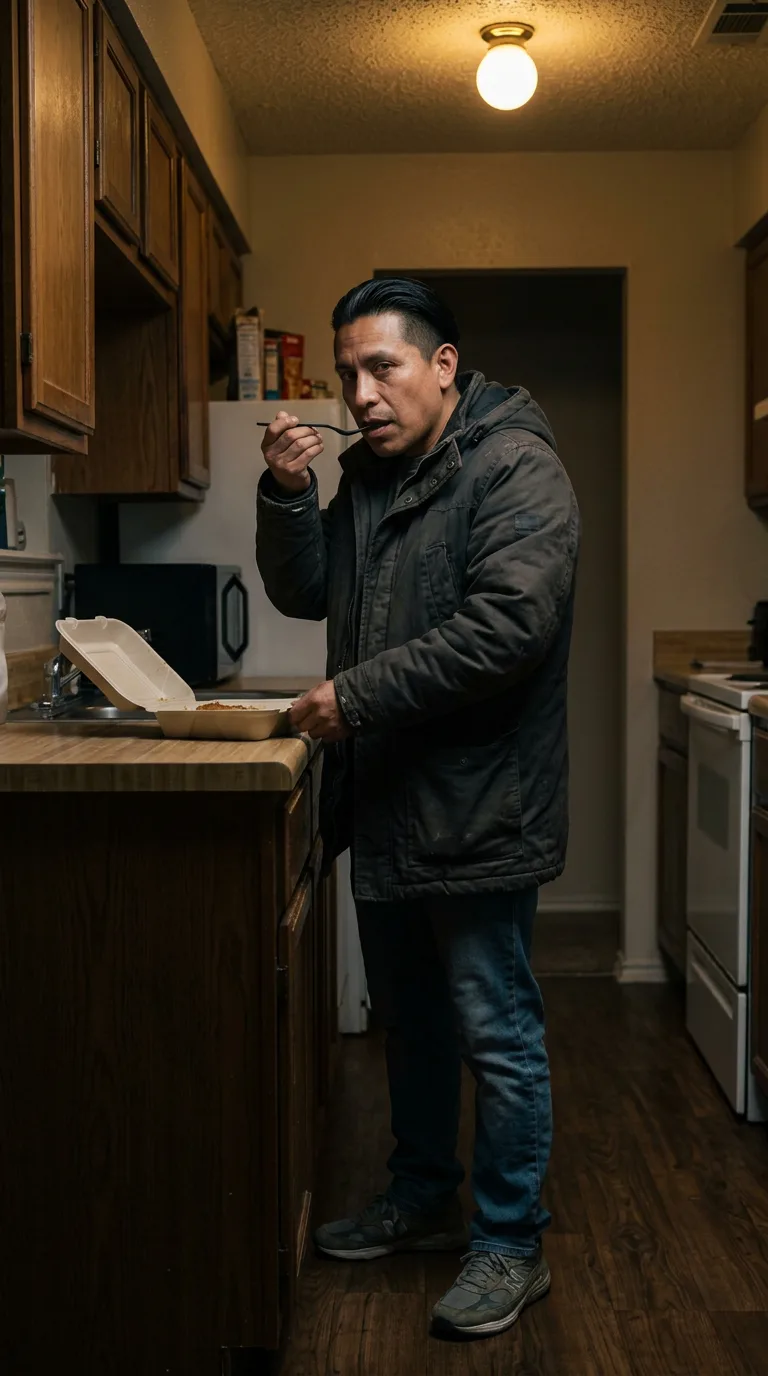
Rarest thing about him: Slicked back — uncommon, 1 in 31
Season 0seed 659330540 · engine v10
Character card
lineage 79CGDV
His body-swap story
@brian.okafor.lynch, wearing Marcellus Deering, rolled the wheel on and woke up as Hector Villareal, spent 6 minutes in him, then spun the wheel and woke up as Colton Ainsworth
Marcellus Deering's feet ache on the break room linoleum, four in the morning, a Monday nobody in this hospital calls a weekend. Five days in this body and you know its complaints already — the lower back that twinges when you lean over a bed rail, the knees that don't love thirty years of double shifts, the phone in the scrub pocket lighting up with texts from a daughter who thinks her father sounds a little off lately. You have gotten good at sounding like him. That's the problem. You are good at it, and goodness was never what you came here for. You came for the wanting, and the wanting is already elsewhere, already scrolling past a gray screen and a wheel on your break, thumb hovering, because five days of being competent and gentle and needed is, it turns out, its own kind of cage, and there is a whole wheel of other lives you have not tried yet. You tell yourself it's just a look. You spin anyway.
The fork is halfway to your mouth and then it isn't. It comes back down to the container, sets itself on the counter with a small definite click, and you feel that motion arrive a half-second after it happens, like watching your own hand from the wrong side of a mirror. The coat — heavy, canvas, cold going out of it — slides off shoulders that are lower than Marcellus's, narrower, closer to the ground somehow, though there is no ground rushing up, no falling, just a new set of proportions snapping into place around a will that hasn't caught up yet. You sit. Whoever this is, the body wants to sit, wants the weight off its feet, and you let it, and you finish the container in even mouthful after mouthful while a dark window gives you back a face that is not yours and never was.
The lanyard is the first thing. It's not around your neck right now — hanging somewhere on a hook, a doorknob, but the ghost of its weight is enough, red and blue twisted cord, laminate corner worn soft from thumbing at it in hallways — and it opens a classroom, fluorescent-lit, the particular hush of a room after the last bell when twenty-eight chairs empty out in ninety loud seconds and then it's just you and the smell of dry-erase marker and a poster curling at one corner. Hector Villareal, seventh grade, room 114. You have stood at that whiteboard eleven years. You have loved it and you have wanted, on specific gray Tuesdays, to walk out the side door and not come back, and you have never once done it, because there's Marisol's tuition and there's Danny's cleats and there's the fact that showing up is the whole architecture of who you decided to be.
The fork is next, still in your hand, and it gives you dinner after dinner eaten like this — standing, coat on, too tired to sit at the table your ex-girlfriend picked out nine years ago and left behind along with the apartment you couldn't afford alone. Elena. You still think her name sometimes with a softness that surprises you, though Priya is who you're dating now, Priya who laughs too loud at your bad jokes and doesn't yet know about the pills in the cabinet that keep your chest from closing up on itself at three in the morning. The counter under your other hand is scratched formica, cold, familiar as a handshake. Under your feet, the floor gives back the specific tired of a man who stood in front of a whiteboard for seven hours and then drove forty minutes home to an empty new-build house with a pickup in the driveway that isn't paid off yet.
This morning — no, yesterday morning, hours and hours gone now — you remember the shirt going on. Light blue oxford, sleeve by sleeve, the cuff a little frayed at the left wrist from where it catches on the truck door every day, and you remember buttoning it looking at nothing, leg already bouncing against the bathroom cabinet before your feet had even decided to move, the way it always does, has always done since before either kid was born. Five-three and average through the middle and every callus on this hand came from gripping a marker too hard, from carrying a stack of essays home he never quite finishes grading before midnight. Nothing hurts exactly. Everything is just slightly, permanently tired, the specific fatigue of a man who is fine, who is managing, who takes his medication and calls his mother on Sundays and has never told anyone how close some Tuesdays get.
You look down. The fork is still in your hand, and the hand is small and brown and not the hand you had four in the morning ago, no gray in the hair on this wrist, no thirty years of someone else's shift work in it. You turn it over once, like checking it's real, and then you lift your eyes to the black window where a stranger's face is looking back with your want still moving behind it.
"Let's see how long you last," you say, to no one in the empty kitchen, and somewhere off in New York a hospital break room finishes its shift without you.