Liam Kestler
Fictional. Generated by AI — not a real person, and no likeness of one is intended.
20, paramedic in New York · rolled by @marco.villagrana · card — no film
History
who has worn him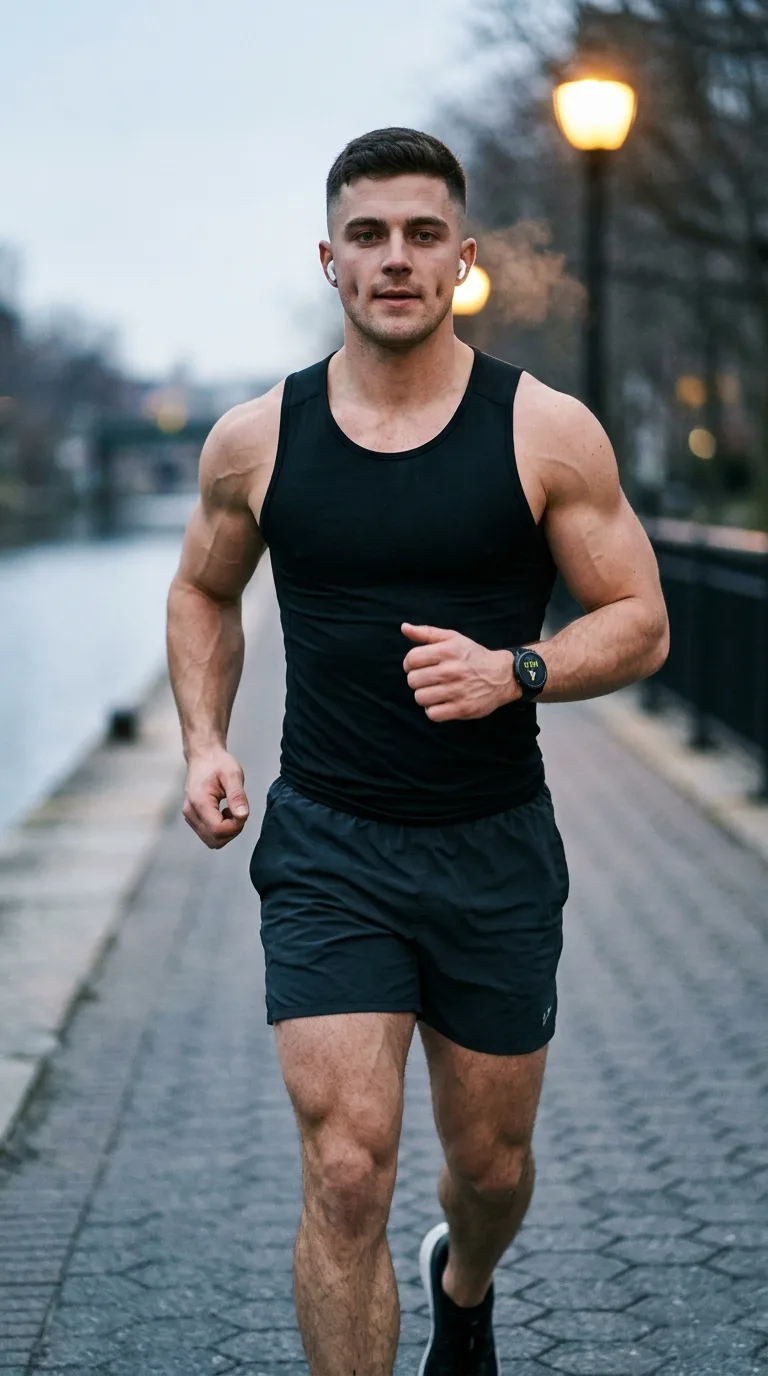
Rarest thing about him: Paramedic — uncommon, 1 in 106
Season 0seed 1971928039 · engine v10
Character card
lineage LJL8SV
His body-swap story
@marco.villagrana, wearing Kenji Matsuda, rolled the wheel on and woke up as Liam Kestler
Kenji Matsuda's shift belt digs into a waist that isn't yours to complain about, three minutes old and already boring you. You are standing in his kitchen in New Orleans, the window unit rattling, a beer sweating on the counter he hasn't touched yet, and you know — the way you always know now — that you did not spin for this. Forty-eight years of him, hazel eyes, the badge weight on his hip, and none of it is the thing you wanted. You wanted the wanting. That's the tell, 120 times over: the moment a body stops being new is the moment it stops being anything. You set his beer down without drinking it. You open the laptop already glowing on his table, vessel.cards loaded from some earlier version of him you don't remember becoming. The wheel spins the way it always spins, colors bleeding into each other, and somewhere a page decides for you.
You are running.
The break comes first — two strides that don't land right, a hitch in a rhythm that was smooth a half-second ago — and then the feet sort themselves out on their own, like a machine catching a stall. Cold air. Canal water flat and gray to the left. A watch on your wrist buzzes a mile split it has no memory of you setting, and your chest is already burning in a way Kenji's never did, younger lungs, a harder pull of breath fogging out in front of you. Earbuds feed you something rhythmic and tinny. The sky is doing the thin business of almost-morning. You didn't ask for dawn. You didn't ask for any of it, that's the whole point of the wheel — but here it is, given.
The tank top is damp against a back that has muscle stacked on it in ways Kenji's never did, and touching it gives you the first flash: a locker room, this same shirt pulled on after a shift, salt-stiff, slung over a chair for two days before he finally noticed the smell. Liam. The name arrives with the shirt, the way names always do — stitched nowhere, just known, the way his own hands know his own name.
The shorts next, and a whole morning unspools: an alarm at 5:40, the specific ache of a double shift the day before still sitting in his hamstrings, the decision — half discipline, half restlessness — to run anyway because sitting still after a bad call feels worse than the running does. There'd been a call. There's always a call underneath a shift like that, and this one comes back in pieces he'd rather not have back full: a kid on a stoop, chest compressions counted out loud in a voice that didn't shake because he doesn't let it, and the specific silence after, riding in front instead of back, his partner not saying anything either. He didn't tell anyone that story. He runs instead. That's what the shoes know, lacing them at the door, the rubber gone soft at the heel from months of the same pavement.
The watch on the wrist gives you mile four, mile three, the whole string of them back to a February morning he ran in actual snow because Brooklyn had thrown one at him and he'd wanted, stupidly, gladly, to be the kind of man who runs in snow. He likes his body. That comes through clean and simple, no shame in it, just a plain animal pride: the dimples that show even when he's not smiling, a joke among the crew at the station that he can't look mad if he tries, that a woman on a stretcher once told him he had a face for church pamphlets and he'd laughed so hard he'd nearly dropped her, gently, obviously, checked twice that she was fine. Evangelical mother, a Sunday he still half-keeps out of habit more than certainty. Single, and not lonely about it, or not yet, or not enough to notice on an ordinary Monday. Twenty years old and sure, in the unexamined way of twenty, that there is a great deal of time still coming.
The earbuds carry a half-second of music that isn't yours, that was queued up by a hand that isn't yours, and under it you feel how strong this body already is without being told to be — the pull of the calves, the specific competent readiness of forearms that have carried people down stairs, the ease of a stride that was built for exactly this, for going and going. It costs him nothing to run. That's the gift under your borrowed feet: a body still young enough that it hasn't started billing him for use yet.
You bring the stride to a stop at the rail, canal flat and pewter beside you, and you look down at your hands — his hands, wide-knuckled, a callus at the base of each palm from gear you haven't held yet and already know the shape of. You turn one over slow in the gray light, like you're checking it's real, like it might not be.
"Little early for a run," you say, to no one, out loud, dimples showing even though your face isn't smiling — and you lift your eyes off your own hand into the middle distance, wondering, already, how long the wheel means to let you keep this one.