Marcus Deveraux
Fictional. Generated by AI — not a real person, and no likeness of one is intended.
34, delivery driver in Small-town Ohio · rolled by @marco.villagrana · card — no film
History
who has worn him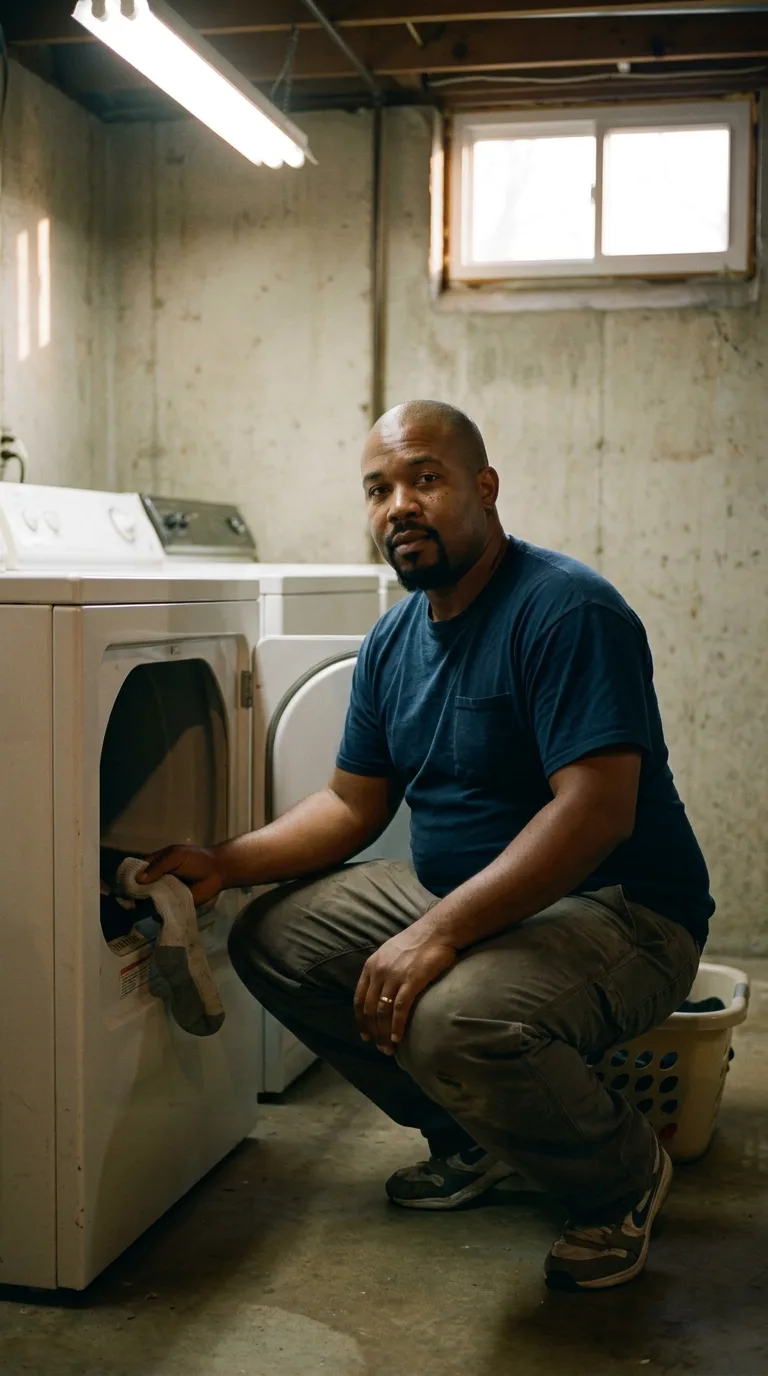
Rarest thing about him: Doing laundry — common, 1 in 36
Season 1seed 1598057072 · engine v11
Character card
lineage LJL8SV
His body-swap story
@marco.villagrana, wearing Liam Kestler, rolled the wheel on and woke up as Marcus Deveraux, spent 4 minutes in him, then spun the wheel and woke up as Gary Petrosian
The dimples are the first thing you lose, and you're almost sorry about that, because you liked catching them in mirrors — Liam Kestler's face doing something warm without you asking it to. But it's been two days of sirens and a supervisor who won't stop calling you "kid," and forty minutes ago you watched a chest compression not work, felt this borrowed twenty-year-old body do everything right and lose anyway, and something in you that has nothing to do with him wanted out of that feeling immediately, the way you always want out, the way you have wanted out of a hundred and twenty-one men before him. You're standing in the ambulance bay, dusk coming down over Queens, and you take the phone out with hands that aren't going to be yours in another second, and you open vessel.cards, and you spin, not because Liam did anything wrong but because he's a body that just lost, and you don't sit inside a loss if you don't have to.
The wheel doesn't ask if you're sure.
You are crouched. That's the first fact, the knees first — a low, wide crouch, weight settled back on your heels in a way Liam's runner legs never sat, and there's heat coming off an open dryer into your forearm, and a sock in your hand, damp-warm, one grey wool sock, and fluorescent light buzzing white above you in a room that smells like concrete and fabric softener and something faintly like mildew under both. Your knees complain. That's new. Everything about the next half-second is new: the low center of gravity, the soft push of belly against thigh as you shift, the absence — total, immediate — of the ambulance, the siren-ghost still ringing in ears that are no longer the ones that heard it.
The sock does it first. Just holding it — you feel a woman's hands, not yours, folding this same sock a hundred times, and a voice, Dana, saying *just throw them in already, Marcus, they don't have to be perfect* — and you laugh, or he does, a small huff through the nose that arrives without your permission, because this is an old argument and a fond one. You pull the load out warm in both arms, heavy and honest, and you drop it into the basket, and your hands go to work before you've decided anything, folding fast, corners squared, a rhythm laid down so many hundreds of times it doesn't ask the brain's permission. You think: eight shirts crumpled in that man's drawer upstairs, and something almost like disdain moves through you, His disdain, not yours — a small private pride Marcus Deveraux takes in doing the one domestic thing exactly right, because his own father never folded a shirt in his life and Marcus swore he'd be different, be present, be the kind of man who does the last load at nine at night so his wife doesn't have to.
The t-shirt against your back — a soft, thinned navy cotton — gives you a whole morning: 5:40 a.m., dark still outside the bedroom window, Dana's back warm against your side for one more minute before the alarm wins, and then the quiet choreography of pulling the brown uniform shirt off its hanger, one arm and then the other, the belt with the scanner holster already heavy in your grip, the short-sleeve collar you always leave open one button because the top one chokes in summer. You feel your own gut, comfortable in your own skin about it in a way that surprises you — not vanity, just familiarity, the settled weight of thirty-four years and two kids and a body that carries groceries and toddlers and forty-pound boxes without complaint, that aches a little in the lower back by 3 p.m. every day and doesn't mention it. The wedding band is a small cool line on the fourth finger, worn smooth, and touching it gives you a wedding in a backyard in June, folding chairs, his mother crying happy-ugly into a paper napkin.
The concrete floor under your boots gives you the route — Elm, Sycamore, the diner that closed in 2019 and nobody's rented the space since, the one stoplight that everyone in town calls "the light" like there's only ever been the one. The van's cracked vinyl seat, the smell of cardboard and hot asphalt through the open back doors, the particular satisfaction of a scan gun beeping green. Two kids — a girl's laugh through a screen door, a boy insisting he can tie his own shoes, don't help, Dad, I got it — arrive soft and complete and unbidden, and for a second the whole domestic gravity of this man's life sits on your chest like something almost too big for the room.
You straighten up out of the crouch, basket on your hip, and look down.
These hands: broad, a little swollen at the knuckle, a thin white scar you didn't put there across one thumb from some kitchen accident that isn't yours to remember properly. You turn the right one over slowly, like it might do something else, and it doesn't — it just sits there being a hand, ordinary, warm from the dryer's heat, the ring catching the fluorescent light.
You lift your eyes off it, into whatever's watching this basement, and you say, quiet, almost like you're only telling yourself:
"Didn't feel a thing."