Kenji Matsuda
Fictional. Generated by AI — not a real person, and no likeness of one is intended.
48, cop in New Orleans · rolled by @marco.villagrana · card — no film
History
who has worn him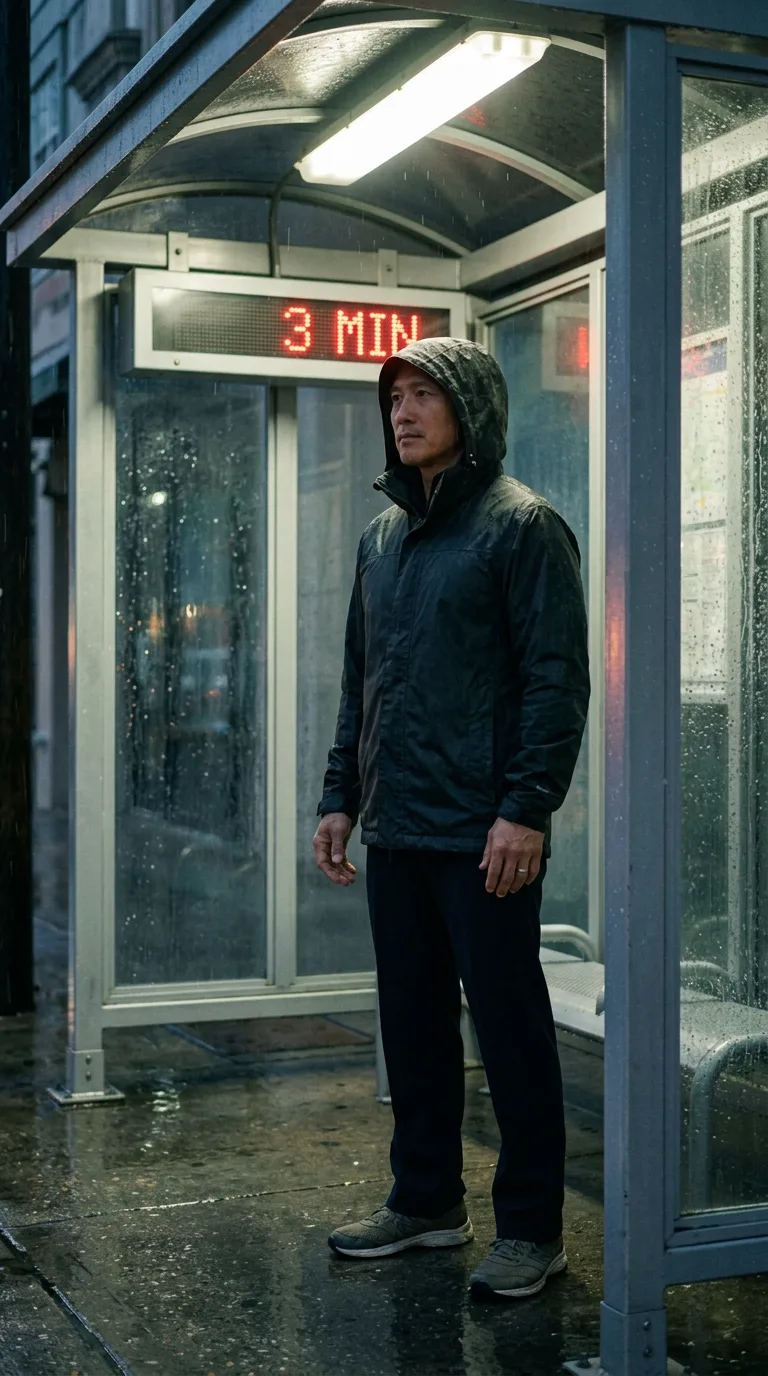
Rarest thing about him: Hazel — epic, 1 in 50
Season 0seed 1345796766 · engine v10
Character card
lineage LJL8SV
His body-swap story
@marco.villagrana, wearing Rogelio Pantoja, rolled the wheel on and woke up as Kenji Matsuda, spent 3 minutes in him, then spun the wheel and woke up as Liam Kestler
Rogelio's kitchen smells like coolant and burnt coffee, and you have been him for four minutes, which is exactly long enough to know you don't want the rest of tonight. He is standing at the counter in his work polo, dimples set in a frown he wears like a habit, looking at a phone that says his shift got extended and a fridge with a magnet holding up a photo of a grandkid who isn't his. Dad bod, bald head shining under the kitchen light, brown eyes tired in a way that has nothing to do with the last four minutes and everything to do with the fifty-five years before them. You didn't even unpack his life. You felt the weight of him settle — heavy in the gut, heavy behind the eyes — and thought: no. Not this one. Not tonight. You set his phone down on the counter, still buzzing, and you go back to the site with his thick fingers, and the wheel doesn't care that you just got here.
It spins.
Rain. Cold, then not cold — his body runs three degrees warmer than Rogelio's ever did, and it hits you first as pure relief, muscle where there was softness, height where there was less of it. Water is coming down on your face and you are not turning away from it. Your hood is back. Somewhere above and behind you a board is counting down a bus that a man was waiting for and you are not that man anymore, though you are wearing exactly what he was wearing when he stopped.
The jacket is the first thing that talks to you. Slick nylon, cheap and practical, and under your palm — his palm now — a memory surfaces of him shrugging it on in a hallway that smells like coffee and gun oil, a woman's voice from the next room saying *you'll want the hood, it's coming down hard*, and the small ordinary warmth of being told that by someone who has told him that for eleven years. Amy. Her name arrives with the jacket, easy, unforced, the way a favorite song arrives before you remember its title.
The uniform underneath — you feel it before you place it, the stiffness at the collar, the belt's familiar drag on the hips — brings a wash of fluorescent light, a locker room, the particular ache of standing on asphalt in August leaning on a hood that's hot enough to fry an egg on, waiting out a call that never came. Twenty years of that. You feel his knees first, the low complaint of them, old impact injuries filed away and never quite forgotten, and his shoulders, which are good, which are strong, which know exactly how to set a hand on someone's arm without needing thought behind it. His hands know cuffs. They know a radio mic without looking. They know, with a small guilty flicker, the shape of another woman's face cupped in them, years ago, somebody he did not marry, a name that surfaces and recedes too fast to hold — the one who got away, gone before Amy, still somehow present the way a scar is present, not hurting, just there.
The wedding band is cold and it warms fast against your skin, and that one comes with an entire evening: a shotgun house one room deep, windows open to let the wet heat move through, Amy's laugh from the kitchen, red beans on the stove, the particular hush of New Orleans rain on a tin roof at 2 a.m. You feel, distinctly, how much he loves that sound. You feel the absence in the house too — no small feet, no toys in the hall, a door they don't open, a grief so old and folded-up it doesn't announce itself, it just lives in the structure of the rooms, in how they filled it instead with each other.
His shoes — wet through now, soaked at the seams — bring back this morning: sitting on the edge of the bed, lacing them in the dark so he wouldn't wake her, badge already clipped, the small anxious hum in his chest that never fully leaves, that he manages now with a pill and a runner's habit and a wife who knows the signs before he does. Not fear exactly. Vigilance with nowhere to put itself down. He dressed slow this morning, the way he always does before a double, checking his own reflection in the dark window glass, not out of vanity — out of habit, out of making sure the man in the mirror was steady before he went out to be steady for other people.
You feel his whole body now, the parts that are always sore and the parts that are still, at forty-eight, better than most men's at thirty. The gray at his temples he colors over every six weeks in the bathroom sink, patient with it, unbothered, a small private maintenance nobody but Amy ever comments on. The rain keeps coming down on his upturned face and there is something in that — some old permission he's given himself, standing in weather instead of fighting it, a man who has been rained on enough times in his life, at scenes, at funerals, on nights that ended badly, that a little more rain on an ordinary Monday doesn't cost him anything at all.
The bus is one minute out. Nobody at this shelter is looking at him. You are looking at your hands.
They are broader than Rogelio's, the knuckles marked in small ways you didn't earn, the ring catching gray light. You turn them over once, then again, and you lift your face out of the rain and toward wherever the nearest lens might be — a phone left running by some kid across the street, a doorbell camera, it doesn't matter, some eye is always open in this city — and you say, in his voice, quiet, almost to yourself:
"Three minutes. I can wait three more."