Rogelio Pantoja
Fictional. Generated by AI — not a real person, and no likeness of one is intended.
55, refrigeration technician in Small-town Ohio · rolled by @marco.villagrana · card — no film
History
who has worn him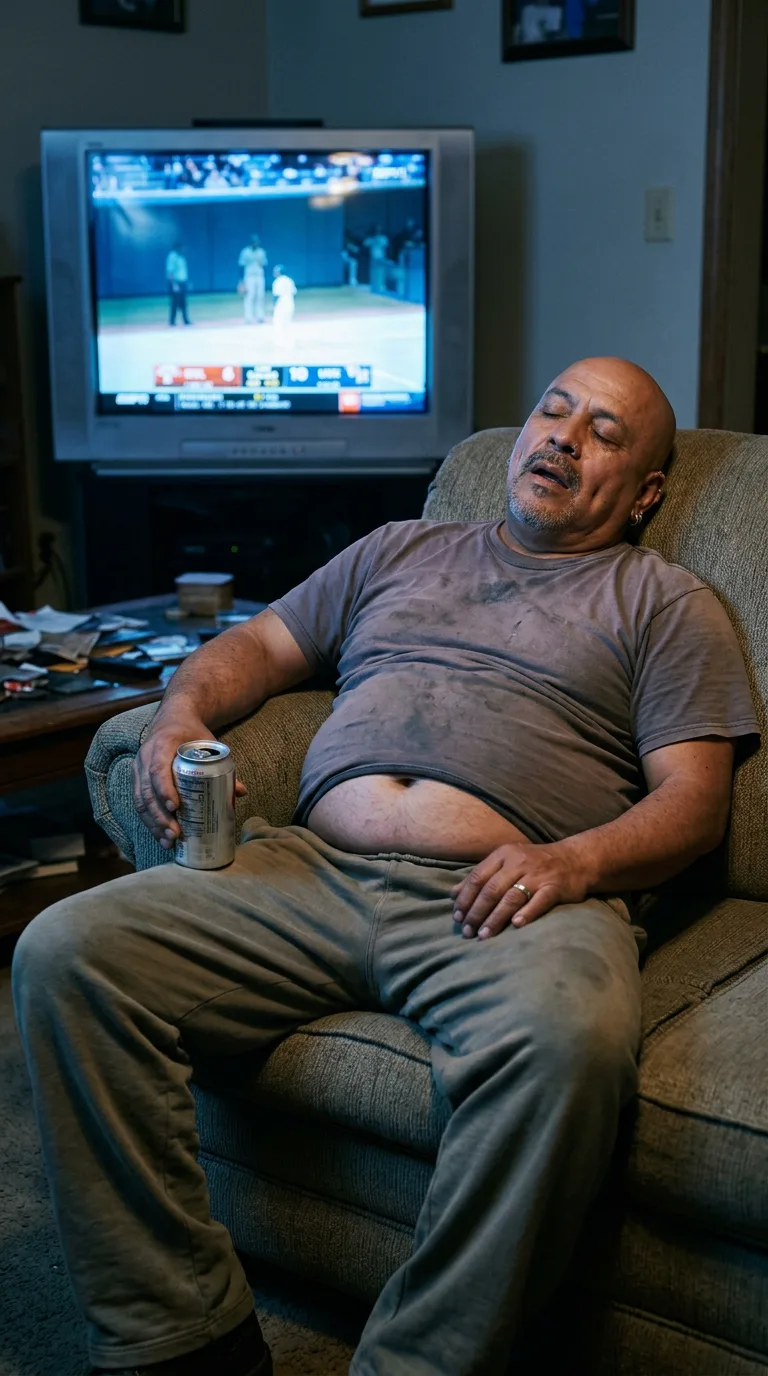
Rarest thing about him: Several — legendary, 1 in 286
Season 0seed 362581943 · engine v10
Character card
lineage LJL8SV
His body-swap story
@marco.villagrana, wearing Nabil Hadad, rolled the wheel on and woke up as Rogelio Pantoja, spent 4 minutes in him, then spun the wheel and woke up as Kenji Matsuda
Nabil Hadad's knees ache on the kitchen linoleum, and that ache is not yours, but it is the last thing you notice before you stop being him. You have been him four minutes. Four minutes of standing in his kitchen in Pittsburgh, off shift, gun belt still on, staring at the refrigerator hum and thinking: this is it? A cop with bad knees and a beer he won't drink and a phone that hasn't buzzed. There was a whole life behind those eyes when you arrived — a partner named Dietrich he doesn't trust, a daughter in Ohio he calls on Sundays, thirty years of report forms — and you touched none of it long enough for it to matter, because four minutes is not a life, it's a doorway, and you are already looking past him at the laptop open on the counter, the wheel spinning lazy colors across Nabil's tired gray-brown eyes. You do not even finish deciding. Your thumb — his thumb, achy knuckle and all — is already on the trackpad. It is early evening here. It will be early evening somewhere else too, and that symmetry is the last thought that is fully yours before the wheel takes it.
The room turns over.
You are sitting forward on a couch that smells like corn chips and old cigarette smoke nobody's smoked in years, a can gone warm and sweating in your hand, and the television is showing a replay of a ball rocketing off a bat, and somewhere in the two seconds you were not anywhere, a stadium roared and you missed it. Your thumb finds the volume button before your mind finds a name. That's the first thing: how sure the thumb is. It knows this remote's dead zones, the exact half-inch where the volume rocker actually registers. You did not learn that. He did.
Rogelio.
The name arrives like something spoken in the next room, and then everything else comes in through your skin, because that is the only door here. The couch cushion is worn to the shape of him and your spine — his spine — settles into it as if slotting into a groove machined over twenty years, and low in your back something old and dull wakes up and says *there you are* the way pain does when a body remembers you before your mind does. Your knees. No — his knees, his lower back, a decade and a half of crouching into walk-in coolers and reaching up into ceiling units, and it never really leaves, it just goes quiet when he sits right.
The shirt against your back is damp with the day's sweat gone cold, and that's the shirt that opens him. You feel — not remember, *feel*, in his chest, not yours — the collar going over his head this morning, before six, the bathroom mirror throwing back a bald head and a mustache gone half gray and those dimples that show up even when his face is doing nothing at all, has always done that, since he was a boy in Youngstown getting his cheeks pinched by tías who called him *cachetón*. He tucked the shirt in with one hand while the other held his coffee, an old two-handed dance he's done ten thousand mornings, and his knees popped going down the porch steps and he swore quietly to a God he still, some tired fondness in it, believes hears him.
The can in your hand is warm, and that's another door: Marisol, at the store six years ago, the two of them arguing gently over paint chips for a kitchen that got remodeled anyway, her laugh, the wedding band — still on your left hand right now, plain, a little loose over knuckles swollen with work — going on for the second time in his life after Elena, after the divorce that took four years and cost him something he still won't say out loud to his sons. Three kids, maybe four, grown now, one who calls every week and two who don't, and none of that is a wound exactly, just a weather system he lives under.
The gas lines. Your palms remember them without asking — the particular cold of a manifold gauge set slung over a shoulder, the fog rolling off an open walk-in door into a stockroom that smells like cardboard and Freon, thirty years of fixing what other men break, and it made him rich beyond what anyone in this town knows, invoices and side contracts and a portfolio he never talks about at the diner, because around here you don't. The diner's closed now anyway. One stoplight, closed diner, and a man worth more than the whole block sits in sweatpants with a warm beer, because none of that money ever bought him the thing that would let him sleep past a ballgame.
The television throws its blue light over a face gone soft with sleep and coming back to itself, and behind that face, for one more second, you are still arriving — his faith, small and steady, grace before dinner, a rosary in the truck's glovebox; the drink he quit years ago because his second marriage asked him to and he found he didn't miss it; the ache that never left his lower back and never will, not really, just goes quiet on the couch, the one place in his life built exactly to his shape.
You lift the can hand and look at it. The knuckles, the wedding band, the little tremor of a fifty-five-year-old man's grip. You turn it over once, like checking it's real, and somewhere in your chest — his chest, but yours now, however long that lasts — a dimple you did not choose settles into his cheek without being asked to.
"Hell of a game," you say, to no one, in his voice, and look up into the light of the screen like it might tell you how long you get to keep it.