Khalid Massoud
Fictional. Generated by AI — not a real person, and no likeness of one is intended.
30, mechanic in San Francisco · rolled by @colby.marchetti · card — no film
History
who has worn him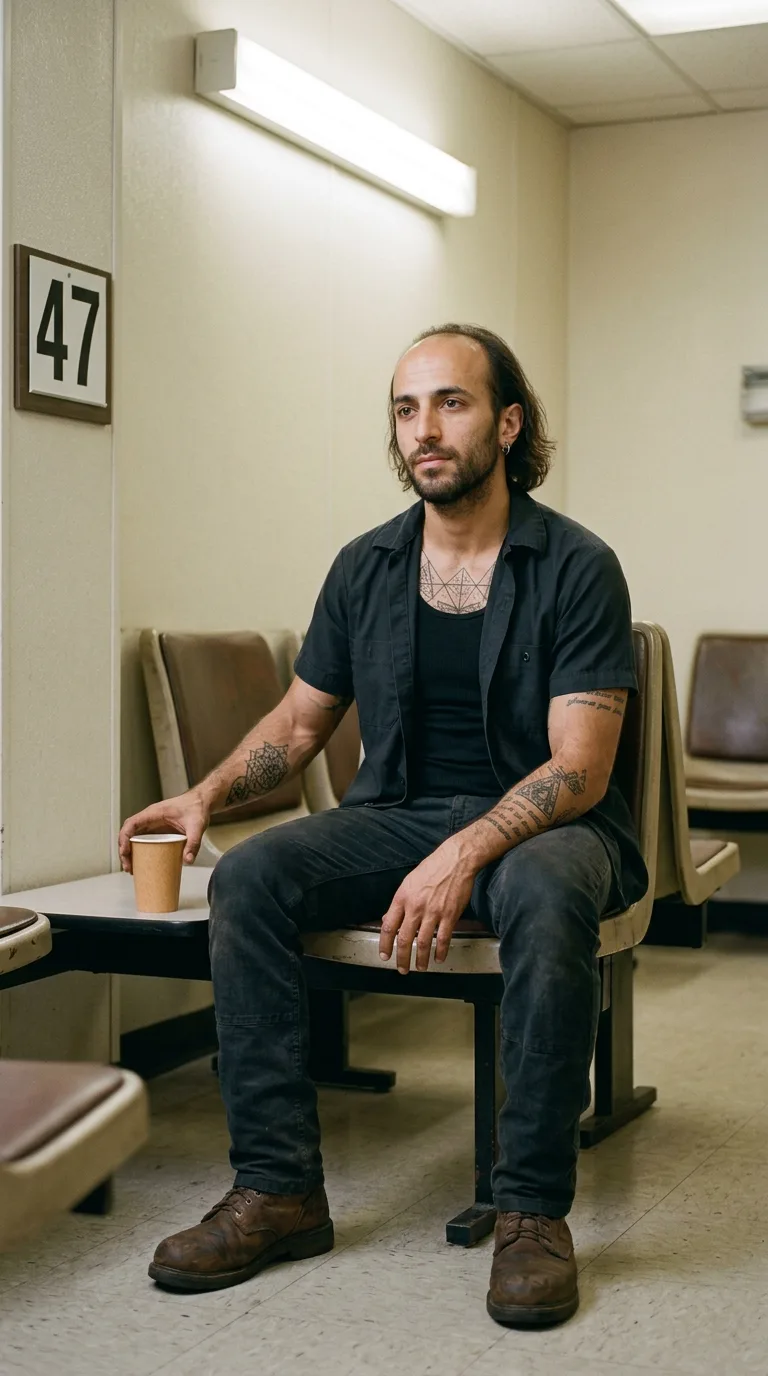
Rarest thing about him: Dip or chew — epic, 1 in 133
Season 0seed 615387019 · engine v10
Character card
lineage OZ80W3
His body-swap story
@colby.marchetti, wearing Marcus Ellery, rolled the wheel on and woke up as Khalid Massoud, spent 4 minutes in him, then spun the wheel and woke up as Franklin Otero
Marcus Ellery's whistle is still around your borrowed neck when you make the decision. Forty-three years old, freckled, average, standing on a wooden platform over a pool that smells like chlorine and sunscreen and small-town July, and you already know you're not staying. Four minutes and you can feel exactly how this goes: the same lake, the same kids, the same slow Ohio Saturday stretching out ahead of him like a road with no exit. His knees ache a little climbing the ladder. You didn't even get that from a memory — you got it from just standing in him. That's the whole problem with a body you take for free. It shows you everything at once, and there's nothing left to want.
So on the platform, phone screen cupped against the glare, you open vessel.cards again. The wheel spins. You feel Marcus's heart do something anxious and human right before it lands — and then it isn't his heart anymore.
The board clicks from 47 to 48 and something underneath your ribs turns over like an engine catching. Your knee — his knee — stops bouncing on the same click. There's a cup of water in your hand, gone warm, condensation beading against callused fingers, and you set it down on the little table, square, like it matters where a paper cup sits. Fluorescent light overhead, flat and colorless. A door somewhere to your left. A woman's voice reading a number that isn't 48, and you don't look up, because some reflex older than you decides not to.
Your hands fold themselves in your lap. You didn't tell them to. They already knew.
Then it starts coming in — not like a flood, more like a rag being wrung out over your head, one memory at a time, dripping.
The shirt against your back does it first. Collar starched despite the grease worked into everything else, short sleeves rolled twice, a name patch stitched crooked because he'd sewn it on himself after the first one fell off in the wash. KHALID. You feel the morning he put it on — this morning, four hours from now by the clock in this room, except it hasn't happened yet and somehow it's already yours: him standing in a garage apartment with gray light coming through a high window, buttoning it one-handed while the other hand holds a piece of toast, running two minutes behind because he always runs two minutes behind, because sleep never quite lets go of him the way it should. He dips a pinch of tobacco into his cheek before he leaves, not because he wants it, because his hands want something to do that isn't his fingernails, which are already bitten to nothing, which have been bitten to nothing since he was nineteen and his mother stopped saying anything about it.
The chair under you gives more. Vinyl, cracked, the kind that's been reupholstered in a dozen waiting rooms exactly like this one. And with it: the appointment itself, dull and administrative, something about the driveway — steep enough that his old truck's oil pan scraped twice last winter, and he's finally here to get the undercarriage looked at before it costs him a transmission he can't afford. Scraping by, always has been, tips in a jar on the workbench and rent that eats most of what's left. He doesn't mind it the way you'd expect a man to mind it. There's a peace in him about money that isn't resignation, just Order — a garage, two bays, a rag in his back pocket that he reaches for eleven times a day without looking. His hands know torque before his mind does. They know the particular give of a stuck bolt, the sound an engine makes half a second before it tells you what's wrong with it. That knowledge sits in your palms now like a language you never studied and somehow speak.
The tattoo at your collar burns faint under the fabric — his idea, ten years back, geometric, fine-line, sacred proportions he liked without needing to explain to anyone why. The little hoop in your left ear catches the strip light. Both of them are the parts of him he chose on purpose, in a life otherwise chosen for him — the garage his uncle got him into, the apartment under somebody else's house, the five daily prayers he still keeps, mostly, missing Fajr more often than he'd admit to his mother.
And under all of it, quieter, an old ex-girlfriend's name arrives without a face attached, just an ache shaped like a person, a woman who used to sit in the passenger seat of his truck with her boots on the dash while he drove nowhere in particular. Whatever ended it, it isn't givenr up easy — some memories the shirt doesn't want to hand you yet. You get the shape of the loss without the reason, and something that isn't yours twists in your chest anyway.
You look down. Your nails are bitten past the quick, and the hands they belong to are wider than any hands you've worn, veined, strong, a mechanic's hands, dirt worked so far into the knuckle creases it'll never fully wash. You turn one over like you're checking it for damage. It isn't damaged. It's just his, and now it's yours, and the difference doesn't show from the outside.
You lift your eyes off it, into the fluorescent light, past the number board, toward wherever the camera would be if there were one.
"Sorry," you say, to no one, to the nurse who called 47, to Khalid, to nobody at all. "Wrong one."
The board still reads 48. Nobody in the room finds that strange yet. You don't know how long you'll be sitting in it when they do.