Franklin Otero
Fictional. Generated by AI — not a real person, and no likeness of one is intended.
55, billionaire in Phoenix · rolled by @colby.marchetti · card — no film
History
who has worn him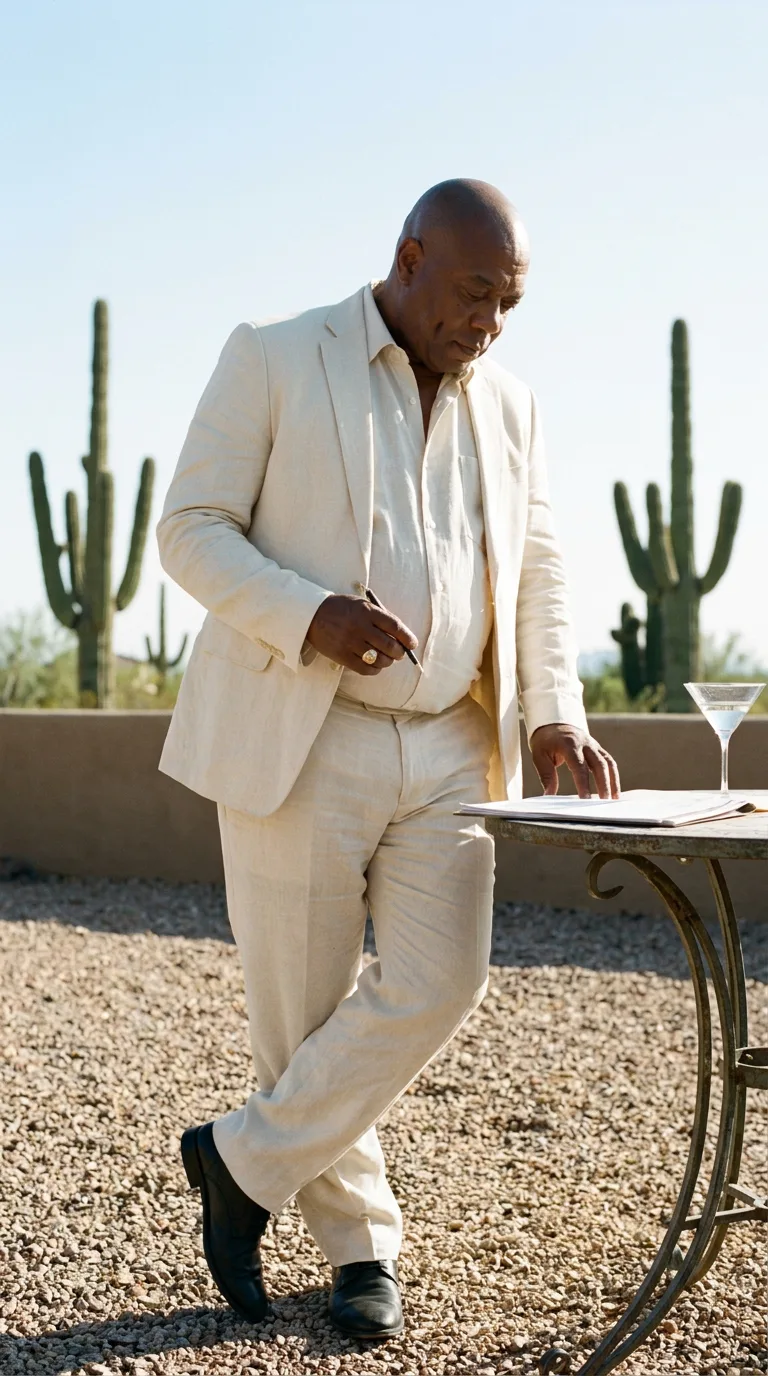
Rarest thing about him: Billionaire — rare, 1 in 523
Season 0seed 634177561 · engine v10
Character card
lineage OZ80W3
His body-swap story
@colby.marchetti, wearing Khalid Massoud, rolled the wheel on and woke up as Franklin Otero, spent under a minute in him, then spun the wheel and woke up as Chris Delacroix
Khalid's hands are good hands. You will say that for him — thirty years old, steady, a mechanic's callus along the first two fingers, and right now they are wrapped around a torque wrench, four minutes into a life you already know you are done with. You are under a Camry that isn't yours, in a garage that isn't yours, and somewhere behind your sternum — his sternum, you correct, already sliding out the door of him — is the small dead give of boredom. This body works. That is the whole problem with it. It works and it will keep working, turning the same bolts on the same cars, sober and young and sound, for another fifty years, and you have been him for four minutes and already you can feel the shape of every one of those years, laid out flat like a driveway. There is money on the counter by the register, tip money, eleven dollars, and it is the saddest number you have touched all week. So before the wrench even finishes its turn you are gone, and the last thing Khalid's body does under your hand is a motion done wrong, then corrected, slow and careful, the way a man checks his own work when something in him doesn't trust it anymore.
You arrive mid-lean, weight forward on the balls of two feet in black leather shoes, one hand flat on wrought iron, the other holding a pen an inch above a page that does not need signing yet. Gravel under you, not garage concrete. Heat already committed to the day though the sun is barely up over the wall — a Saturday heat, a Phoenix heat, dry as a match. Saguaros stand off to the side like men waiting to be introduced. There's a martini glass sweating quietly against the table, untouched, and your body — heavier now, wider, fifty-five years settled into it like sediment — takes one breath before it understands it is not the same body, and the ten motions that follow, uncapping the pen, smoothing the page, checking the date, come out checked, deliberate, a rich man's hands double-checking a job that has signed a thousand pages without looking.
The linen shirt is what gives you the first of it — collar loose, top buttons open, and with the fabric against your back comes an arm going into a sleeve at some earlier hour, unhurried, a wife's voice from another room saying something about the caterer, and the small private satisfaction of a man who does not have anywhere he has to be and dresses like it. Franklin Otero, his own memory offers, the way a man's name arrives when nobody's asked. Buttoning slow because his fingers have gotten thicker than they used to be and buttons have gotten smaller, or maybe it's the same the other way — he laughs at that, alone in a closet the size of some men's whole apartment, and the sound of that laugh is still in your throat.
The wedding band on the left hand gives you a wedding — not the day of it, but a Tuesday eleven years in, his wife laughing at something stupid he said at a table full of people who wanted something from both of them, and the specific gravity of loving someone who has watched you become this. A daughter's memory comes in sideways off nothing at all, off just standing here in daylight — her at nine, at the edge of a pool he built because she asked for it, and the terror of that much money attached to that much love, how it never once made the second part simpler.
The pen is heavier than Khalid's wrench ever was and gives up less. But your foot finds a lighter in the trouser pocket without you sending it there — his hand wants it, has wanted it in every idle second for thirty years, an old reflex from before the money, from a corner store counter and a pack he quit before it started, the flick-open-flick-shut a tell his wife still teases him about in board meetings he shouldn't be fidgeting through. Under the linen there's a body that carries itself carefully now — not from injury, from pressure, a doctor's flat voice at some checkup saying numbers Franklin didn't love, and a small ongoing vigilance that lives behind his sternum like weather. Dad's body, thick through the middle, dimples that don't leave even when nothing in his face is smiling, which is its own kind of joke his wife has made more than once.
You look at your hands. They are dark, broad, a little swollen at the knuckle the way fifty-five-year-old hands get, one of them wearing a plain band that has meant the same thing for eleven years to someone you have never met and now, in some sense, are. Khalid's callus is gone. The wrench is gone. Eleven dollars in tip money is a joke from another life, four minutes long, already fading like a name you knew once and let go.
You lift your eyes off the pen, off the page, into the flat white morning light coming off the gravel, and you say, to no one standing there, in a voice that isn't asking permission from anybody: "Let's see how long I can stand being rich."