Marcus Ellery
Fictional. Generated by AI — not a real person, and no likeness of one is intended.
43, lifeguard in Small-town Ohio · rolled by @colby.marchetti · card — no film
History
who has worn him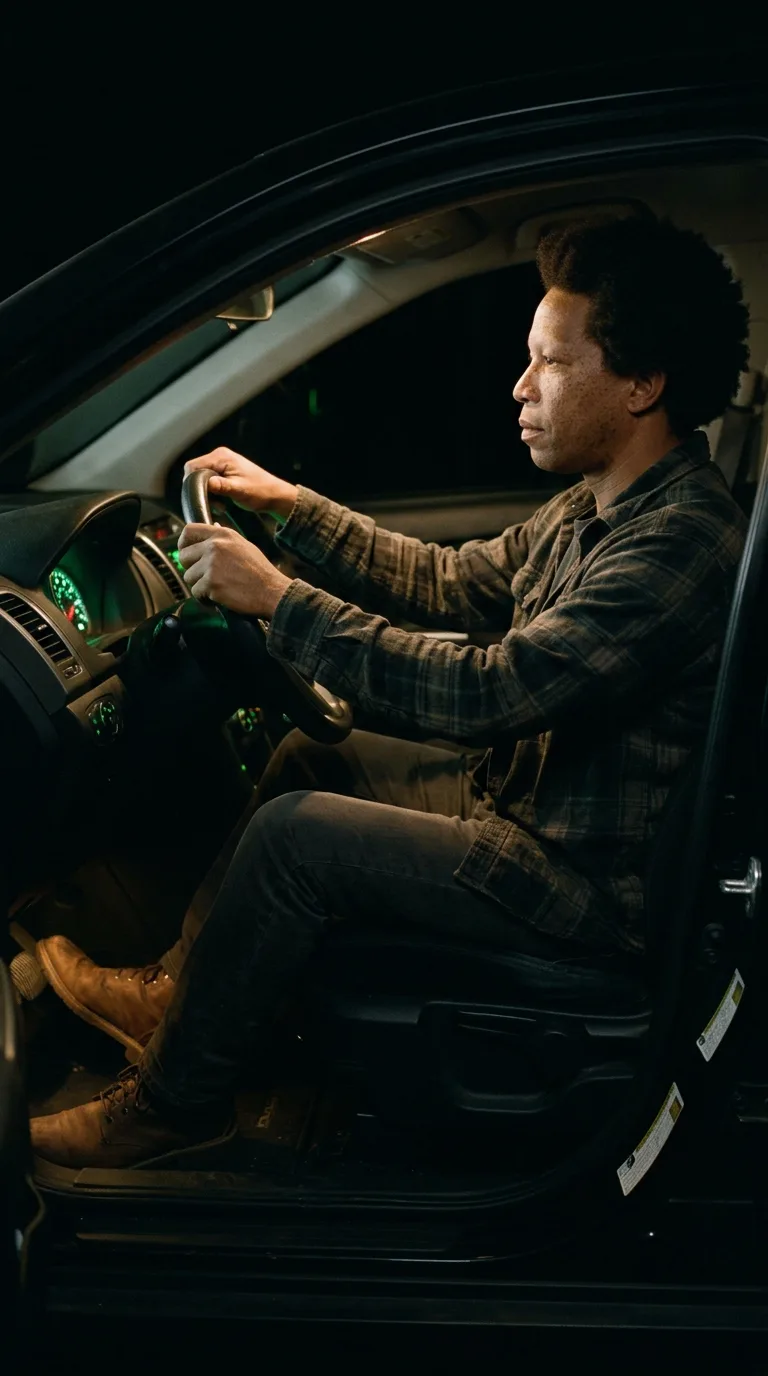
Rarest thing about him: Lifeguard — uncommon, 1 in 122
Season 0seed 995236565 · engine v10
Character card
lineage OZ80W3
His body-swap story
@colby.marchetti, wearing Otis Beaumont, rolled the wheel on and woke up as Marcus Ellery, spent 4 minutes in him, then spun the wheel and woke up as Khalid Massoud
---
You are standing in Otis Beaumont's kitchen at eleven in the morning, and his coffee has gone cold in his hand, and you already know you are going to spin again.
It isn't the vitiligo, though you noticed it first, in the bathroom mirror an hour ago, the pale map of it climbing his forearm like something poured. It isn't the shift he's not on, or the wife's name you don't know, or the photo of a grandkid stuck to the fridge with a magnet shaped like a train. It's that he is sixty and solid and has lived a whole life of being exactly one thing, conductor, husband, grandfather, and none of the rooms of him have a door you haven't already opened. Six minutes was enough to walk the whole house. You are bored the way you get bored of a hotel room you've already unpacked in.
So you set the mug down on his counter, in his kitchen, in his marriage, and you go back to the page with the wheel on it, because boredom is its own kind of hunger and you have found that out about yourself for the first time today.
You pay. You spin.
—
The wheel stops on a highway you've never seen, three miles from a house you've never stood in, and the hands on it are not Otis's hands. They are darker at the knuckle, narrower, and they come off the wheel of a car doing fifty-five and resettle lower, wider, like they're feeling for a shape they already know. The turn signal clicks on, green ticking in the dash glow, for an exit that isn't his exit. Freckles catch the light across the backs of these hands when they pass near the vents. You are five inches shorter than you were a minute ago. The car does not swerve. It comes home to the lane like it was only ever drifting to check.
—
The shirt is the first thing. Cotton, thin from washing, LIFEGUARD across the chest in letters you can feel more than read, and touching the collar of it — his collar, hanging loose now with the plaid flannel buttoned crooked over it because he never took it off after his shift, just layered up against the highway cold — brings back the whistle. The weight of it on the lanyard, dropped twice today, caught both times before it hit the sand. A kid, eleven maybe, going out past the buoy line with a boogie board and Marcus Ellery standing up on the stand without deciding to, one hand already up, the whistle already between his teeth, and the flat bright note of it cutting the whole beach quiet for a second before the kid turns around, sheepish, paddling back. Every day has one of those. Most days it's the only thing that happens.
The steering wheel gives you the drive itself, five o'clock traffic thinning out past the county line, gas station coffee gone lukewarm in the cupholder, the particular Ohio dark that comes down like a lid once you're off the state road. Three miles out and he always eases off the gas a little, not because he has to, just because the house is close enough now to let the day go.
The ring is what opens the rest. It's not on his finger — it's in his pocket, has been all day, because he takes it off for the water and forgets, half the time, to put it back on until he's home, until he's at the door, and his hand goes to his pocket now out of forty years of habit even though the pocket's empty of everything but a receipt. Sonya. Fourteen years, the house on Birch with the porch light that's out again, two kids — Dana who is nine and loud about everything, Marcus Jr. who is six and quiet about everything, and the sound of both of them at the door most nights before he's even got it open, which is the whole reason he eases off the gas early. He never told Sonya about the tattoo on his arm being from before her, before the beach job, before any of it — Fort Benning, a unit patch inked into skin that was twenty years old and sure of things skin isn't sure of anymore. Nobody at the beach asks about it. The sleeve mostly covers it. He likes that it's his and nobody's business, the one thing in a small town with one stoplight that isn't common knowledge by Tuesday.
The boots against the floor mat, worn soft at the ankle, remember standing all day on hot aluminum, the specific ache in the arches that isn't young anymore, that a drink or two most evenings takes the edge off of but never quite fixes. Forty-three feels different in the knees than it used to. He quit the cigarettes six years back when Dana was born and still, some nights, driving this same stretch of dark road, his hand drifts toward where a pack used to sit and finds nothing there, and he lets it drift back down, mildly disappointed in himself for a habit he doesn't have anymore.
This morning — his morning, hours behind you now but close against the skin — the flannel went on over the still-damp lifeguard shirt because the beach was cold before the sun got up over the tree line, and he stood in the kitchen doorway watching Sonya make the kids' lunches, and he did not say anything about it because there was nothing that needed saying, and that, more than anything else in the house, is the thing his hands seem to miss now, holding the wheel of a car that isn't going anywhere anymore.
—
You look down. The freckles are there, dark against darker skin, scattered like something flicked from a brush. You turn your hand over once in the dash light, palm up, and the calluses on it are not calluses you earned.
"Three miles," you say, out loud, to no one, in his voice, and it comes out steadier than you expected, like the mouth already knew how to hold Ohio in it.
You don't know yet if that's true tonight, or tomorrow, or ever again.