Kai Alameida
Fictional. Generated by AI — not a real person, and no likeness of one is intended.
25, landscaper in Honolulu · rolled by @colin.hasbrook · card — no film
History
who has worn him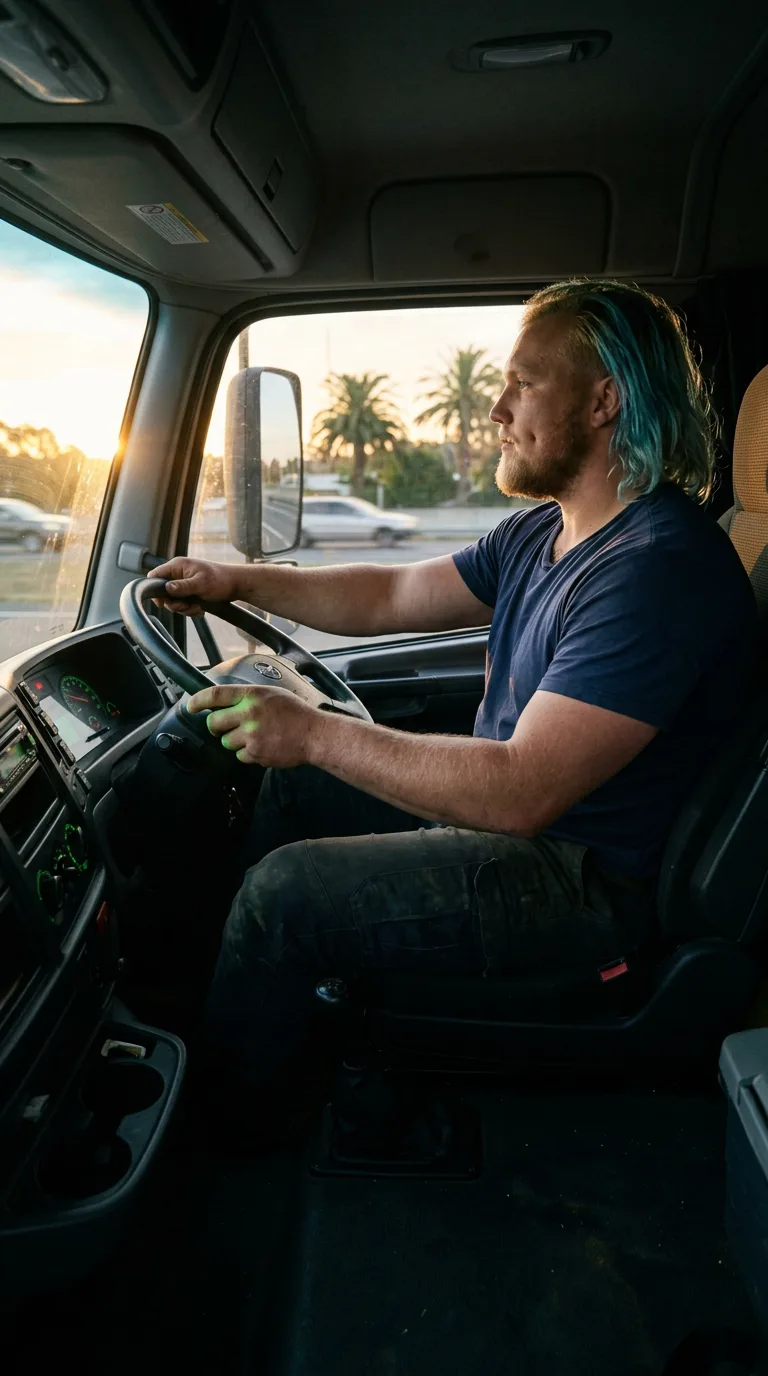
Rarest thing about him: Fashion color — common, 1 in 76
Season 1seed 1458246504 · engine v11
Character card
lineage 2NZHHJ
His body-swap story
@colin.hasbrook, wearing Colton Braswell, rolled the wheel on and woke up as Kai Alameida, spent 8 minutes in him, then spun the wheel and woke up as Dustin Kowalczyk
The maintenance closet smells like machine oil and the coffee going cold on the shelf, and you are standing in it in Colton Braswell's body, one hand still on the breaker panel you just reset for no good reason except that your hands wanted something to do. He has freckles up both forearms and a green exit-sign glow on his knuckles that isn't yours and never will be, no matter how many times you wear it. You have been him less than a minute, in the strict sense — the sense that matters to nobody but you — and already the wanting is back, small and stupid and total, the way it always comes back: not hunger exactly, more like a hand reaching for a doorknob before the mind has decided to leave the room. Houston is dark outside the one high window. You did nothing to deserve boredom this fast. You just have it.
You take out your phone and the page loads the way it always loads, patient, gray, the wheel sitting there like a clock with no numbers on it, and you pay, and you spin, and Colton Braswell's chest is the last thing you feel from the inside before it isn't.
The wheel gives you sun.
Not warmth — the body arrives with warmth built in, already sweating at the collar — but sun, white and flat and everywhere, coming off a windshield and a dashboard and a strip of red dirt visible past a mailbox. Your hands are at ten and two and then they are not: they come off the wheel on their own, before you have any say in it, and resettle lower, wider, a stranger's grip finding its own stranger comfort. The turn signal is already ticking for an exit you have never seen. Three miles from a home that is not yours yet, in an afternoon that has no business existing at the same second as the Houston night you just left, the car drifts a foot toward the centerline and comes back straight, smooth, like nothing happened, because as far as the road is concerned nothing did.
The steering wheel is cracked vinyl, warm from hours of sun, and it is the first thing that gives him to you: a flash of a hardware store parking lot, this same wheel slick under his palms after a day of trimming hedges in ninety percent humidity, him laughing at something his boyfriend said on speakerphone, dimples cutting into his cheeks even though nobody could see them. Then it's gone and you're just driving, his foot easing off the gas at the exit he didn't mean to take, his body performing the beginning of a decision his mind never made.
The seatbelt is next — canvas gone soft with wear, cutting the same worn groove across the same worn shoulder it's cut a thousand times — and it opens him wider: this is Kai Alameida, twenty-five years, and the belt remembers every commute home from every yard he's mowed since he was old enough to hold a Stihl. You get the whole shape of a Thursday before you get the man. Up before six, into the truck by six-thirty, the trailer of mowers rattling behind him down streets where the grass grows like it's trying to prove something. A day of noise and diesel and the particular satisfaction of a lawn cut in perfect stripes, headphones muffling the roar, cicadas timing themselves to the blade note. His hands know things without asking him — the flick that starts a two-stroke, the angle that keeps an edge from scalping a slope, the exact pressure a pair of shears wants before they'll do what he means. Muscle without vanity, built by the work and not for it. His lower back complains in a way it didn't at twenty. His forearms are burnt dark against paler shoulders where the shirt covers.
The shirt — this shirt, the one going damp against a back that isn't yours, chambray softened by a hundred washes — gives you the morning itself: him pulling it off the hook by the door, one sleeve already rolled from yesterday, his boyfriend still asleep in the tangle of sheet behind him, one bare foot hanging off the mattress into a stripe of early light through the louvered window. The house on its posts creaking the way it always creaks, tin roof ticking as it heats. He'd buttoned the shirt halfway, left the placket open the way he always does, felt for his phone, his keys, the ear protection that lives around his neck all day whether he needs it or not. He hadn't thought about any of it. That's what a life folded into muscle looks like from the inside — unremarkable, which is its own kind of grace.
The collar brushes his throat and there it is: the tattoo he can't see but always knows is there, script and a date, inked the year his father died, the year he told himself grief needed somewhere permanent to live besides his chest on the inside. He touches it sometimes without meaning to. He touched it this morning, buttoning up, half a thought about calling his mother later, gone before it finished.
There's an ex in the glovebox, in a manner of speaking — a phone he almost doesn't check anymore, a name he still flinches reading, an ache gone quiet but not gone, the kind you carry into a new house and a new man's arms and don't mention unless asked directly. There's the boyfriend waiting three miles up this road, dinner probably already started, the screen door probably already propped for the dog. There's twenty-five years of ordinary want — to be home, to be clean, to be touched by somebody who knows which parts of him ache — folded into a body that clicks a pen without knowing it's doing it, that has never smoked, that drinks hard maybe twice a month and calls itself spiritual when anyone asks, meaning: I don't know, but I think something's listening.
You look at your hands on the wheel. They are wider than Colton's, sun-marked at the wrist where a work glove stops, a groove of pale skin where a ring isn't but maybe will be someday, in a life you are not going to see the rest of.
"Hey," you say, to no one, to the windshield, to the dimples you can feel sitting in your own borrowed cheeks even now, at rest, "who's this."
The signal keeps ticking for the exit that isn't his, and neither of you corrects it yet.