Colton Braswell
Fictional. Generated by AI — not a real person, and no likeness of one is intended.
26, maintenance technician in Houston · rolled by @colin.hasbrook · card — no film
History
who has worn him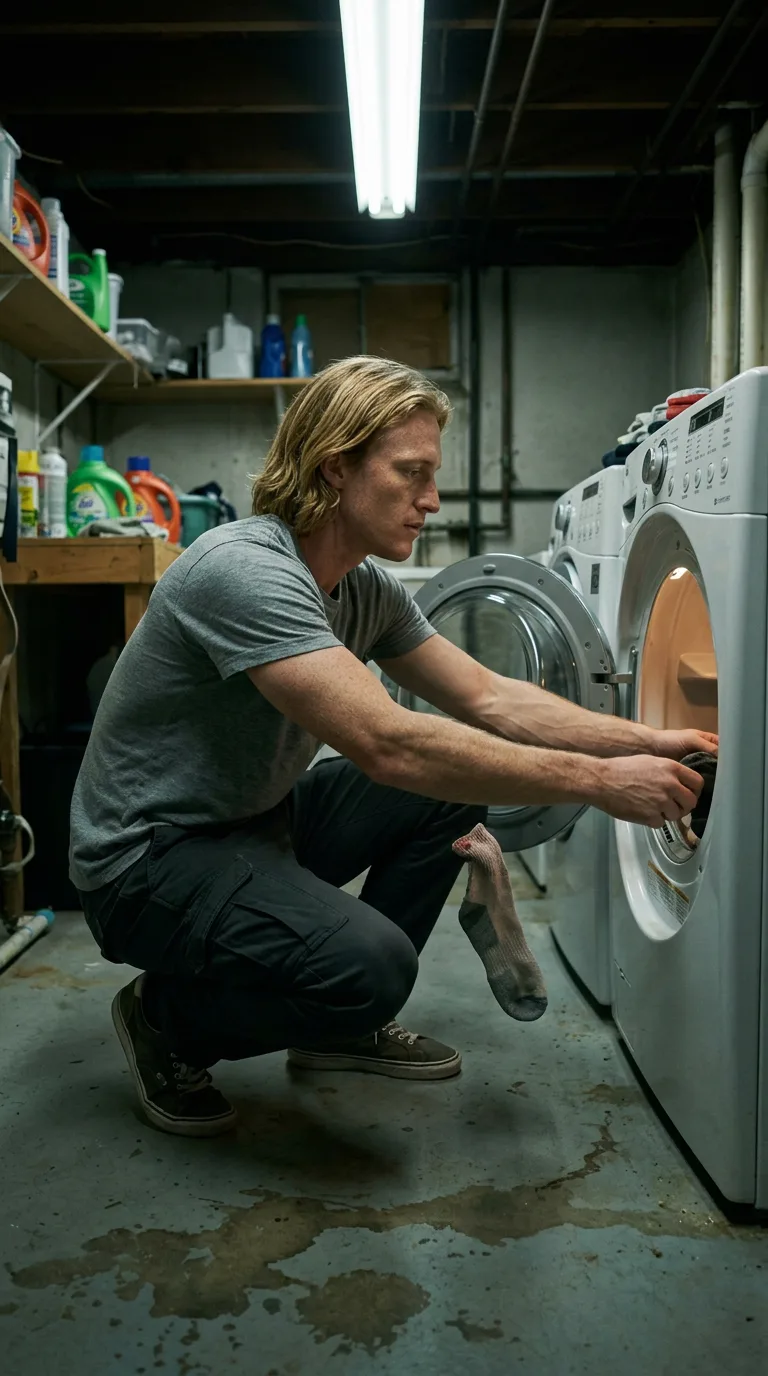
Rarest thing about him: It's a problem and it shows — common, 1 in 37
Season 1seed 122534753 · engine v11
Character card
lineage 2NZHHJ
His body-swap story
@colin.hasbrook, wearing Brendan Kowalczyk, rolled the wheel on and woke up as Colton Braswell, spent under a minute in him, then spun the wheel and woke up as Kai Alameida
Brendan Kowalczyk's hands smell like machine oil no matter how many times he washes them, and that's the first thing you notice tonight, standing in his kitchen at the end of his shift, running water over knuckles that will never come clean because they're not really yours to keep clean. Thirty-nine years old. Stubble like sandpaper. A body that clocks in, clocks out, and drinks two beers on the porch step because that's what Brendan does, or did, before you were the one doing it.
You've had him less than a minute and you already know you're done with him.
It's not his fault. It's never their fault. It's that the machine operator's life fits like a coat one size too small in the shoulders — the same floor, the same noise, the same handshake with the same three guys every morning — and you spun him last only because the last one before him had gotten unbearable in some other way you've already half forgotten. Eight hundred and fifty-six men, and the only thing that stays constant is you, restless in whatever chest you're currently occupying, standing at a sink in Chicago wanting to be somewhere else, someone else, before the water even runs warm.
So you go back to the site. Same wheel, same wait, same small mean pleasure of paying for it.
You spin.
—
The dryer door is warm against your knee before it's warm against anyone's, and then it's just warm against yours, because you are crouched here now, weight settled into a stranger's crouch, a sock dangling from fingers that were, one half-second ago, someone else's fingers entirely. The fluorescent tube overhead hums its flat electric hum. Concrete floor, damp in one corner where something has leaked and dried and leaked again. You pull the load out in one motion — his motion, already moving before you've caught up to it — warm cotton and denim, and drop it into the basket at your hip.
He is younger than Brendan. You feel that first, in the knees, in the give of the crouch — no ache there, no old-man complaint in the joints. Lean and quick. A leg that wants to bounce even folded under you like this.
You start folding, and the folding is fast, and it is not you doing it.
—
The shirt sleeve slides through your fingers and something comes with it — not a picture exactly, more a weather, a Tuesday, Houston heat pressing flat against a windshield, the particular ache of standing on a stepladder with your arm up inside a ceiling panel for forty minutes trying to find a short in wiring nobody labeled. Colton. That's the name that arrives with the shirt, the way his mother says it over the phone, clipped and a little tired: Colton, did you call the dentist back. He didn't.
The gray T-shirt against your back gives you the morning he put it on — this morning, though for him it was hours and hours ago, the sun already murder-bright at seven a.m. He'd pulled it from the drawer without thinking, over yesterday's deodorant, because the good shirts were still in the hamper you're currently kneeling in front of. Cargo pants next, the left pocket heavier out of habit, keys and a folding knife he never uses for anything but opening blister packs and cutting zip ties. The apartment complex on Willowbrook, four buildings, ninety-some units, and half of them with something wrong — a disposal, a thermostat, a door that won't latch — and him going floor to floor with the ladder folded under one arm like a crutch he doesn't need yet.
The basket handle under your palm gives you the drive home. Not this drive — every drive. Radio on, windows up against the heat, a six-pack riding shotgun that won't survive the evening. That part comes back heavier than the rest, weighted wrong, the way his hand already knows the shape of a bottle better than it knows anything else it's supposed to hold. It's a problem and everyone around him is too polite or too tired to say so out loud anymore.
Denim against your knuckles: Marisol's laundry mixed in with his, and with it the whole shape of her — asleep upstairs right now, or reading, or waiting for him to come up smelling like fabric softener instead of the bar he sometimes stops at first. You live with her. You love her in the uncomplicated way of two people who haven't yet had the conversation that changes anything. And under that, quieter, snagged like a hook in fabric — Danielle. Not here anymore. Gone four months and still turning up in the smell of a particular detergent, in a song, in nothing, the way exes do when you fold laundry alone in a basement at whatever hour this is.
It's late for him too — you feel that in the tiredness sitting behind his freckled face, in the fact that nobody else is down here, that the building above is quiet in the specific way of a Thursday night when everyone's already gone to bed and he is down here alone with a hamper of shirts because the shift ran long and he didn't want to face the apartment yet, didn't want to face her yet, wanted ten more minutes of a room that doesn't ask him anything.
The sock — his hand remembers the sock. A hundred socks, a thousand, this exact motion of matching a pair by feel before you've even looked at them, corners squared on the T-shirts after, precise in a way nothing else about him is precise, like the one part of his life he can make come out even.
His body underneath all of it: twenty-six, and it shows in how little the crouch costs him, how the shoulders carry the day's work without complaint, freckles like a spray of static across a nose that's been sunburned more times than anyone's bothered to count. Strong hands, rope-callused, quick. And under the sternum, low, a bounce trying to start in the left leg even folded — a motor that never fully idles.
—
You straighten up out of the crouch with the basket on your hip, and you look down at the hand not holding it — his hand, freckled, a white ring of dryer-lint dust along one knuckle — and you turn it over once, slow, like it might tell you something it hasn't already.
You lift your eyes toward nothing in particular, toward the humming tube light, and you say, out loud, to the empty laundry room:
"Man, I gotta stop drinking."
You don't know if you mean it as him or as yourself. You don't know how long you're staying to find out.