Josh Northrup
Fictional. Generated by AI — not a real person, and no likeness of one is intended.
29, cop in Coastal Maine · rolled by @colin.hasbrook · card — no film
History
who has worn him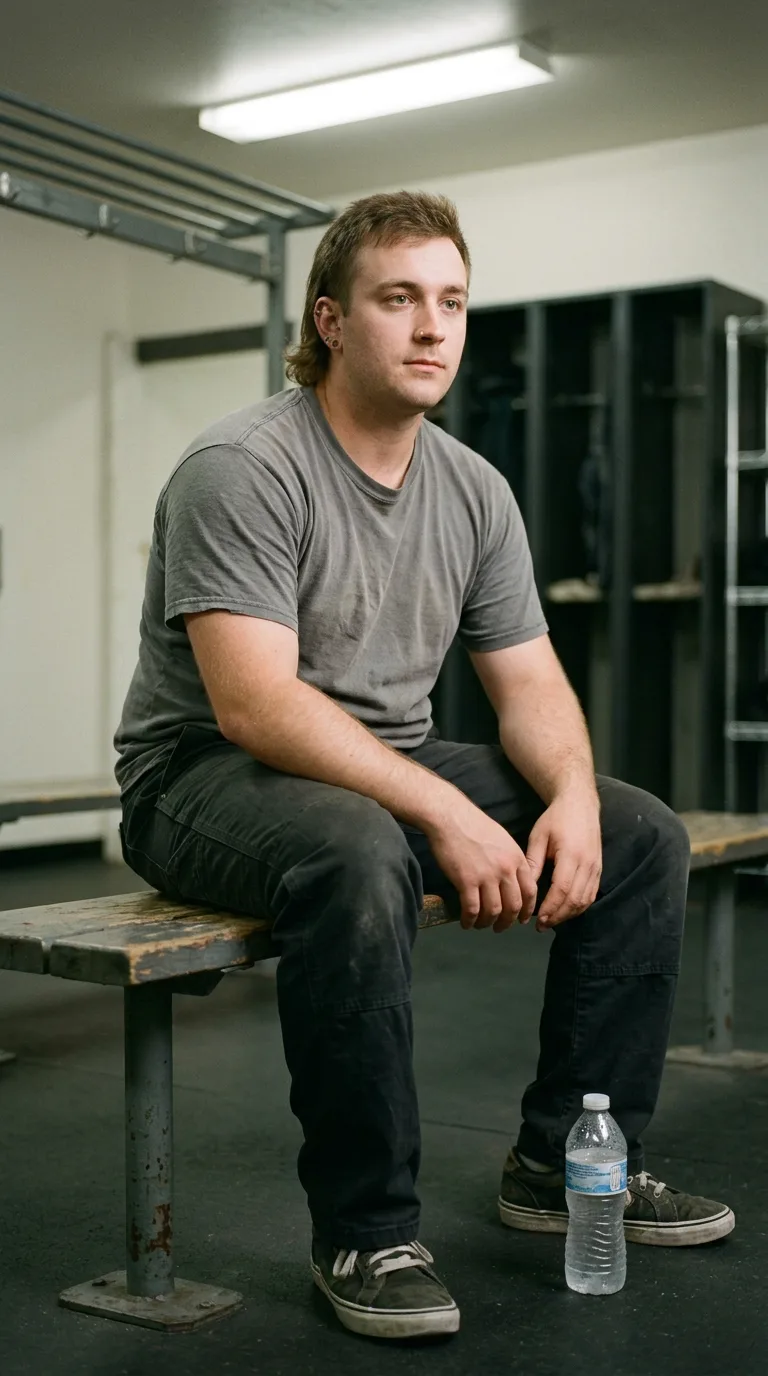
Rarest thing about him: Several — legendary, 1 in 198
Season 0seed 1622959340 · engine v10
Character card
lineage 2NZHHJ
His body-swap story
@colin.hasbrook, wearing Gregory Simmerling, rolled the wheel on and woke up as Josh Northrup, spent 21 hours in him, then spun the wheel and woke up as Marcus Villanueva
You are washing your hands in Gregory Simmerling's bathroom, and that is the whole problem.
Sixty seconds a nurse, fifty-eight years old, and you are looking at his hazel eyes in a mirror you have looked at maybe forty times now, and you know already, the way you always know, that you are done with him. Not unhappy. Nothing happened. That is almost worse — nothing happened, nobody coded, nobody needed you, the shift ended clean and the dimples in the mirror are pleasant and the hands are steady and none of it is enough to keep you in a body a single evening longer once the wanting turns over. It turns over the way it always does, without asking you first. You dry your hands on his towel, and somewhere behind Gregory's face, small and familiar, is the thought: two hundred forty-six, and here we go again.
You do not even sit down for this one. You spin standing at his kitchen counter in Nashville, the sun still up enough to lay orange across the linoleum, phone propped against the sugar jar, and you watch the wheel go around and stop on a man leaning on nothing, on a bench, mid-breath, four hundred miles and one time zone away from wherever Gregory's Monday is.
The gym smell arrives before anything else does — rubber matting, chalk, a little bleach — and then weight, more of it than Gregory carried, settled low and comfortable through the hips and gut, and a bar in your hands two inches wider than any grip you've used all year, though you don't know that yet, you only know your palms have found a place on the knurling that feels chosen rather than checked. You are three-quarters through a rep. Your teeth are open around a breath that was supposed to be a count of one more and is now just air, going nowhere, because the next thing that would have happened — a grunt, a rack, a hand slapping the bar back into its cradle — doesn't. The reps keep coming, slow, even, wrong. Nothing on the face that a last rep puts there. Nobody watching. Nobody watching is the only mercy in it.
His name comes up through the bar first, the way it always comes through whatever he's holding — Josh — and then the gray T-shirt against your back gives you this morning, or his this morning, six hours ahead of the kitchen you just left: him pulling it over his head in a shingled house that has gone the color of a nickel, sea light coming flat and cold through a window over the sink, lobster traps stacked wet in the dooryard from a father he half-talks to, a mullet he half-means as a joke that stopped being a joke around year three of the job. The shirt smells like fabric softener and, underneath that, like the locker room he's sitting in now, and underneath that like his own skin, and all three arrive at once the way smells do, no order to them.
The uniform in the locker two feet away gives you more, and it gives it in that order things go when a life comes back through cloth: first just weight, the belt heavy on a hip you haven't felt yet, then a whole shift — leaning on the fender of the cruiser in a gravel lot while the light goes down over the water, radio quiet, nothing happening, nothing happening being most of the job most nights in a town this size — then further back, the academy, his mother crying a little at the ceremony because he is the only one of her sons who didn't go into the boats, and further back than that, further than the uniform can reach on its own, a temple two towns over he hasn't been inside in years and still thinks about on the wrong nights, guilt shaped like nothing in particular, just an absence with his name on it.
The ring gives you the most, and gives it last, because his hand goes to it now on its own, an old habit older than the mullet — his index finger finding his own thumb and turning a plain band that isn't a wedding ring, was his grandfather's, sized down at a jeweler's in Portland the week the old man died, and you feel, not your feeling but his, arriving late and total, how much of him lives in that turning. Not grief exactly. Company. He was single and meant to stay that way a while yet, had said as much to somebody at a bar six months back, easy about it, not lonely about it — quit drinking two years ago for no dramatic reason, just drifted off it the way you drift off a radio station, never smoked, never needed the ring or anything else explained to anyone. He carries nothing he'd bring up. That's the whole of what's under his hands: a job, a house going silver by the water, a grandfather's ring, an ordinary Monday ending in an ordinary gym on the other side of a day you already left once tonight.
Your — his — forearms are heavier than Gregory's ever were, softer through the middle, strong in the specific places twenty-nine years and a duty belt make a man strong, and it is a good weight, a weight that has done things, hauled things, held a car door for an old woman in the rain without thinking about it. You set the bar down at last, the correct rack, the correct sound, a full beat later than it should have landed.
You look at your hands. Wide across the knuckles, a callus at the base of each finger from the bar, the ring catching the fluorescent light going pale gray-orange with the last of a Maine dusk somewhere behind these particular walls. You turn the right one over, the way he does without thinking, thumb finding the ring on its own before you've told it to.
Then you look up, into the empty locker room, at nothing, and you say, out loud, to no one who's listening: "Whose lot is this again."