Marcus Villanueva
Fictional. Generated by AI — not a real person, and no likeness of one is intended.
30, lawyer in Western Kansas · rolled by @colin.hasbrook · card — no film
History
who has worn him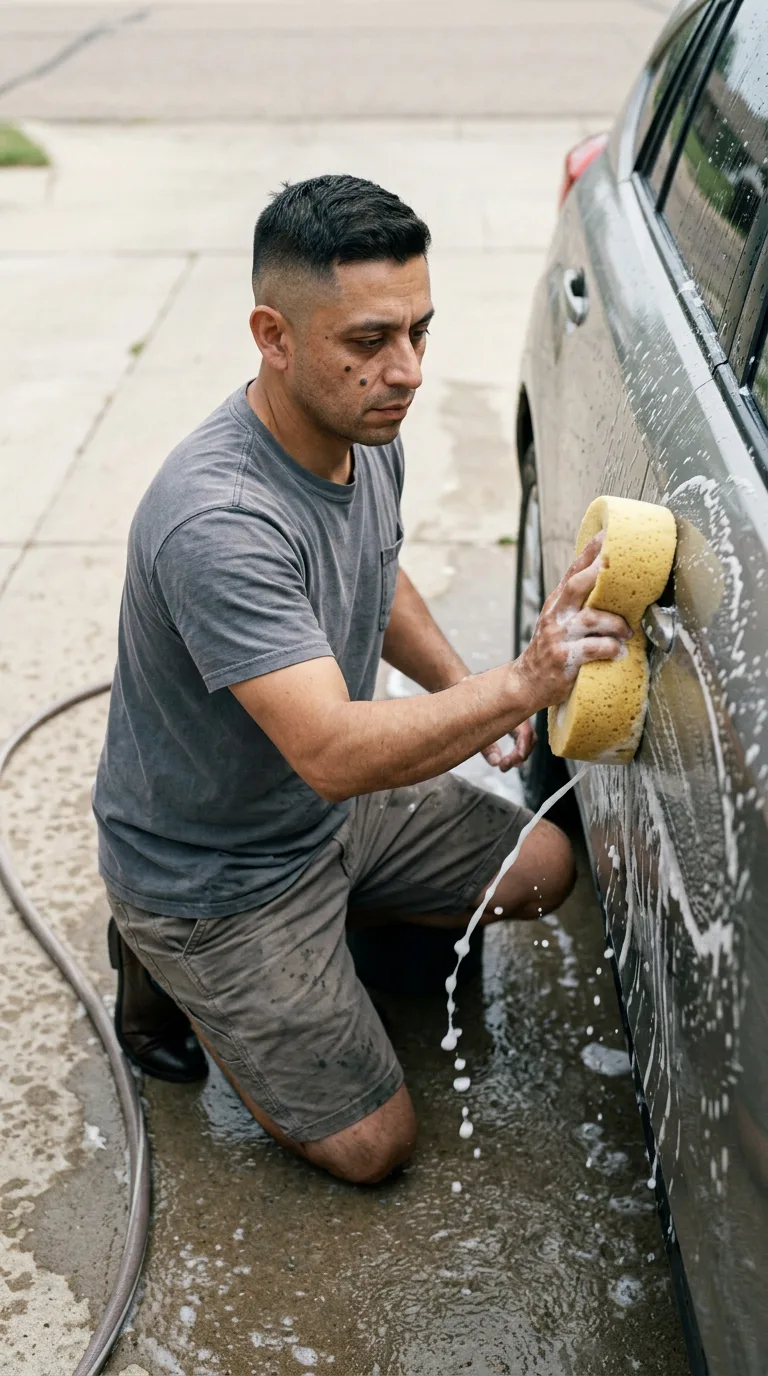
Rarest thing about him: Western Kansas — uncommon, 1 in 44
Season 0seed 453276253 · engine v10
Character card
lineage 2NZHHJ
His body-swap story
@colin.hasbrook, wearing Josh Northrup, rolled the wheel on and woke up as Marcus Villanueva, spent 3 minutes in him, then spun the wheel and woke up as Gregory Podolski
The radio in Josh Northrup's kitchen is playing something with too much bass for a Tuesday afternoon, and you are standing at his counter in his dad-bod, in his skin, twenty-one hours and three minutes into being him, and you are bored out of your mind.
That's the whole reason, if you're honest, which you don't have to be. Not to Josh, who doesn't exist enough to be lied to anymore. Josh was fine. Josh was a cop who liked his coffee too sweet and had a knee that clicked on stairs and a mother who called every day at four, and none of that was bad, exactly, it just sat on you like a coat that fit someone else's shoulders. Twenty-one hours of a man who checks his phone every six minutes for a text that isn't coming. You paid for better than that. You are owed better than that.
The site loads the way it always loads — patient, gray, the wheel sitting there like it's been waiting on you specifically. Two hundred and forty-seven times now. You don't feel the number anymore. You feel the itch, which is different, older, and always the same shape: not this, something else, now.
You spin.
—
The wheel doesn't ask and it doesn't warn. There is a sponge in your hand, yellow, going soft at one corner, and it is dragging suds down a car door in an arc that started before you existed here and ends now, mid-stroke, because halfway down the panel your grip changes — thumb tucking under, wrist rolling in small tight circles instead of long ones — and the swirl marks you didn't know you were leaving behind simply stop.
You are crouched. Water is running somewhere near your knee, out of a hose left on in the grass. There is weight on you that Josh never had — tighter through the gut, harder in the forearm, a body used differently — and the light is all wrong, too yellow, too low for the hour you left, and stacked up behind a stand of grain elevators in the distance is a thunderhead so black it looks painted on.
You don't know yet whose hand this is. You just know it isn't asking permission from anyone anymore.
—
The sponge is what gives you the first of it — foam working into the creases of a palm that has held a thousand things this exact way, gripping tools, gripping steering wheels, gripping a pen over a legal pad at four in the morning — and with the sponge comes the driveway, comes Saturday, comes a man who does this every other week whether the car needs it or not because his father did, because it is a kind of prayer that doesn't require going anywhere.
His name arrives sideways, the way names do, from the shirt — no, there is no shirt yet, there's this shirt, gray, gone soft and thin at the shoulder seams from a hundred washes, and putting it on this morning comes back whole: the closet light not working, the bulb he keeps meaning to replace, his girlfriend's voice from the bathroom saying something about picking up the kids from her sister's by six, and him answering *yeah, yeah* around a mouthful of toothpaste, not really listening, already thinking about the Castillo deposition, about a witness who'd change his story between now and trial if somebody didn't nail it down today.
Marcus. Marcus Villanueva. The name comes with the belt of his shorts, elastic, easy — Saturday clothes, off-duty from the tie and the gray suit that lives in a garment bag with his name embroidered small inside the collar, a suit that comes with courthouse steps, with a briefcase handle worn shiny on one side from thirty years of hands like his and his father's before that, a walk down concrete stairs he's made a hundred times with reporters sometimes and sometimes nobody at all.
The mole is not a memory, it's just there under two fingers when he wipes his own cheek out of habit, sweat or soap, and something about it — the girlfriend used to trace it while he slept, an old tender thing, or maybe that's from before, maybe that's the ex, the one whose name still catches somewhere behind his teeth on certain nights when the kids ask questions he doesn't have easy answers for. Two kids. Not hers. The other one's. Weekends and Wednesdays and a child support number he does math against every month like a man rubbing a bruise to see if it still hurts.
It still hurts. The money hurts — a hole under him that widens every quarter, decisions made in his twenties that a law degree apparently doesn't insure you against, and he goes to Mass most Sundays anyway, kneels through it, asks for the specific and unglamorous thing: enough. Just enough. Not forgiveness for anything in particular. Just enough.
The knees remember the concrete under them right now, the wet grit of the driveway biting through his shorts. The shoulders remember eight hours in a suit yesterday and the relief of this — no tie, no watching his words, just water and soap and a sky going the color of a bruise over the wheat stubble that runs gold and shorn to the flat edge of the world. His hands know this car, this door, this exact soft give of the sponge, know it without thinking, the way his hands know how to hold a jury's attention or a beer at six o'clock or his kids when they're small enough to still want holding.
He'd have looked up in a second, at the sky, and thought *storm's coming*, and thought about getting the hose put away before it opened up, and that thought is still sitting there, unfinished, when everything he is quietly stops being the one thinking it.
—
You look at your hand. Soap running off it in a thin white thread, knuckles darker than Josh's ever were, a callus at the base of the thumb you didn't earn and now own outright.
You turn it over once, like it might explain itself.
Above you the black wall of cloud takes another silent step closer, and somewhere behind this face a girlfriend is fifteen minutes from calling to ask if he's leaving soon, and two kids don't know yet that nothing about tonight is going to be different, not from where they're standing, not for a while.
"Almost done," you say, to no one, in his voice, and you go back to the door with the wrong hand doing the right motion, already wondering how long the itch stays quiet this time.