Gregory Simmerling
Fictional. Generated by AI — not a real person, and no likeness of one is intended.
58, nurse in Nashville · rolled by @colin.hasbrook · card — no film
History
who has worn him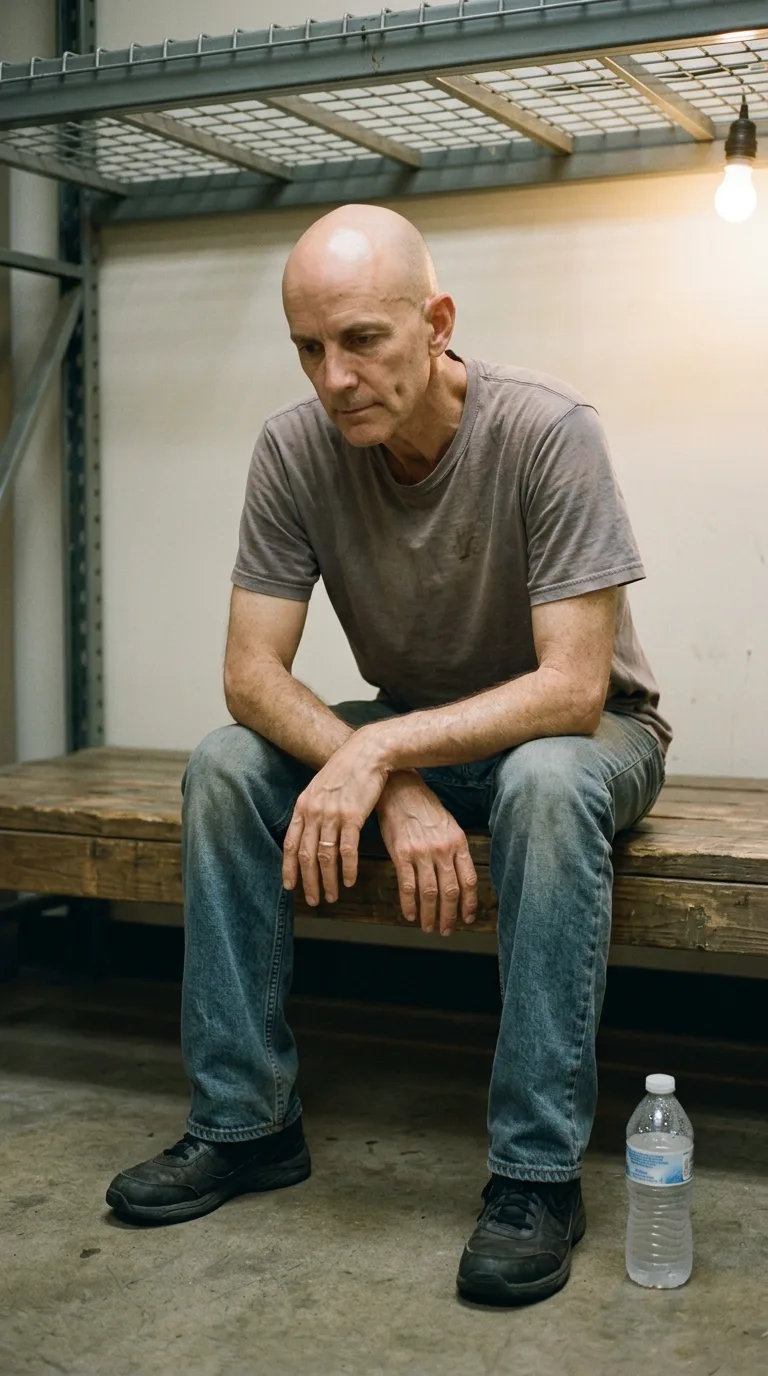
Rarest thing about him: Nashville — uncommon, 1 in 44
Season 0seed 720780024 · engine v10
Character card
lineage 2NZHHJ
His body-swap story
@colin.hasbrook, wearing Colin Wharton, rolled the wheel on and woke up as Gregory Simmerling, spent under a minute in him, then spun the wheel and woke up as Josh Northrup
The mop is still warm from the bucket when you decide. You are Colin Wharton — you have been him less than a minute, you are still learning the ache in his lower back, the way his knees pop when he pivots the mop head — and already you know you don't want him. It's not the job. It's the smell of the industrial cleaner, the fluorescent hum, the fact that Colin Wharton's whole apartment, when the memory surfaces uninvited, has exactly one photograph on the wall and it is of nobody. Thirty-two years old and there is nothing in him worth being. You spun into a blank. You want out of the blank before you've even finished the thought, phone already in your free hand, thumb finding the site without needing to look, because you have done this two hundred and forty-four times and your thumb knows the way better than your eyes do.
You spin.
—
The bar is two inches wider in your hands than it was a second ago, though of course it isn't, it's exactly where it always is; it's you who are different, arriving mid-press with his elbows locked at the bottom of the movement and his lats screaming in a way that has nothing to do with you and everything to do with the eleven reps that came before this one, which you did not do. The rack is close overhead. A single bulb somewhere behind you throws yellow light across the knurling. His breath — your breath now — is caught halfway between his teeth, and you finish the exhale he started, slow, controlled, none of the ragged gasp a twelfth rep usually earns. The bar goes up. The bar goes down onto the rests with a sound like a struck bell. Skinny arms, you think, surprised, before you understand whose arms they are.
—
The chalk on his palms goes first — a flash of a locker room decades gone, a younger version of these same hands wrapping tape around a wrist that hasn't started aching yet — and then the whole bench comes alive under you: how many nights he's sat on wood just like it, forearms on knees, water sweating on concrete, deciding whether he has one more set in him. Tonight he did. He always thinks he might not, and he always does, and there is a stubbornness in that which isn't about vanity anymore, hasn't been in years — it's about being fifty-eight and still able, when so much else has stopped being certain.
The scrub top comes back next, because it's still faintly on him even now, ghosted in his shoulders' memory of it — the V-neck collar, the elastic waist of the pants he changed out of before he drove here, the retractable badge reel that swings and clips against the counter forty times a shift. You get the nurses' station whole: the fluorescent tube that buzzes over bay four, the chart he was three lines into when Denise called him for report, the particular fatigue of a man near the end of a stretch of night shifts, the room lit up like noon at an hour when this city outside is asleep in its beds — except him, except the whole ward, wide awake under the tube light while Nashville's clock says something closer to morning than anyone in scrubs wants to admit. Then the shift ends, or almost does, and there's a version of him standing in a locker room peeling the blue cotton off, and pulling on the gray shirt and the jeans that are on you right now, sleeve by sleeve, the fabric gone soft with washing, threadbare at one elbow, and he doesn't think about any of it, just does it, the way you do a thing your hands have done ten thousand times.
The ring finger gives you the rest, or its absence does — a pale stripe of skin where fourteen years of a band used to sit, and under that stripe, unbidden, an ex-wife's laugh in a kitchen that isn't this one anymore, a daughter's height marked in pencil on a doorframe he doesn't own anymore either. The divorce didn't break him so much as rearrange him — that's the feeling that comes through the tan line, plain and unsentimental, a man who grieved a marriage the way you grieve a job you were good at and still lost. He calls his daughter on Sundays. He does not go to church, has never seen the appeal, prays to nothing and asks nothing of the air. He drinks a beer at a bar sometimes with the guys off shift and never smokes, never has, watched too many lungs on X-ray to want to try.
Your — his — heart is doing something that isn't quite right, hasn't been for a few years now, and a small orange bottle at home keeps it in line, mostly, and he thinks about that sometimes on the stairs and doesn't say so to anyone. His hands find their way to his mouth without him noticing — an old habit, teeth to nail, the same worry that's been there since he was young enough that nobody remembers when it started — and even now, sitting under the rack with the bar racked and his pulse coming down, one hand drifts and he almost bites before he catches it. Deep dimples cut into his face at rest, ordinary as breathing, the thing every patient comments on, the thing that made a hundred children stop crying before the needle went in.
Skinny build, tall, bald head cooling under the shop light, feet bare on rubber matting because he took his shoes off between sets, an old habit from a physical therapist years back. Nothing hurts tonight except the good kind of hurt, the kind that means tomorrow's shift will feel earned.
—
You look down at his hand — his nail bitten short at the thumb, the pale stripe on the ring finger catching the light — and turn it over slow, watching it not quite believing it's yours to turn.
"There you are," you say, out loud, to no one, and you don't know yet if you mean the hand or the man or the two hundred and forty-fifth stranger you've decided, for now, to be.