Isaac Cordero
Fictional. Generated by AI — not a real person, and no likeness of one is intended.
20, landscaper in Rural Texas · rolled by @colin.hasbrook · card — no film
History
who has worn him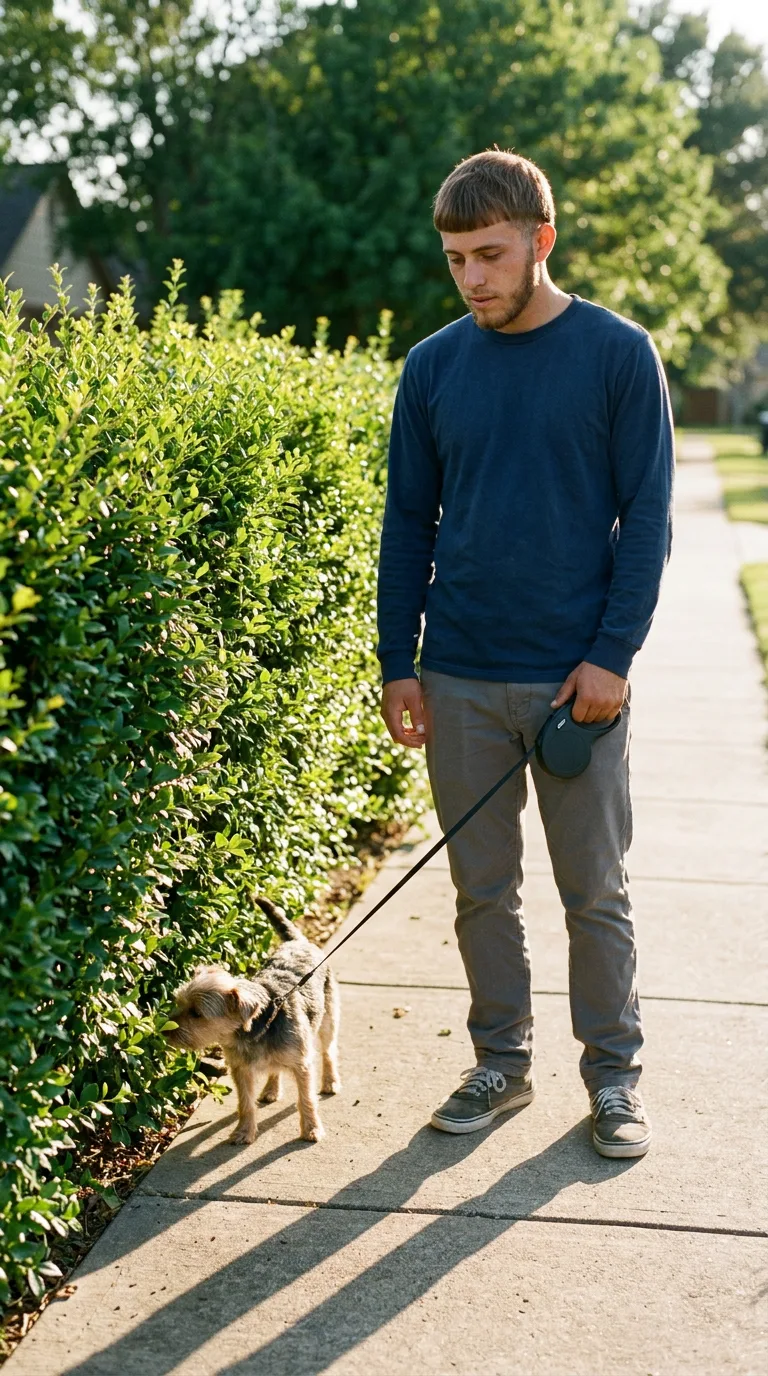
Rarest thing about him: Patchy beard — common, 1 in 30
Season 1seed 372206757 · engine v11
Character card
lineage 2NZHHJ
His body-swap story
@colin.hasbrook, wearing Peter Holcombe, rolled the wheel on and woke up as Isaac Cordero, spent 2 minutes in him, then spun the wheel and woke up as Wesley Tannehill
The trucker's knees ache first, before anything else does. You've been him less than a minute and already you know the whole architecture of the pain — a rebuilt disc, thirty years of a driver's seat, a cigarette habit he quit decades too late for it to matter. Fifty-three years old and sitting in a rest-stop lot in New York with the engine ticking as it cools, and the ache is already climbing into your hip the way it does every evening around this hour, reliable as a bill. You paid for this body 715 spins ago and you have been carrying it for less than a minute and you are already sick of the knees.
There's a phone in the cupholder, his, with a picture of a woman you've never met as the lock screen, and you don't want to know her either. You want the wheel. You open the site on that phone with his thick thumbs, the screen little and swimming, and there's a half-second where some small ugly part of you — the part that has done this seven hundred and sixteen times now — thinks about what it might feel like to not have a body that hurts anywhere. You spin knowing nothing about what you'll land in, the way you always do, the way that stopped being frightening around spin forty and started being the only thing that still felt like anything.
The dog looks up past the hedge first — ears back, front paws set, waiting for something to be wrong. Then the leash goes slack in your hand because your hand has stopped walking, and for a second you are only weight: five-eight, compact, twenty years younger than anything you've wanted in longer than you can say. The evening light is coming in low and gold across a lawn somebody else keeps, and there's a hat brim shading your eyes, headphones cold and slightly damp against the back of your neck, dirt under your nails already, before you've done a thing today to earn it. You wind the leash twice around your palm without deciding to — his hand doing it, a reflex older than you are, now — and start walking again at a pace the dog has to trot to match.
The leash is nylon, worn soft at the grip, and it opens first: not a memory exactly, just a warmth, a dog's whole stupid trust in you, an ordinary love with no weight to it at all. Then the shirt — you feel it settle against your back and it gives you this morning, sleeve by sleeve, Isaac standing in a bedroom with the blinds half down, pulling the sage-green long-sleeve over his head because the sun's already ugly by seven and he burns easy on the neck. Boots next, the left one always tighter, a half-size off from a bad deal at a bootleg outlet two years back that he never returned because the drive was forty minutes each way and gas isn't free. The hat — his mother's idea, actually, from a Father's Day gift for a father who left when Isaac was nine, so it went to him instead, and he wears it because it works and because throwing it out felt like something he didn't want to explain to her.
The headphones around his neck carry a whole year: the trailer hitch, the smell of two-cycle oil and cut grass, the particular ache between the shoulder blades that comes from four mowers loaded and unloaded five days a week since he was seventeen. His hands know this — you feel them know it, the calluses at the base of each finger fitted exactly to a mower handle's vibration, a whole language his palms speak without asking his head. There's a girlfriend in here too, warm and recent, a laugh from a truck cab with the windows down, her name arriving soft and unforced — Priscilla — and a gap-toothed smile he's self-conscious about around her mother but never around her. There's a big Saturday night twice a month, beer and a bonfire and somebody's cousin's radio, and Sunday mornings that hurt just enough to be worth it. There's no church, never was, his family let that go two generations back and nobody missed it. There's a bank account that never quite fills past a few thousand and a gravel road home with a water tower he's used as a landmark since he could walk, and none of it feels like poverty to him, just Tuesday.
And under all of it, older than any single memory, is the leg — his leg, which has bounced under every school desk and every truck bench seat and every folding chair at every family thing since before he can remember, doing it right now even as you stand here holding a leash, some motor under the thinking that never got the message to stop.
You look down at his hand around the leash grip — twenty years old, sun-browned, a callus riding the first knuckle, nothing on it you put there — and you turn it over slowly like it might come with instructions. The dog has stopped pulling. It's just watching you now, head tilted, and somewhere behind a hedge a sprinkler kicks on three yards down.
"Good boy," you say, and the gap in your teeth catches on the b, and it isn't your voice at all, and you like the sound of it more than you expected to.
You don't know yet if this is a long one.