Peter Holcombe
Fictional. Generated by AI — not a real person, and no likeness of one is intended.
53, trucker in New York · rolled by @colin.hasbrook · card — no film
History
who has worn him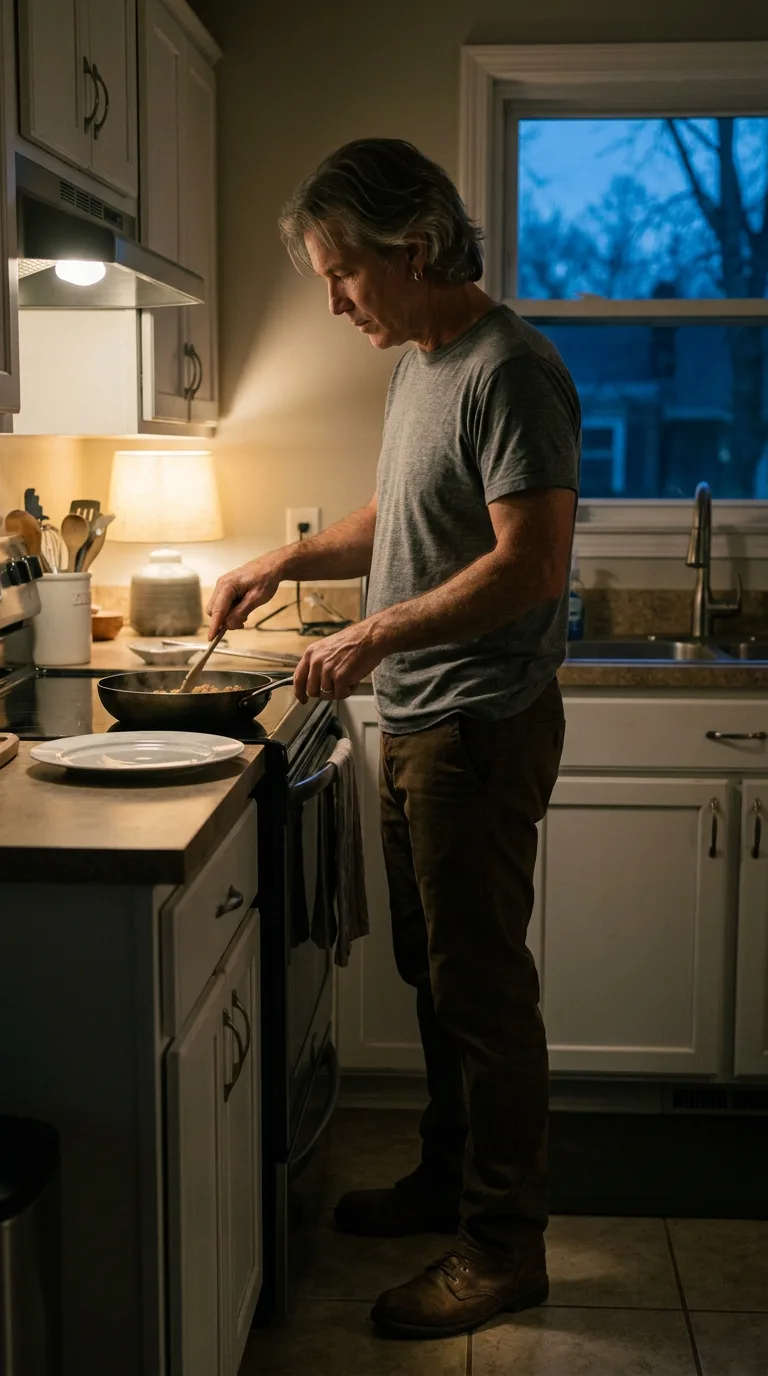
Rarest thing about him: One earlobe — common, 1 in 26
Season 1seed 293654034 · engine v11
Character card
lineage 2NZHHJ
His body-swap story
@colin.hasbrook, wearing Nikhil Fonseca, rolled the wheel on and woke up as Peter Holcombe, spent under a minute in him, then spun the wheel and woke up as Isaac Cordero
The picker line at the Ohio warehouse shut down four minutes early, and that never happens, and you took it as a sign the way you take everything as a sign now — an excuse already looking for a door. Nikhil Fonseca's body carried you out to the parking lot on a broken nose and a patchy beard that isn't yours, forty years old and none of them interesting to you, a body you've wanted out of since the second minute in it. The phone was already in his pocket, the site already bookmarked in a browser you didn't open, you just thought about it the way you think about a drink you've already decided to have. Small-town Ohio at the end of a Wednesday, sky doing its long orange nothing over the loading dock, and you paid before you'd finished deciding, because six hundred and some spins in, deciding stopped being a separate step.
The wheel spins and you are stirring something in a pan with your back to a kitchen that smells like onions and butter and old coffee.
Your hand keeps moving in the same circle it was already moving in, and then it doesn't — it stutters, reverses, stirs the other way, and something in the shoulder that isn't a shoulder you know yet has to relearn which way it was going. You salt the pan by feel, too much probably, and you don't taste it, because tasting it isn't the thing your hand wants to do. Your hand wants the cabinet. You open it before you've looked at it and your fingers already know which plate is the good one and which is the everyday, and you take down a second plate — white, plain, a hairline crack near the rim that your fingers find before your eyes do — and you set it down next to the first one, an inch off center, the way a man sets a place for somebody he's used to setting a place for.
The spoon is wood, worn pale down the middle where a thumb goes, and it gives you the first flash before you've even registered you're holding it: a kitchen fuller of noise, two kids fighting over a ketchup bottle, a woman's voice saying *Pete, watch the rice* — and that's the name, that's him, Pete, Peter, and it comes with the smell of rice starting to catch and the particular irritation of loving people who won't let a man cook in peace. The shirt against your back keeps giving too, low and steady, this morning's version of it: buttons done up one-handed at a bathroom mirror in a house that creaks on the left side of the hallway, flannel gone soft at the elbows from a hundred washes, sleeves rolled twice because the cuffs never sit right on him anymore, not since the shoulder. The shoulder that clicks when it's cold. It's cold in New York tonight, you can feel that now, a low ache riding down into the elbow, old and familiar as a dog at the foot of the bed.
The boots by the door — steel-toed, cracked across the left one where a strap of chain slid wrong eleven years ago outside Scranton — give you the road: eleven hours behind a wheel that vibrates up through your forearms even parked, weigh stations at 3 a.m., a radio permanently tuned to something with a fiddle in it, the particular quiet of a cab at night when the whole state is asleep except you and the reflectors. You've been home two days. You go back out Friday. The earring in your left lobe — a hoop, cheap, bought on a dare twenty years ago from a woman who is not your wife, a woman whose name arrives with the metal warm against your ear: Donna, a bar in Scranton, a version of you that still had all his hair the original color, a thing that ended clean enough that it never needed lying about, mostly. The ring on your other hand is heavier than the earring in every way that matters — Carol, twenty-six years, a courthouse wedding neither family could afford to travel to, two kids raised in the gap between routes, a marriage that runs on grocery lists and voicemails and the two of you falling asleep on the phone more nights than either would admit.
The second plate sits there and you don't know yet, standing in him, whether it's for her coming home late or for a habit that never broke after the kids moved out — the body sets it before the mind finishes the thought, muscle ahead of memory the way muscle always is with him. Fifty-three years in these knees, this lower back that complains getting in and out of a cab, this jaw he shaves clean every single morning on the road out of some stubborn, private discipline that has nothing to do with anybody watching. None of it hurts in a way that scares him. All of it hurts in the way that means he's still working.
You look down at the hand on the spoon — his hand, weathered, a white line of a wedding band pressed pale into the finger, a hoop of light metal warm at your ear — and you turn it over once like you're checking it came with the rest of him.
"There we go," you say, to the empty kitchen, to the second plate, to nobody, "there we go" — and you don't know yet if that's tonight's whole sentence or the start of something you'll still be saying in a year, and neither does he, and neither, really, do you.