Imran Sohal
Fictional. Generated by AI — not a real person, and no likeness of one is intended.
28, groundskeeper in Anchorage · rolled by @colin.hasbrook · card — no film
History
who has worn him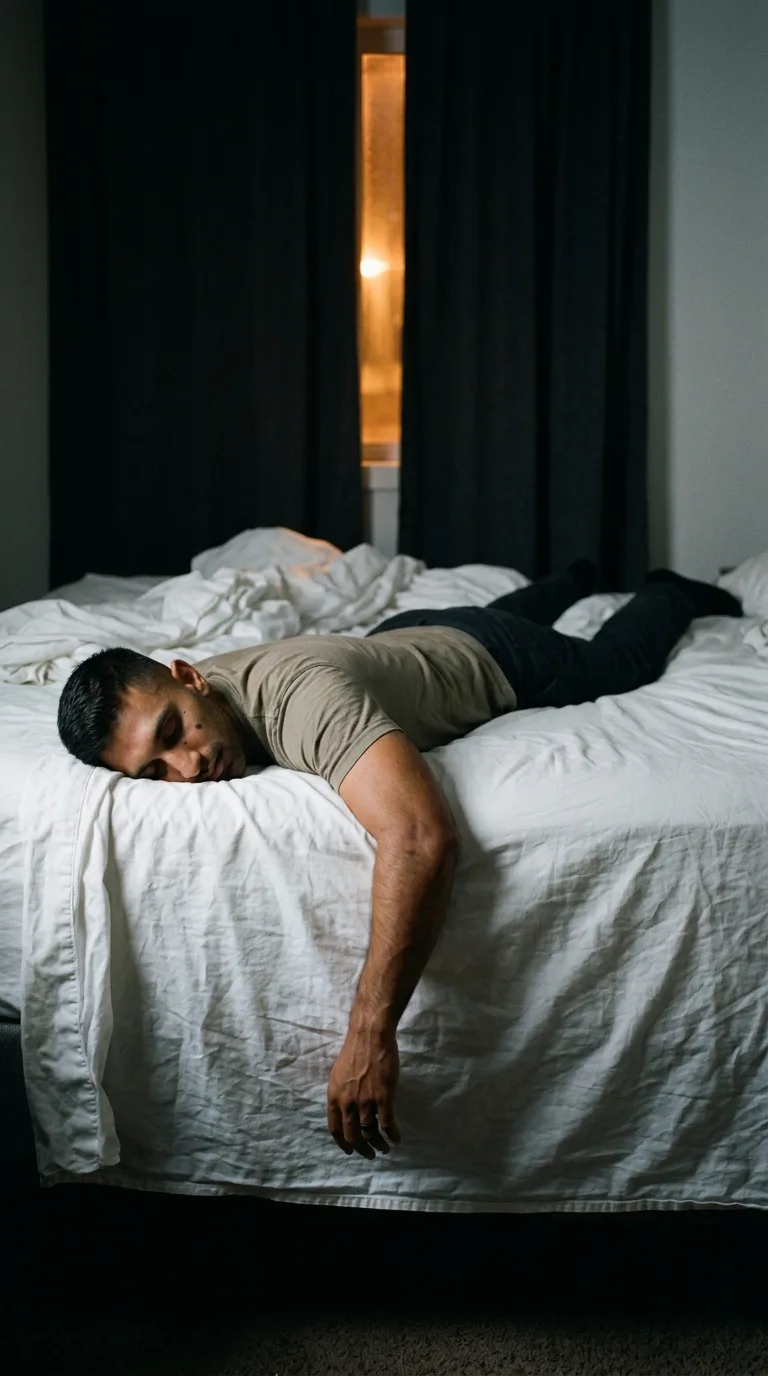
Rarest thing about him: South Asian — rare, 1 in 26
Season 0seed 251738883 · engine v10
Character card
lineage 2NZHHJ
His body-swap story
@colin.hasbrook, wearing Marlon Iverson, rolled the wheel on and woke up as Imran Sohal, spent 1 minute in him, then spun the wheel and woke up as Ronald Kessner
---
The lawyer's apartment smells like dry cleaning and old coffee, and you're standing in his kitchen holding a glass of water you don't want, in hands that are twenty years too young and never worked a day outside a courtroom. You gave this body thirty-eight minutes of your attention, and that was generous. Hazel eyes, freckles, a nice enough face — a face that has never once had to decide anything harder than which associate to blame. You know this because you were, until forty minutes ago, the associate. You know his apartment, his particular anxieties, the girlfriend he texts but does not call. None of it earned its keep. You set the glass down without drinking from it, already thinking about the wheel, already restless in a way that has nothing to do with him and everything to do with what waking up in a stranger has started to feel like: appointment, not miracle. You open the laptop. The page loads the way it always loads, patient, undramatic, a circle waiting to be a mouth. You do not think of it as a decision. You spin.
The color goes out of the room and comes back as breath — not yours, not the lawyer's, someone else's ragged intake evening out into something slow and deep and unbothered, and you are lying face-down in sheets that smell like a stranger's sleep, one arm dead-hanging off a mattress edge into cold air, streetlight seaming the curtain like a struck match. The arm draws itself up. You did not tell it to. The whole body rolls, unhurried, onto its back, and the hands come together at the chest, fingers laced, formal as a man laid out for a viewing — a posture this body has apparently never chosen for itself, and won't remember choosing now.
The mole is the first thing you find, without meaning to — your cheek finding it under your own finger, high and dark and permanent, a landmark on a face you haven't seen yet. Then the ring. Plain gold, left hand, and it comes with a woman's laugh somewhere behind it before you've even opened his eyes.
You open them onto a ceiling you don't recognize and don't need to; recognition isn't how this works. The room comes through the body, not the eyes — the mattress firm under a back that carries actual muscle, actual use, shoulders that have thrown a mower rope a thousand times, forearms with a farmer's tan line where the sleeves stop, sun that doesn't reach a groundskeeper who works the early stripe before anyone's in the stands. Under the sheet your feet find the cold ridge of a comforter kicked half off, and with that cold comes June, comes a green so bright it hurts, comes the smell of cut grass rising in a wet rope off a reel mower at six in the morning, dew soaking through boot leather he stopped minding years ago.
Your hand — his hand — finds the hem of the t-shirt twisted up around his ribs, and that single seam of cotton hands you a whole morning: standing in front of the dresser before a shift, pulling on the chambray shirt that's really for after, for the drive home, buttoning it one-handed while the other holds a coffee mug with a chip in the handle his wife keeps meaning to throw out. The shirt was clean. He remembers being glad it was clean, some small private vanity about looking decent even under grass stains, because she likes him in blue. Then the boots — he remembers lacing them on the edge of the bed while she slept in, remembers the particular give of the left one where his foot has worn a groove nobody else's foot would fit. This is a body that knows exactly what it is for: the shove of a mower handle against calloused palms, the register of an outfield's grade through the soles of the feet, the small pride of stripes cut so straight a stranger might think God did it with a ruler.
There is a night shift behind some of this — Anchorage light lying about the hour, ballfields groomed at strange times because summer here doesn't sleep either, and the man under you has learned to sleep whenever the dark finally commits to being dark, curtains blacked out against a June that won't quit glowing. It's the middle of his day by the clock and it doesn't matter; his body decided it was bedtime and the body was right, until it wasn't his to decide anymore.
The wife is everywhere once you go looking — not a name yet, just warmth, just the specific shape of a body that fits against his in sleep, just an argument three years old about money that ended in her laughing first, always her laughing first. No kids, and a small unspoken relief buried under the wanting-someday, his, not yours, arriving anyway. No one he keeps in a drawer for later. Nothing he'd bring up if you asked him straight out what he was hiding, because there isn't anything, and some part of you — the part that has now been thirty-nine different men — finds that almost unbearably restful, a house with no locked rooms.
You feel the size of him settle in: five-nine, compact, strong through the shoulders in a way the lawyer never was, hands rough at the pads in a way that will ache faintly and pleasantly by the end of a real shift, a body used well and used often and not yet used up. Twenty-eight years old and none of them wasted, as far as you can tell from thirty seconds inside his marrow.
You bring your hands up out of the fold on his chest and look at them — the mole's shadow just visible at the edge of your own eyeline if you cut your gaze sideways, the ring catching what little streetlight gets through the gap — and you turn the left one over slowly, like you're checking it's real, because it is, because it's yours now the way none of the others stopped being someone else's first.
"Okay," you say, to the dark, to no one, to him, and it comes out low and unpracticed in a voice you didn't choose either, and you leave it right there, eyes up, on the ceiling of a room that smells like someone else's whole ordinary life.