Héctor Villagrán
Fictional. Generated by AI — not a real person, and no likeness of one is intended.
58, mail carrier in Small-town Ohio · rolled by @marlon.etienne · card — no film
History
who has worn him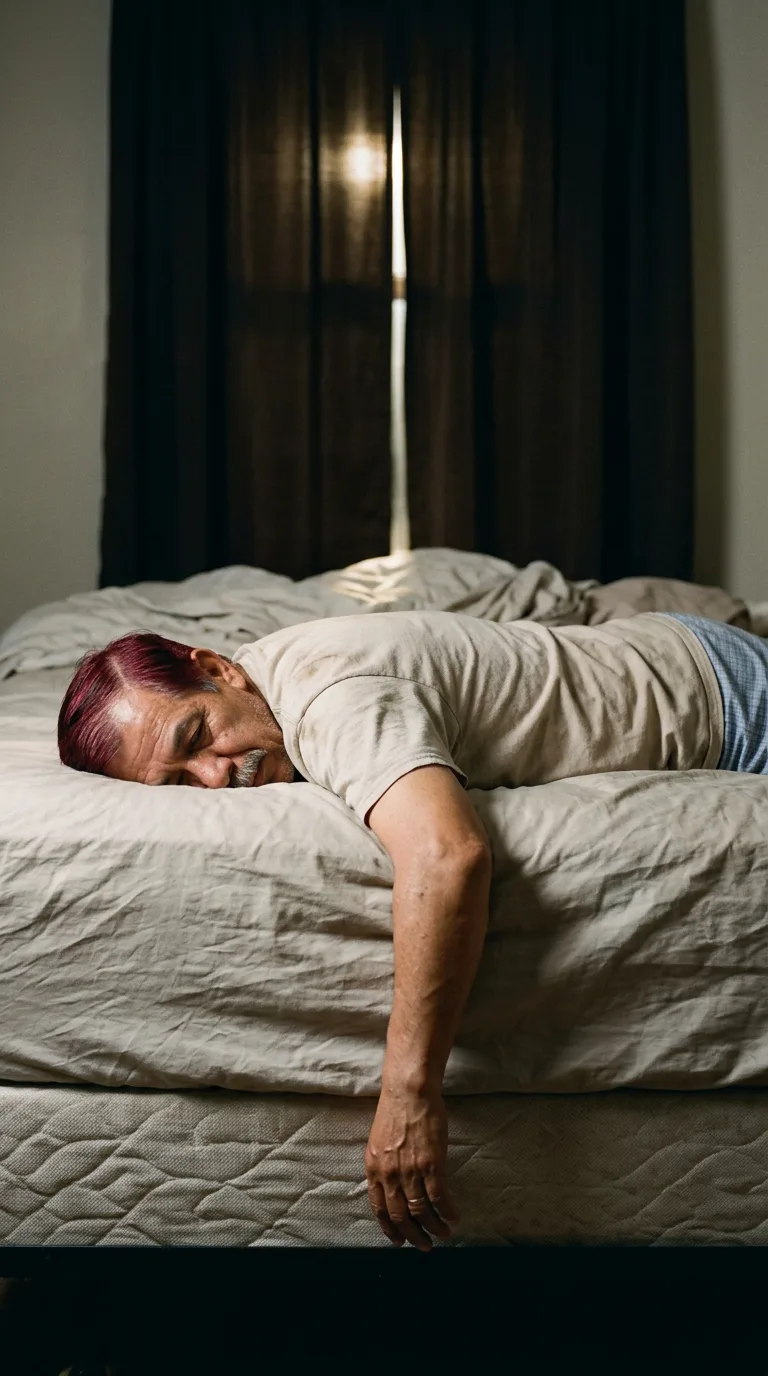
Rarest thing about him: Dyed red — legendary, 1 in 238
Season 0seed 184804421 · engine v10
Character card
lineage 6PRR5R
His body-swap story
@marlon.etienne, wearing Marlon Etienne, rolled the wheel on and woke up as Héctor Villagrán
You are standing at the rail with salt on your lips and dimples you didn't earn, and the boat is doing that slow roll under you, and you think: seven minutes. Marlon Etienne has a good back, a young back, no ache in it anywhere, and you spent your first spin of him just breathing, feeling how little it cost this body to stand. That should have been enough to hold you. It isn't. The line in your borrowed hands hasn't even gone tight yet, the horizon is doing nothing, some gull is screaming about nothing, and underneath all of it is the old itch, the one that was never about comfort — you don't want the good body, you want the next one, you have wanted the next one eighteen times now and calling it greed doesn't stop the wanting, it just names it. Somewhere below deck there's a phone with the site already open in the history. You set the rod in the holder. Nobody on this boat will remember you were ever here.
The wheel spins on its own light, and then there is no boat.
There is a bed, and it is not moving, and that is the first wrong thing your body notices before you do — a mattress instead of a swell, a ceiling instead of sky, a smell of fabric softener and someone else's sleep. Your arm is hanging off the edge of it, heavy, older, the fingers thick and slow to close. Then the breathing changes underneath you without your telling it to — ragged, then even — and the arm draws itself up, and you feel the whole torso roll onto its back like something remembering an order it was given a long time ago, hands coming to rest folded on the chest. A wedding band taps once against a shirt button. Somewhere outside, past a gap in heavy curtains, a streetlight is doing the work the sun should be doing at this hour, and isn't.
The shirt is what starts it — not yet on him, still hanging off the closet doorknob for tomorrow's route, but your hand brushes the collar reaching for the lamp and it comes anyway, a flash: sleeve, cuff, the little grunt he makes buttoning it one-handed while the coffee maker clicks off in the kitchen. Then more. The whole ritual of a morning that for him starts while the rest of the street is still lightless — dressing by feel because Rosa is asleep two feet away and thirty-one years married means you've learned to be quiet in the dark for someone. Héctor Villagrán, fifty-eight, and his hands already know this shirt the way they know a doorframe in their own house — short sleeve, two flap pockets gone soft and gray at the edges from a thousand washes, the tie he loops and never fully unknots, just loosens and slides over his head like a priest with a stole. The pants sit low because his stomach isn't what it was at thirty, and there's a permanent low ache behind his left knee from twenty-six years of curbs and driveways and dogs that only pretend to be friendly. His blood pressure medication is on the nightstand, one pill, dry-swallowed most mornings because he doesn't want to wake Rosa getting water.
Rosa. That name comes with weight nothing else in the room has — thirty-one years, and before her, briefly, someone else, a first wife whose name still sits in him like a stone worn smooth, no anger left in it, just a shape. Three kids, maybe four depending which year you ask him, scattered now — one in Columbus, one who calls every Sunday like a sacrament, one he worries about and doesn't say so. He goes to Mass less than he tells his mother he does. He drinks two beers most nights on the back step, watching the light go out of a street he's walked every morning of his adult life, a cigar on Fridays if it's been a decent week. He has never told anyone — not Rosa, not the kids, not the priest — about the year after his first marriage ended when he almost didn't get up for the route at all, when he sat in the truck in the depot lot for forty minutes because moving felt like agreeing to something. He got up anyway. Every day since is built on that.
The mole on his cheek is a thing his hand finds without meaning to, thumb brushing it while it rubs sleep out of an eye, the same gesture it's made ten thousand mornings, and with it comes the dumbest, dearest memory in him: his youngest daughter at six, solemnly informing him the mole was where God signed him, like a painting. He laughed so hard Rosa came in to see what was wrong. Nothing was wrong. Nothing has been wrong in a very long time, in this life, in this bed, in this dark before a Friday route that will take him up somebody's path with their electric bill and a birthday card in his hand, ordinary as breath — and you feel, arriving in the middle of it, how much of a life fifty-eight years actually is, how it doesn't announce itself, it just sits in the wrists and the jaw and the low steady clench of a man who has spent decades deciding, quietly, to keep going.
Your eyes open on the dark. Rosa doesn't stir beside you.
You lift the hand off your chest and turn it in the streetlight — thick fingers, the ring, a life on it — and hold it there a second before your eyes come up and find nothing, find the curtain, find whatever is watching.
"Dios mío," you say, quiet, not sure yet whose prayer that is.