Wade Kessler
Fictional. Generated by AI — not a real person, and no likeness of one is intended.
39, tailor in Rural Texas · rolled by @marlon.etienne · card — no film
History
who has worn him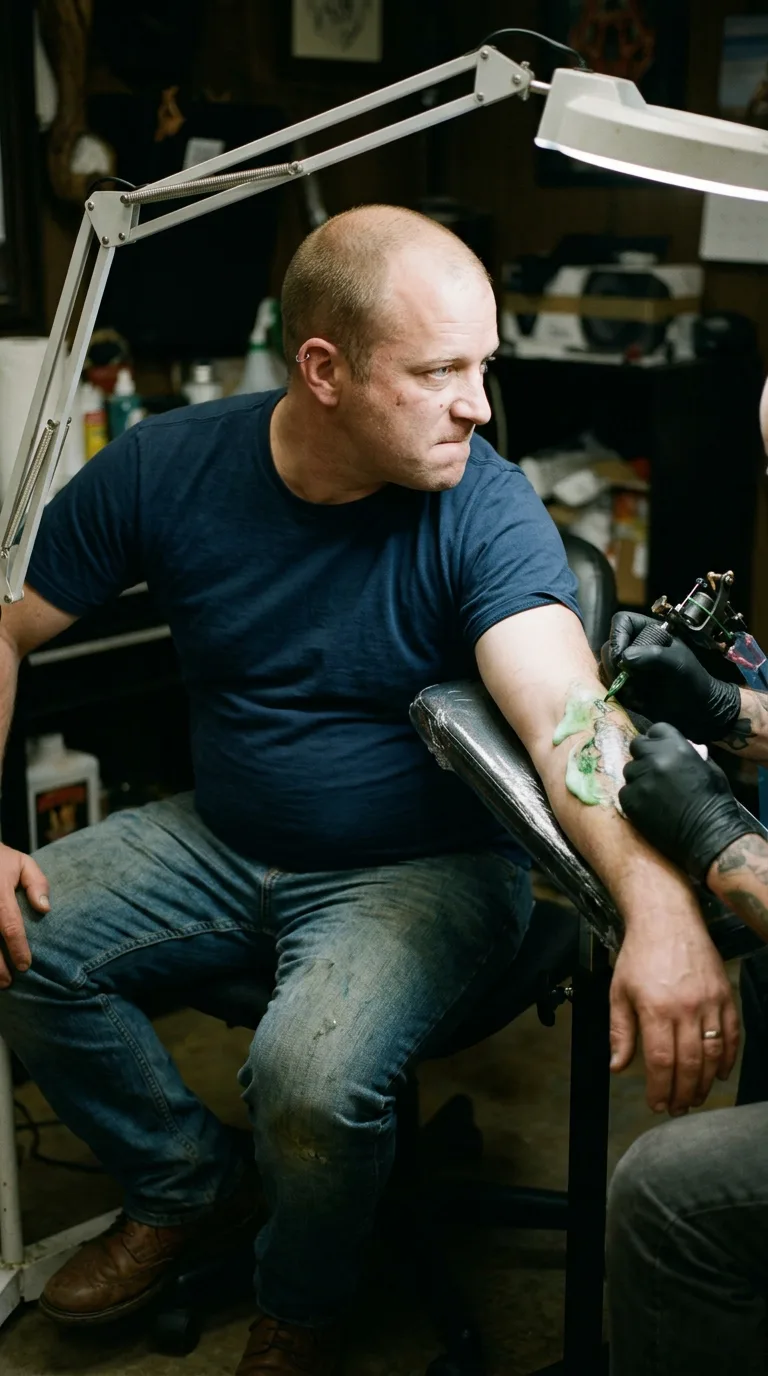
Rarest thing about him: Ear cartilage — epic, 1 in 69
Season 0seed 69398756 · engine v10
Character card
lineage 6PRR5R
His body-swap story
@marlon.etienne, wearing Riley Kastner, rolled the wheel on and woke up as Wade Kessler, spent under a minute in him, then spun the wheel and woke up as Manny Cisneros
You have been Riley Kastner for two minutes and you already hate his hands.
They are small and quick and freckled, a young man's hands, and right now they are shaking because two minutes ago they were still holding somebody else's skin under a needle, some kid's shoulder blade, half a phoenix wing left unfinished on the table behind you, and the buzz of your own machine is still going in the next room and you cannot make yourself walk back in there. Twenty-three years old. Small-town Ohio, gray before-dawn light through a shop window that says OPEN in red neon nobody has turned off from last night. The espresso machine behind the counter is gurgling through its cycle. You have never liked being him. He is skinny in a way that feels unfinished, and his brown eyes water too easily, and there is a customer's half-drawn stencil under your palm that you don't want to look at because you drew it an hour ago in a life that is not, technically, yours. You spun into him last, out of eleven other men, and you have not warmed to a single thing about him except that his hands know the machine. That's not enough. It's never enough. You want weight. You want a body that has lived long enough to have somewhere to put a memory. So you take out your phone, the one that came with him, thumb already damp, and you open the page with the wheel on it, and you spin, because boredom is its own kind of hunger and this one has never once been satisfied by staying.
The shop light drops out for two seconds — brownout, a breaker somewhere, nothing — and when it comes back you are not holding a stencil. You are sitting. Something is buzzing low and mean against your forearm and there is green soap pooled cold in the crook of your elbow and a stranger's gloved hand is pressing a needle into your skin, dragging color, and you do not flinch, though a half-second ago somebody did. You are wide now. Heavier. A gut that sits low and comfortable under a dark blue t-shirt, shoulders thick with the kind of muscle that comes from bending over a cutting table, not a gym. Your jaw has gone loose where it was clenched. You turn your head — slow, unhurried — and watch the needle work on your own arm like it belongs to the furniture in the room, like it's happening across a fence line and not to you.
The chair leather is cold through your jeans. That's the first thing that opens up — worn denim, paint-stained at the knee, and with it comes a flash: standing in a Wal-Mart parking lot in these same jeans holding two gallons of milk and a birthday cake box, his daughter's ninth birthday, Rosa in a paper crown she wouldn't take off for a week. Then the boots — brown, broken in exactly to the shape of his own feet, standing all day on a shop floor — and with the boots comes the whole shop: light coming low and gold through the front window of Kessler & Son (there is no son yet, there might never be, but his own father put the sign up wanting one, and Wade never had the heart to change it), a half-finished herringbone jacket slouched on the dummy by the door, chalk dust ground into the floorboards, a paper pattern weighted down with spent shears.
The wedding band. Cold, plain, on the hand not currently being tattooed, and it opens wide and slow like a held breath: Carla, nineteen years married, the two of you dancing badly in the kitchen to a country station because the babies were finally both asleep, her laugh with the crack in the middle of it. Behind that, further down, a woman named Dana who isn't Carla — an old ache with no threat left in it, a because-she-was-there-first feeling, the kind you keep folded at the bottom of a drawer you don't open. You touch none of that on purpose. It just comes, the way it's supposed to, uninvited, through the ring.
The cartilage piercing at the top of your ear catches the shop lamp's edge and gives you the morning he got it — forty next year, Carla dared him, he'd gone through with two beers in him and grinned the whole walk home like a teenager. The mole on your cheek you don't remember getting because you didn't; it was simply always there, something Carla used to trace with one finger when they were young and it still embarrassed him.
And the shirt — this one, the navy t-shirt he's wearing right now — gives you this morning specifically, hours ahead of where you're sitting: pulling it over his head in the dark bedroom in Rural Texas so as not to wake Carla, one arm getting stuck in the sleeve the way it always does because his shoulders got wider than the shirt ten years ago and he never buys new ones, working the second arm through by feel, the smell of fabric softener and, underneath it, him — sweat and Barbasol and the machine oil that never quite comes out of anything he owns. Two AM light through the window. He is up because the diabetes woke him thirsty and cotton-mouthed, again, and while he was up anyway he figured he'd finally get to Randy's shop before the day filled in around him, before the fitting at nine and the boy's christening jacket due Sunday. Getting a tattoo at two in the morning because it is the only hour that is his.
The arm under the needle is thick, freckled, going soft at the bicep the way a body does at thirty-nine when it spends its days sitting and cutting rather than lifting. It aches faintly, a low ambient hum from the needle and a duller one from feet that have stood twelve hours a day for twenty years. It is a good ache. It is his.
You look down at the hand not being worked on — the left one, the ring catching lamp light — and you turn it over slowly, like you're checking it's really attached.
"Huh," you say, to no one, to the tattoo artist, to the gray Texas dark outside the window. "Didn't feel a thing."