Harold Vetsch
Fictional. Generated by AI — not a real person, and no likeness of one is intended.
63, plumber in Seattle · rolled by @colton.weyburn · card — no film
History
who has worn him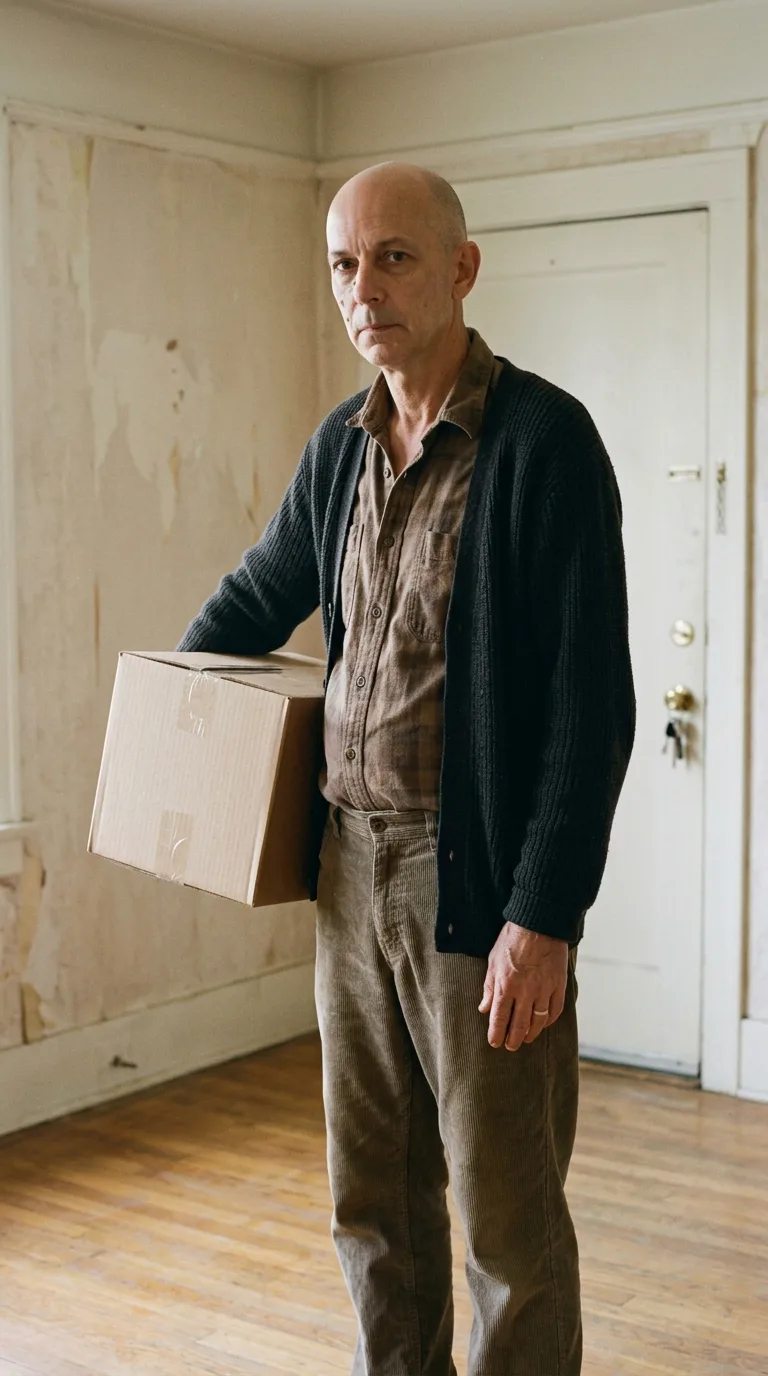
Rarest thing about him: Plumber — rare, 1 in 76
Season 0seed 636273068 · engine v10
Character card
lineage GSHCK1
His body-swap story
@colton.weyburn, wearing Marcus Delacroix-Reyes, rolled the wheel on and woke up as Harold Vetsch, spent under a minute in him, then spun the wheel and woke up as Robert Vance Finneran
The berth is too small for the decision you're making in it.
You're Marcus Delacroix-Reyes tonight, or you were, thirty seconds ago — folding down a bunk in a sleeping car somewhere past Galesburg, the diesel hum coming up through your knees, a passenger's shoes still by the curtain waiting for a polish you already did once today. Forty-three years old, mixed and handsome and strong in the shoulders in a way that took no work at all this time, brown eyes that look good in the little mirror by the door. Fifteen men behind you now. This one's been the easiest body to wear — quick hands, good back, a face that gets tips. You liked him. That's the problem. You've been him less than a minute and you're already doing math about whether liking him is a reason to stop.
It isn't. It's never been a reason to stop.
The phone is in your hand — his hand — before you've decided anything, the way it always goes, decision arriving after the fact to sign what the thumb already did. Vessel dot cards, the wheel already loaded from last time, muscle memory in a body that's only had the memory for a minute. You spin because a good hand on the wheel is exactly the hand you don't trust to stay still. Comfortable isn't the same as content. You liked being handsome. You wanted to see what else there was.
The wheel spins. Somewhere a bell you can't hear. It lands.
—
The box comes down onto bare floorboards with a sound like a held breath let out, and your arm — his arm, and it is his now, entirely, skinny with a soft middle roped through with old ropy strength — uncurls from around it. Cardboard corners dig one last mark into a hip that's carried boxes for forty years of somebody's houses, never his own until this one. Keys hang forgotten in the door behind you, throwing a thin blade of hallway light across a floor that hasn't seen furniture yet.
You are sixty-three years old and it lands in your knees first, a looseness at the joints you didn't have an hour ago in Chicago, and then in the skull, bald and cool under a hand that comes up on its own to touch it, the way a man checks a lightbulb that's just gone out.
You walk the edge of the room, and it's not your choice, not exactly — his body knows how to do this, has always done this, checking a new space for what's wrong with it before it checks for what's right, because his whole life has been finding what's wrong with rooms. Knuckles trail the wall. Plaster, old paint, a seam of wallpaper glue gone tacky under a thumbnail. Home before the lights are on. Nobody taught you that. It was already here, waiting in the hand.
Then the shirt.
It comes back through the collar first — a rough plaid, a button at the throat done up wrong once by fingers thick with the fumbling of a morning he doesn't remember deciding to have. Sleeve by sleeve it comes: a bathroom mirror steamed at the edges, a man not you and not anyone yet, buttoning slowly because his shoulder's been catching lately, some small tear in it from twenty-some years of reaching under sinks. The cardigan going on over it after, out of habit more than cold, an old man's habit though he'd have said forty was too young to call himself an old man. A tan line at the ring finger, pale as a scar that never broke skin, and with it — not a picture so much as a weight — Linda. Not gone, not cruel, just elsewhere now, twenty-six years folded down into a signature on a form and a Christmas card that still comes, addressed to both of you out of habit she hasn't broken either. Three kids between you, scattered, one who calls on Sundays, one who doesn't, one who's somewhere in the middle and always will be.
The floor under bare feet, cold boards, and with it a whole day: a stranger's bathroom this morning, tile grout gone black, kneeling with a pipe wrench that's rubbed a callus into the same three fingers for two decades, water shutting off with that particular shudder old houses do, a woman upstairs asking is that going to hold now and you — him — saying it'll hold, it'll hold, in a voice worn smooth with saying reassuring things to strangers about their pipes.
The mole on the cheek, when the hand finds it without meaning to, checking a face the way you check a stranger's face in a mirror: it comes with nothing, just a fact of him, dermatologist cleared it twice, he stopped thinking about it years ago. The knuckles crack on their own, a habit older than the divorce, older than the job, something his hands do instead of speaking when nobody's there to hear them not speak.
Under it all: skinny fat, soft where muscle used to be, a lower back that announces itself when you straighten too fast, a heart that takes a small pill every morning for a worry that never had a single good reason and never needed one. Sixty-three years standing in an empty room he signed a year's lease on alone, for the first time, ever, in his life — the last box in, keys still in the door, the whole rest of it still cardboard and blank wall and the smell of someone else's paint.
—
You lift the hand — his hand, thin-veined, ring finger pale where the metal used to sit — and turn it over slowly in the hallway light, palm up, like it might tell you something the wall didn't.
Then you look up, into the dark doorway where a lens would be if there were one, and you say, in his voice, rough with a day's silence:
"Guess I'm home."