Robert Vance Finneran
Fictional. Generated by AI — not a real person, and no likeness of one is intended.
54, cop in New York · rolled by @colton.weyburn · card — no film
History
who has worn him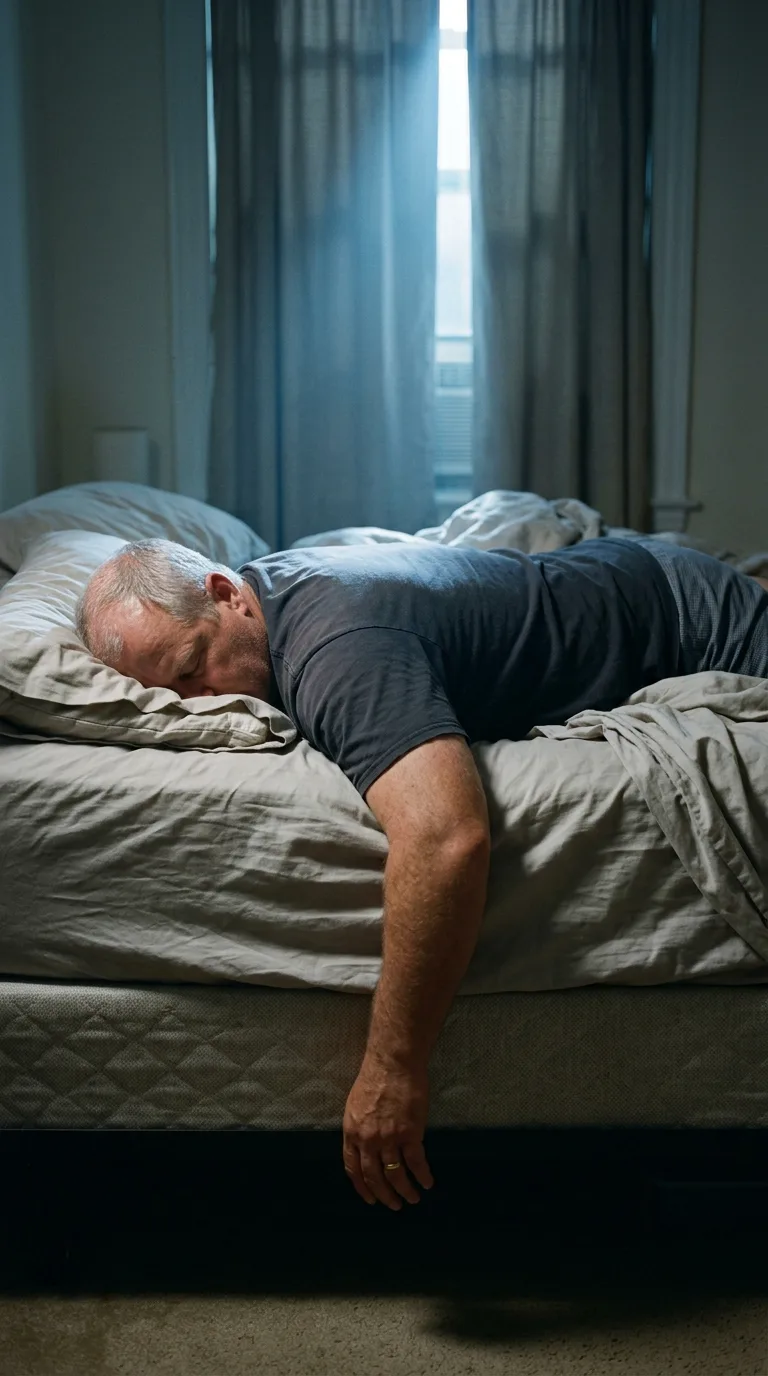
Rarest thing about him: A missing front tooth — epic, 1 in 124
Season 0seed 703502997 · engine v10
Character card
lineage GSHCK1
His body-swap story
@colton.weyburn, wearing Harold Vetsch, rolled the wheel on and woke up as Robert Vance Finneran
Harold Vetsch's van smells like sweat-cut and pipe dope, and you have been him for less than a minute and already you hate the smell. It's early evening in Seattle, the job stretched a half hour past when it should have ended, and your knees — his knees — ache in that particular old-man way that says this body has thirty more years of kneeling under sinks left in it if you're unlucky. You didn't take Harold Vetsch for his knees. You don't remember why you took him at all, standing here in some stranger's unfinished basement holding a pipe wrench that isn't yours, and that not-remembering is the whole reason your thumb is already walking to the phone in your borrowed pocket, already finding the site, the wheel loading slow on bad reception. You don't decide so much as notice you've decided. The wheel is spinning before you've admitted you wanted it to.
Three thousand miles east, past a curtain gapped just enough to let one blade of sodium light lie across an unmade bed, a heavy man face-down in his own sheets takes one ragged breath in, and lets a different one out even.
The arm that was hanging off the mattress draws itself up like it's been called. The whole heavy weight of him rolls, unhurried, onto its back — a wide chest under a gray t-shirt, hands finding each other and folding there, fingers laced over the sternum, a posture this body has never once arranged itself into in sleep, not in fifty-four years. Somewhere outside, a bus exhales at a stop. Somewhere inside, you are lying still, getting used to a new geography — the give of the mattress under more weight than Harold Vetsch ever put on anything, the pillow smelling like someone else's aftershave and someone else's hair.
The wedding band is the first thing. It's just skin against skin, the metal warm from his own hand, but it comes with an afternoon attached — a courthouse, not a church, his new wife laughing because the JP mispronounced Finneran, twenty-six years old and sure for once in his life that he'd done something right. Robert. That's the name that surfaces with it, unbidden, the way his own name always seems to arrive sideways, through the ring and not through any voice.
The sheets under your — his — back give you the rest in pieces, the way a radio finds a station. Not sequential. Not asked for.
A locker room that smelled like Right Guard and gun oil, twenty-nine years old, the sergeant's hand on his shoulder telling him good work on the domestic call, the one where he talked the guy down instead of drawing, and how that had felt better than every commendation after it, because nobody got hurt and nobody had to know how close it came. A front tooth, gone in a bar in Sunset Park in his twenties — not on the job, nothing that dramatic, just a pool cue and a bad angle and a friend laughing so hard he had to sit down, and Robert laughing too, blood in his mouth, because that was the kind of night it had been. He never got the tooth fixed. His wife likes it, or says she does; says it's the first thing that made her look twice at him across a deli counter in 1997.
The two kids arrive through nothing he's touching now — just close enough to the surface that they come anyway. A daughter's graduation, him standing at the back of the folding chairs so nobody would see him get wet-eyed. A son who calls him Sundays, mostly, sometimes Tuesdays if there's a game on.
The shirt sleeve, the one still tangled around the arm that fell asleep hanging off the bed — that gives you this morning. Not this morning; yesterday morning, the last morning he dressed with any attention: the uniform shirt, buttons small under thick fingers that have done this ten thousand times, the belt heavy going on, the vest that never stops being a small annoyance no matter how many years, the way he checks the mirror and touches the gap where the tooth isn't, an old habit, tongue finding the space before his hand does. He'd leaned on the hood of the cruiser at the end of that shift and watched the light go orange over the lot and thought, not for the first time, that he was getting too old and too heavy for this, and thought, right behind it, that he had eleven years to retirement and he'd take every one of them standing up.
Big, this body. Heavier than Harold's, differently heavy — solid through the shoulders, gut carried like ballast rather than apology. The knees complain here too, though less than Harold's did; what aches instead is low in the back, a cop's ache, built from years of a belt's weight and a car seat's angle. His hands, when you're not asking anything of them, want to drum — four fingers, a little rattle against whatever's near, a tic his wife used to tease him for at the dinner table. Ex-smoker's chest, a little tight on the deep breaths, ten years quit and still, some nights, wanting one.
Streetlight comes through the gap in the curtain and lies across the ceiling instead of the bed now, because you're on your back looking up at it, and there's a smell of somebody else's shampoo on the pillow next to yours, and downstairs, faint, a Tuesday-night television laugh track, his wife still up.
You bring the folded hands up off your chest and look at them in the bad light — thick fingers, wedding band, a white scar across one knuckle that isn't from anything you did.
"There you are," you say, out loud, to no one, in a voice with gravel in it you didn't have an hour ago.
Somewhere under the words is the wheel again, already spinning in the back of your mind the way it always does now, not tonight, not asking to be spun tonight — just there, patient, certain you'll come back to it, the only question being when.