Harold Steckel
Fictional. Generated by AI — not a real person, and no likeness of one is intended.
53, chauffeur in Small-town Ohio · rolled by @connor.waskiewicz · card — no film
History
who has worn him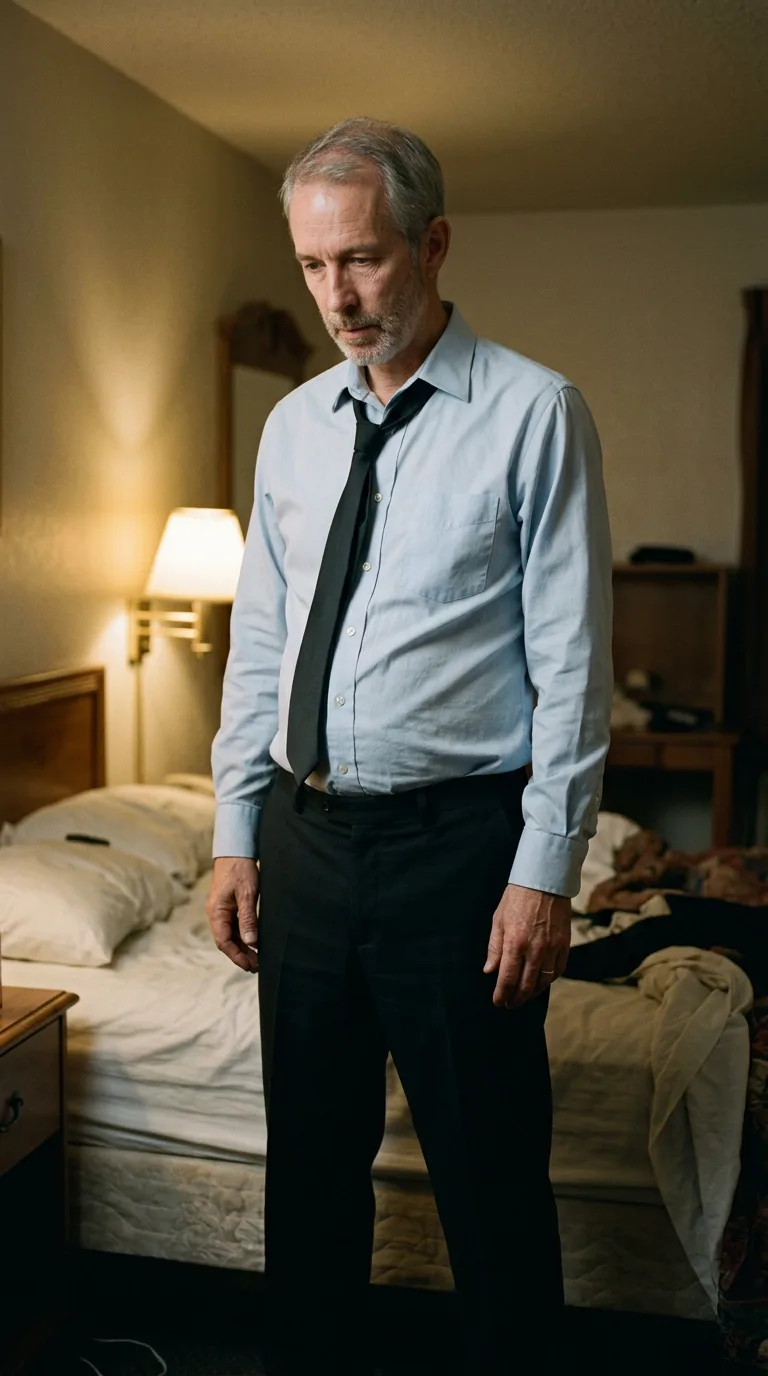
Rarest thing about him: Chauffeur — uncommon, 1 in 1,344
Season 1seed 313317348 · engine v11
Character card
lineage 2NZHHJ
His body-swap story
@connor.waskiewicz, wearing Rajesh "Raju" Paliwal, rolled the wheel on and woke up as Harold Steckel, spent under a minute in him, then spun the wheel and woke up as Peter Vantassel
Rajesh Paliwal's hands smell like flux and hot copper, and they will not stop shaking.
You have been him less than a minute, standing in his one-room apartment above the electrical shop, breaker panel schematics taped to the wall like a shrine, and already you know the shape of the problem: he bit his tongue climbing the ladder today, some customer screamed at him over a bill, and there is a woman two floors down who used to love him and does not anymore, and none of it, none of it, is anything you haven't felt before in one of the other nine hundred and sixty men you've worn. It isn't boredom exactly. It's recognition. You know this apartment before you've finished looking at it, because you've stood in a hundred like it, and knowing what a life is going to say to you before it says it is its own kind of unbearable. You did not come here for Rajesh's problems. You came here to stop being able to guess them in advance.
The wheel is still open on the laptop, glow against the dark room, everyone in this building asleep, Friday bleeding toward Saturday. You didn't even sit down. You just put your thumb on it.
The spin doesn't feel like anything. It never does, from this side. There's the wheel, and then there's a shirt.
Your hand is flat on your own chest, and the ribs under it are not the ribs you had a half a second ago — narrower through the shoulders but soft everywhere else, a belly that has quit fighting gravity, and the shirt buttoned wrong, skipped a hole somewhere around the sternum. Lamp light, amber, cheap. A motel bedspread the color of weak tea, one pillow dented, a jacket thrown across the far corner of the bed like it lost an argument. A mirror throwing back a face with a beard trimmed close and gray, a hairline retreating off a scalp that shows pink at the crown under the lamp. Older than Rajesh by a generation. A tie hangs loose around the collar, unknotted, dead weight.
The buttons go first. Your fingers — his fingers now, blunt, nail beds bitten down past where they should be — find the wrong hole without being told and correct it, working up from the sternum, and each button gives a small flash as it seats: a hotel like this one outside Zanesville, a hotel like this one outside Findlay, a hundred rooms that all had this lamp in them. Not memory yet. Just the shirt talking.
Then the tie, and the tie has more to say than the shirt did.
Your hands — his hands, and you can feel now how well they know this, how the motion doesn't ask the mind's permission — knot it in four passes, a full Windsor, the kind of knot a man learns once from his father-in-law at a wedding and never unlearns. Ohio comes up through the fabric like heat off a road. A driveway with a black car nosed into it, engine still warm. The dispatcher's voice on a radio clipped to a visor. Standing at an airport curb at five in the morning holding a little printed sign with somebody else's name on it, wind coming sideways off the tarmac, and the particular ache of standing still for forty minutes in dress shoes that were never built for standing. This body knows waiting. This body has made a whole life out of waiting well, out of being invisible in a good suit, out of holding a door and saying sir and ma'am and meaning neither one personally.
There's a wife in the memory before you can stop it — Carol, the name arrives with the smell of her shampoo, some drugstore vanilla thing she's used for twenty years — and a kitchen with a calendar on the fridge that has church potluck written on a Wednesday in her handwriting, and grace said over a small table for two because there was never a third chair needed and they stopped grieving that particular fact a long time ago, quietly, the way you grieve something you've agreed between you not to talk about anymore. He believes in something. It sits in him plain and unfussed, no drama to it — a man who reads his verse in the mornings and does not need anyone to see him do it. Never smoked, wouldn't touch a drink at a wedding even when everyone else did, and the offering of a glass never once felt like temptation because it was never a fight to begin with.
The bed behind you gives up its own hour: three in the morning here, though the lamp makes it feel later, because the airport wants him at the curb before dawn and the pickup is a redeye and there was no sense sleeping through the little window he had. Half-dressed, running on the four hours a chauffeur's schedule allows a man his age, hands moving through a motion they've made ten thousand times — shirt, tie, jacket, cap — while the mind is somewhere else, on the road, on gas prices, on whether Carol remembered to take her pill this morning three hundred miles away in a bed he isn't in.
The wedding band is cool and plain and it has been on that finger so long the finger has a groove for it, and touching it gives you one clean bright thing: a courthouse, 1996, her laugh at something the clerk said, cheap flowers because that was what there was money for.
You feel the whole architecture of him now — the tiredness that lives in a fifty-three-year-old back that has sat in a driver's seat for two decades, the soft weight around his middle that no amount of standing at curbs ever burned off, the itch at his cuticles where his teeth have already been today, an old habit that shame never quite talked him out of. Nothing showy about him. Nothing anyone would point at on the street. That, somehow, comes through clearest of all: a man built entirely out of not being noticed, and being at peace with that, most days.
You look down at your hands. They are pale, spotted faintly at the knuckle, nails bitten to the quick, and one of them wears a ring that isn't yours and never will be, not really, no matter how long you keep it on.
You lift your eyes to the mirror, to the face that came with the ring, and you say, quietly, to no one in the room:
"Well. Better tie a real knot then."