Rajesh "Raju" Paliwal
Fictional. Generated by AI — not a real person, and no likeness of one is intended.
36, electrician in Mexico City · rolled by @connor.waskiewicz · card — no film
History
who has worn him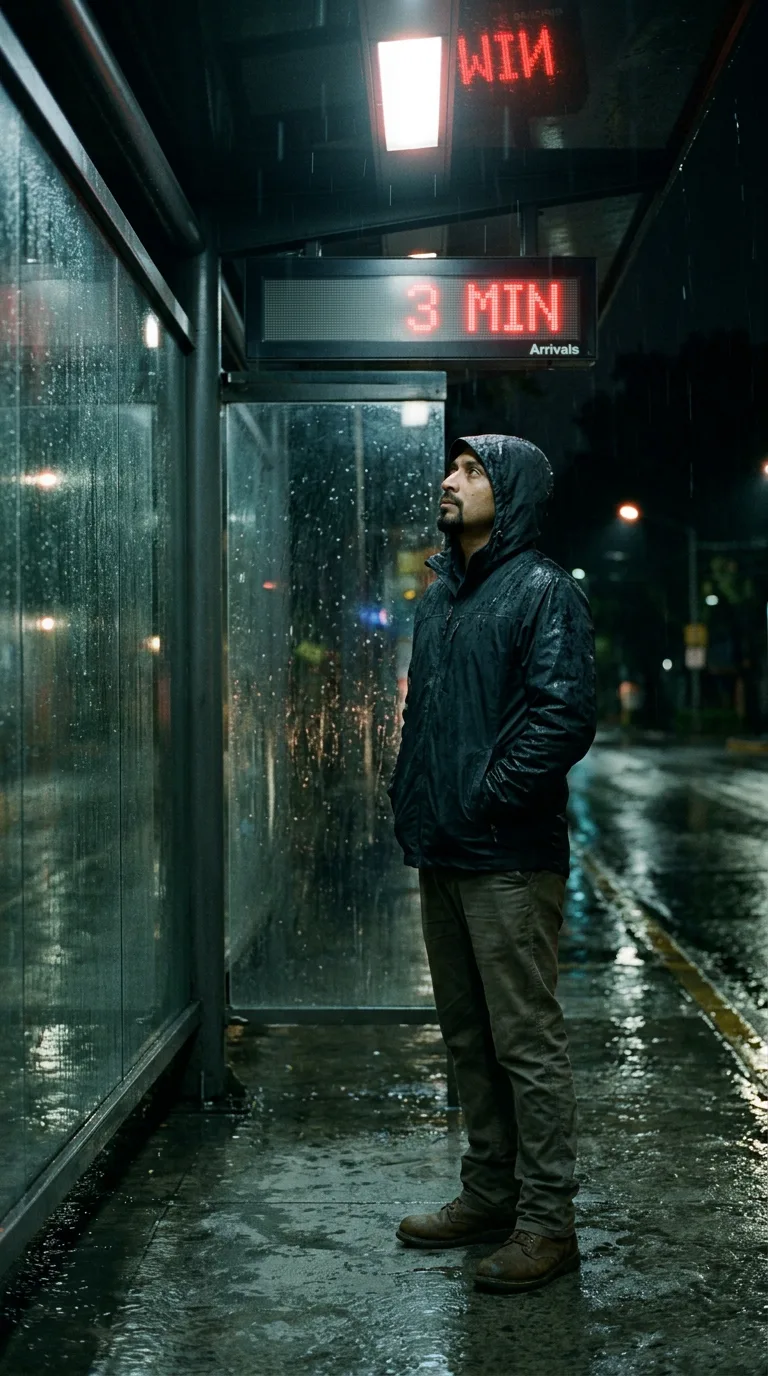
Rarest thing about him: Mexico City — uncommon, 1 in 360
Season 1seed 108158690 · engine v11
Character card
lineage 2NZHHJ
His body-swap story
@connor.waskiewicz, wearing Wyatt Youngblood, rolled the wheel on and woke up as Rajesh "Raju" Paliwal, spent under a minute in him, then spun the wheel and woke up as Harold Steckel
The barn smells like it always smells, and that is the whole problem. Wyatt Youngblood's hands know the parlor before his mind wakes up in it — muscle-deep, the cold rail, the hiss of the vacuum lines — and you have been standing in this smell going on a minute, deciding, while somewhere behind you cows shift in the dark and nobody is awake to know you're deciding anything. Twenty-five years old, six-foot-two, a beard he grew because his father wore one, a birthmark under the beard that his girlfriend used to trace with a fingertip before she stopped doing that. You liked him. You always like them for a while. But the thing about a dairy farm is that four in the morning comes back around every single day forever, and you have done four in the morning nine hundred and fifty-nine times in nine hundred and fifty-nine other skins, and tonight, alone with the cows and the cold and the particular ache in this shoulder that is his and not yours no matter how long you keep it, you want to not be tired in a way you recognize. You want the rain. You saw a man in the rain, on the card before this one loaded, a small man with a mole high on his cheek turning his face up into it like it was baptizing him, and something in you that is not hunger exactly, and not boredom exactly, decided it before you finished deciding it. You take out the phone with his hand. You open the page with his thumbprint. You spin.
The water is already on your face when you arrive, which is the first thing — mid-tilt, chin up, mouth a little open, rain going into it. Then the weight: shorter, denser, a body built low and used hard, wrists a half-size smaller than the ones you just had, a tool belt riding your hip with real weight in it. Boots full of runoff. A hood pushed back off wet hair. Whoever this is, he stepped out from under shelter on purpose, into weather he had been standing out of the way of a second before, and something in the chest you're now wearing is doing a thing you don't have a word for yet — not fear, not joy, something adjacent to both, an animal gladness at being rained on.
It comes in through the shirt first. Navy twill, damp through to the skin, and it gives you a morning — not this morning, an ordinary one, weeks back — his own hands buttoning it in a room with a ceiling fan turning slow overhead and a woman's voice from the next room asking if he wants eggs. Priya. The name arrives with the smell of the shirt, cheap detergent and the ghost of solder smoke that never quite washes out. He buttoned it bottom to top, always had, some habit from an uncle who taught him the trade, and the flash carries the whole gesture, unhurried, a small mole on his own cheek in a mirror he didn't really look at because he already knew what was there.
The belt gives you more — the pouch worn soft at one corner from fifteen years of the same pliers going in and out, the leather dark with hand-oil where his palm rides it a hundred times a day. Under a ceiling with the drywall not up yet, conduit run overhead like ribs, he is good at this, better than good, the kind of good where his hands finish a splice before his mind has caught up to deciding how. There is pride in that, plain and unphotographed, nobody's business but his — a boy from Sultanpur who came north to the capital at nineteen with nothing and can now read a building's whole nervous system by looking up at its bones. There is a man he apprenticed under who is dead now, and grief comes through the belt too, small and old and settled, like a stone worn smooth.
The hoop in the ear is next, cold with rain, and it brings a woman who is not Priya — Meena, years back, who put it there herself with a needle and a lighter and a nerve she didn't tell him she had, in a rented room above a tortillería on a street that smelled like this rain smells now, hot metal and corn and diesel. That ended badly and slowly, the way the ones do that you still think about. He does not think about her often anymore. He is thinking about her now, standing in the water, because rain on skin apparently unlocks that door before it unlocks any other.
And there is a boy — six, maybe seven, the memory arrives sized like that — asleep at this hour on the other side of the city in a bed that isn't this one, a boy who calls him Papi in a voice that breaks something open every single time, and who does not know his father is standing at a bus stop in the rain instead of driving him to school in six hours because tonight was a night shift, a rewiring job in a restaurant kitchen that had to happen after close, cable runs and panel work under bad light with a crew of two, finished now, bus running late, hands finally still.
The cheeks are shaved close, the goatee trimmed two nights ago in a bathroom mirror with Priya leaning in the doorway complaining he takes too long, and that flash is warm and easy and recent, the kind that doesn't hurt yet because it hasn't had time to become a thing he's lost. He is thirty-six. His back is fine. His knees are not — sixteen years of ladders have opinions about his knees that the rain is currently making worse, and you feel that honestly, the specific ache of a joint that's earned its complaints, and under it a body that is, on balance, strong in the ordinary unremarkable way of a man who works with his hands for a living and has never had reason to think about it.
You are still standing in the water. Nobody has come to get him. The bus board somewhere behind changes its number and neither of you looks at it.
You bring your hand up out of the rain and look at it — brown, blunt-fingered, a old white nick across one knuckle from a wire stripped wrong a decade ago, water running off it in a way that has nothing to do with you and everything to do with a storm that started before you got here.
"Ya no llueve tanto," you say, to nobody, testing the mouth, the accent already sitting strange and correct at once — it's not raining that hard — and somewhere behind the words is the small dumb wonder of not being tired, not being cold, not being anyone you have been in nine hundred and fifty-nine tries, and no idea at all how long that gets to last.