Graeme Hartsock
Fictional. Generated by AI — not a real person, and no likeness of one is intended.
60, butcher in Brisbane · rolled by @colin.hasbrook · card — no film
History
who has worn him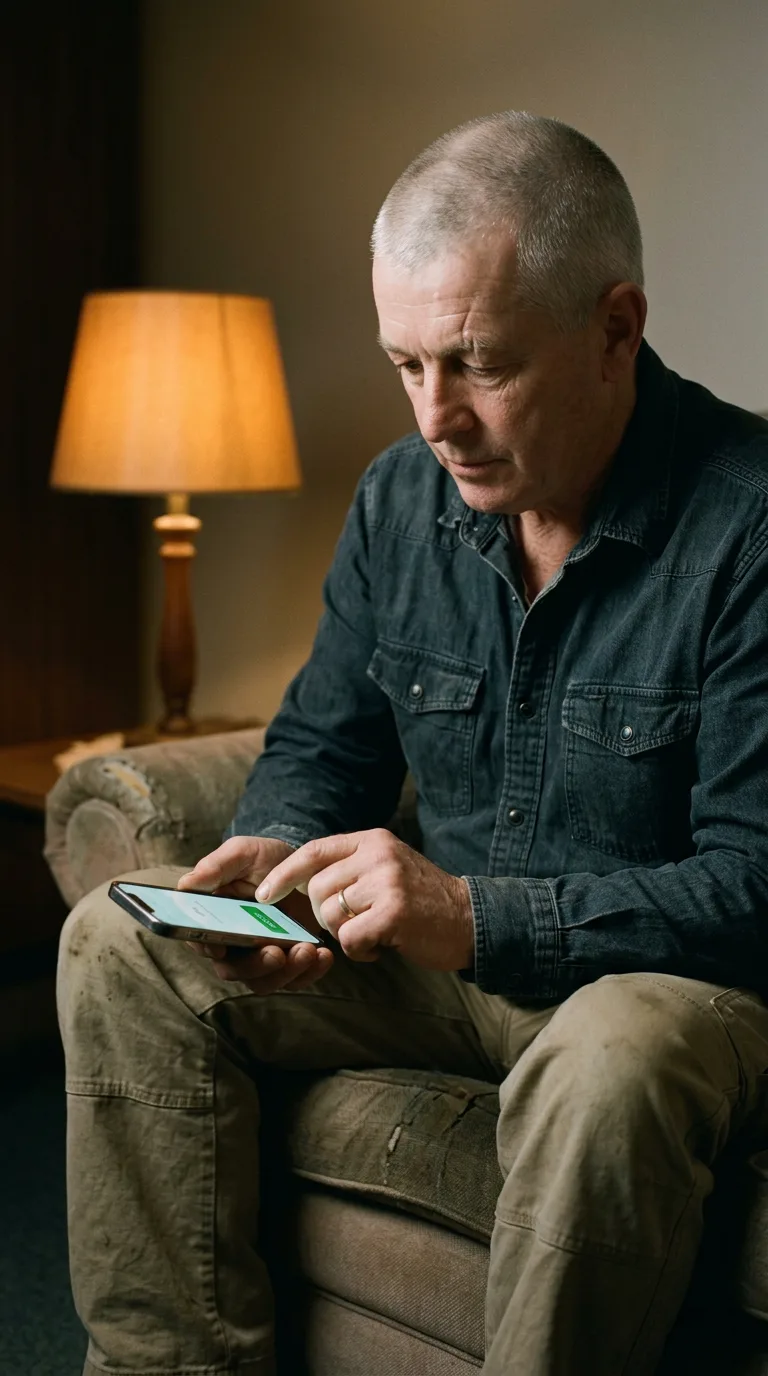
Rarest thing about him: Brisbane — legendary, 1 in 3,165
Season 0seed 1463539941 · engine v10
Character card
lineage 2NZHHJ
His body-swap story
@colin.hasbrook, wearing Tyler Vosnak, rolled the wheel on and woke up as Graeme Hartsock, spent under a minute in him, then spun the wheel and woke up as Kevin Lee
You are still sitting in the barista's skinny-fat frame in a San Francisco apartment that isn't his, mid-afternoon light coming flat through the blinds, and the ache is already there: the itch of a body that fits nobody, least of all you. Tyler Vosnak's hands are soft, unbroken, twenty-two years of never lifting anything heavier than a portafilter, and one minute ago you weren't even this — one minute ago you were a soldier in Los Angeles, dark-haired, twenty-two, and you were only him for four minutes before you paid to stop. You keep doing this to yourself, spin after spin, chasing the drop instead of the ground, and the guilt of putting a man down before his coffee's gone cold doesn't slow your thumb at all. You open the site on Tyler's phone with Tyler's thumb. The wheel spins. You are two hundred and two.
The white comes first, brighter and longer than any phone should throw, and then it is not a phone in your hand at all — it is a couch cushion under one hip and a body twice the weight of the one you just left, heavier in the chest, thicker through the wrist, a wedding band pressing cold against a finger that has worn it for decades. Thumb still hangs in the air over a screen gone dark. The room smells of old carpet and last night's rain through a window somewhere behind you. Outside, the sky has that yellow-green underlight of a storm not yet arrived, and it is too early for a man to be sitting up already dressed.
The shirt is the first thing that talks. Denim, worn soft at the elbows, and it comes back sleeve by sleeve — Graeme standing in the dark laundry alcove hours ago, or was it yesterday, pulling it off the hook because it was the one that didn't need ironing, working the top button one-handed because the other hand was holding a torch, because the power flickered before dawn the way it does before a big one rolls in off the bay. He'd laughed once, short, to no one — Marika used to hate that he could dress in the dark without waking her, and now there's no one to wake. She's four years gone and the space in the bed still surprises him some mornings, an ambush.
The trousers carry the shop. Not this room — a cold room, steel tables, the particular ache that lives across his lower back after thirty-eight years of it, the stains that don't wholly wash out no matter what he uses. His hands know a boning knife the way another man's hands know a steering wheel: not thought, just true. He has cut for weddings and cut for funerals and cut through a Tuesday so ordinary it barely left a mark, six days a week, a shop with his name over the door that his father built and that none of his three kids want, and that ache is its own kind of grief, low and unglamorous, nothing like the other one.
The couch under him is the good chair, the one that used to be the good chair when there were two people to argue about which one sat in it. He got the phone from his daughter — she'd sent it in a message with three exclamation marks, dad you have to try this, it's hilarious, and he'd sat with it three nights running not understanding what it wanted from him before he finally pressed the button just to make it stop asking. Somewhere in that scrap of memory is a flicker of the woman before Marika — younger, laughing on a verandah he can almost place, the one who left before he knew enough to keep her, thirty-some years buried and still able to surface without warning, the way old scars do when the weather turns.
The eyebrow scar prickles faintly, an old story — a hook slipping, nineteen years old, blood in his eye and his father not even looking up from the block. Nothing since has cut him that deep. He has grown old carefully, one register of pain at a time — the blood pressure medication on the counter by the kettle, the knees that complain on the cold-room floor, the tiredness that comes on now not from work but from simply being sixty and alone in a house on stumps with a mango tree dropping fruit nobody eats.
You feel all of it land at once, in his chest and not yours, heavy the way real days are heavy.
You look down. The hand with the ring on it is already turning over in the grey pre-storm light, broad, scarred at two knuckles, a stranger's hand doing exactly what you tell it.
"Right," you say, out loud, to the empty room, in his voice, low and Queensland-flat. "Let's see how long you last, old man."
Somewhere behind your eyes the wheel is still spinning, and you don't know when you'll stop it again.