Kevin Lee
Fictional. Generated by AI — not a real person, and no likeness of one is intended.
19, paramedic in Small-town Ohio · rolled by @colin.hasbrook · card — no film
History
who has worn him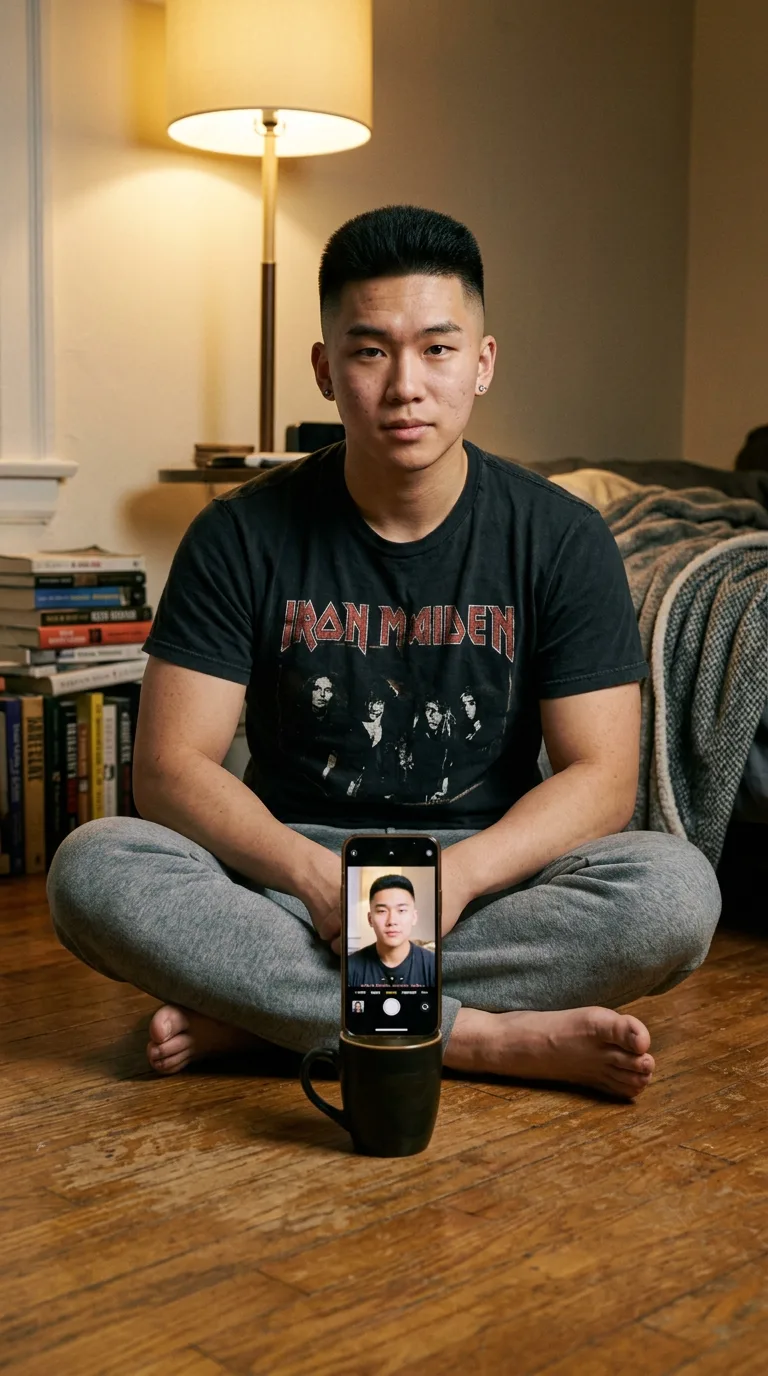
Rarest thing about him: Chronic back or joint pain — rare, 1 in 29
Season 0seed 31059125 · engine v10
Character card
lineage 2NZHHJ
His body-swap story
@colin.hasbrook, wearing Graeme Hartsock, rolled the wheel on and woke up as Kevin Lee, spent 3 minutes in him, then spun the wheel and woke up as Brendan Hoyer
The knife is heavier than it should be, or maybe Graeme's shoulder is just tired at this hour, tired the way a sixty-year-old shoulder gets tired even before the shop opens, even before the radio's on. You stand in the cool room with the carcasses hanging and you are not thinking about pork loin. You are thinking about a minute ago — an apartment in San Francisco, bare feet on a floorboard, a mug, Iron Maiden across a chest that wasn't your chest, one minute of somebody else's whole life going through your hands like water and then gone, spent, traded back in at the wheel before you'd even learned his last name properly. Tyler. You were Tyler for a minute and it wasn't enough and it will never be enough, that's the shape of the hunger now, two hundred and two men deep and still reaching. Graeme's hazel eyes, Graeme's scar through the eyebrow from some argument forty years gone that you never bothered to feel all the way through. You set the knife down. You go to the little laptop by the till, the one he uses for orders, and you open vessel.cards with hands that have cut ten thousand cuts and know none of it the way you know the site's white wheel on black, spinning, spinning, and you think, not of Tyler exactly, but of the boy Tyler always talked about back home, the one who left Ohio talk out of his voice on purpose and never quite managed it — best friend, paramedic, good kid, the one who texts him filters to try because he worries about him being lonely out there. You didn't choose it. The wheel did. It always does.
The filter cuts out mid-laugh and the laugh keeps going for exactly no time at all, because you are already behind it, already inside the stillness the smoothing left in the muscles before anyone told them to stop performing young. Your hand — his hand — comes up on its own, an old habit not yours yet, and turns the jaw toward the lamp, one side, then the other, checking something in a mirror that isn't there. The mug is still warm against nothing, propped-phone glow lighting a face gone slack a half-second before it finds itself again.
And then it is not empty, it is full, all at once, the way a room fills with water: the shirt first, navy twill snug at the shoulders, and in it — his hands doing the buttons that morning, quick, the second button always fighting him because he's put weight there since the academy, top pocket pen going in by feel, radio mic clipped without looking because his fingers know the exact half-inch of collar it lives on. The belt cinched over a stomach he is a little ashamed of and works out for and eats badly around anyway, protein bars in the rig, coffee instead of lunch. The name tape — K. LEE — stitched by his mother two years back when the first one frayed, and the fondness in that, and the small flinch too, because she still asks when he's bringing a girl home and there's an answer he hasn't given her.
The girl. That comes up through the shirt too, a whole separate ache: Danielle, sophomore year of the EMT program, her laugh in the break room, the two years they had and the reason it ended that he still turns over sometimes like a stone looking for what's under it, never quite finding blame that sticks to either of them. The one who got away, everyone calls her that in his head now, a title more than a memory.
The boots against the floor — standing on a curb outside a call, this same posture, weight rolled onto the outsides because his lower back has ached since a bad lift eighteen months in, a patient who went down heavier than expected, and it never fully unclenched after. Chronic, the word the department doctor used, cheerful about it, here's some stretches. His hand goes to his own jaw without him asking it to — he does this, has always done this, some tic older than the job — and thumb finds the place along his cheek where the phone is angled and past it, muscle memory: the last cigarette on the step behind the station forty minutes before this, the whole pack a day tucked in with the guilt of knowing better than anyone in his line of work should. The mug against his palm, someone else's tea gone lukewarm, and under that a whole quiet apartment: books stacked because he reads instead of drinking, prayer he doesn't call prayer, something he does at 2 a.m. after bad calls that isn't church but isn't nothing either.
He is nineteen. The body is not old, nothing in it should hurt yet, and it hurts anyway in that one low place, faithfully, the way it will for sixty more years if you let it run that long. You do not know yet if you will.
You look at your hands — his hands, unmarked, no rings, calluses starting at the base of the fingers from strap and gurney and steering wheel — and you turn them over once in the lamp light, the phone still propped and dark-screened in front of you, watching nothing.
"Okay," you say, out loud, to the empty room, to no one, "that's new."