Grady Fennimore
Fictional. Generated by AI — not a real person, and no likeness of one is intended.
20, glazier in New York · rolled by @colin.hasbrook · card — no film
History
who has worn him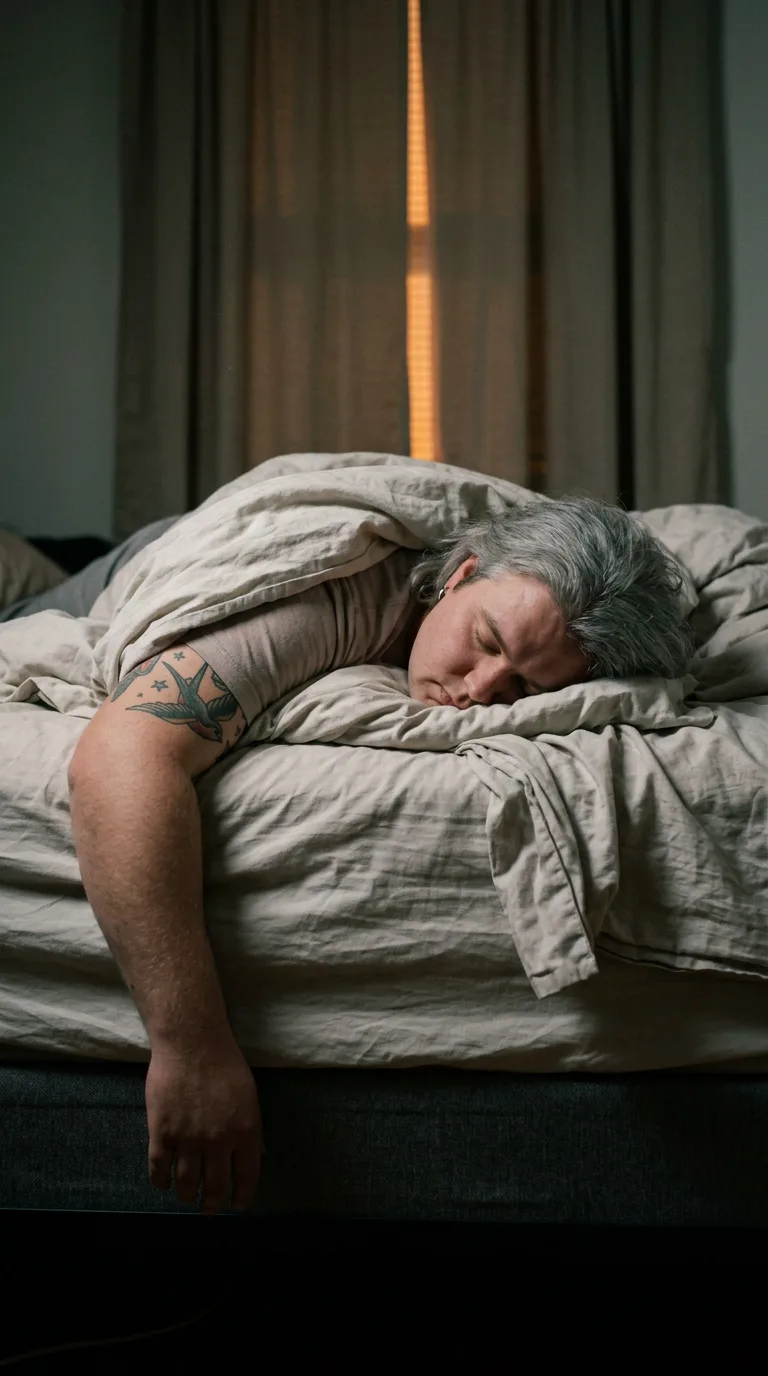
Rarest thing about him: Stutters under pressure — rare, 1 in 77
Season 0seed 287312585 · engine v10
Character card
lineage 2NZHHJ
His body-swap story
@colin.hasbrook, wearing Dale Whitepine, rolled the wheel on and woke up as Grady Fennimore, spent under a minute in him, then spun the wheel and woke up as Gary Hutchins
The shop is closed and Dale's hands — your hands, for now — smell of green soap and stencil ink, and the shop's back room has that low afternoon light that comes through a Small-town Ohio window like something apologizing for itself. You sit in the chair you tattoo other people in and you look at the ledger you keep by the register, the one with three appointments for tomorrow and none for the day after, and something in you that is not Dale's, has never been Dale's, goes quiet and restless at the same time. It is a Monday. The leg — his leg, the below-knee prosthetic, fifty-two years of a body you've had less than a minute in the world's accounting though he lived every day of it — aches where it always aches, a phantom throb in a foot that isn't there, and you think: not this. Not today. Not boredom exactly. More like the low hum under boredom, the thing that made you spin the first time and the hundred and seventy-ninth. You stand, you go to the laptop on the counter, you open vessel.cards without deciding to, the way you'd reach for a doorknob in your own house. The wheel spins. You do not even watch it land.
And then you are smaller and heavier at once, lying face-down, one arm off the edge of a mattress, and the room smells like fabric softener and old paint and a little like the outside — wet street, sodium light easing through a gap in the curtain like a blade laid flat. Ragged breath evens out in the space of a single inhale. The arm draws itself up. The body rolls onto its back, hands coming to rest folded on the chest, a posture this man has never once slept in, not once in twenty years, and nobody is awake to see it happen or wonder why.
The sheets are the first thing. Cheap cotton, worn soft, and through them comes a flash — him at nineteen, buying them at a Target on Flatbush with his mother's old credit card because his own hadn't come in the mail yet, embarrassed, hurrying. Then longer: this apartment, the brownstone above a hardware store, three flights up, cheap because the landlord doesn't fix the buzzer. Grady Fennimore has lived here fourteen months. Before that, his parents' place in Bay Ridge, and before that, nothing, because he is twenty and there hasn't been much before that yet.
The pillow under the back of the skull gives up the smell of it — this pillow, and underneath that, another pillow, years back, a girl's shoulder, a name arriving whole and aching: Renata. Nothing dramatic happened. That is the whole shape of the wound. She moved to Providence for a nursing program and he did not go, could not go, was already three months into the apprenticeship at the glass shop on Fifth Avenue and too proud or too scared to say the job mattered less than her, and so it just — ended, politely, over months, the way ice goes rather than the way glass goes. He thinks of her sometimes lifting a pane into a frame, the care of it, how she used to hold coffee mugs with both hands like she was afraid of dropping something that mattered. He has not called her in eleven months. He still has her number saved under a fake name so his thumb won't catch on it by accident.
The tattoo on the arm comes up warm where the arm lies against the sheet — the swallow, bold lines, faded red and blue, done at nineteen in a shop two blocks from here by a guy who talked the whole time about his ex-wife. It had hurt more than he expected and he'd almost asked the guy to stop and hadn't, because stopping felt like something he wasn't allowed. The little silver hoop in the left ear is cold where it always is, a decision made the same week, the same defiance, aimed at no one in particular since nobody at home was paying that much attention.
The hands remember the suction lifter before the mind does — the weight of glass through a rubber grip, the specific fear-sweat of a big storefront pane swinging half an inch more than you want it to, the way his voice goes to pieces when the boss is watching, stutters coming up out of nowhere the second pressure lands on him, though his hands never once shake on the job, never, not in two years, steady as anything even while his mouth falls apart. He is good at this. He is quietly, privately proud of being good at this, the one thing that has never once made him feel like the fat kid in the back pew who couldn't get through his own missionary farewell talk without his voice cracking on every third word.
There's the ward building on a Sunday, three years running now, the same folding chairs, the same bishopric, him alone in the pew because he has never once brought a girl to sacrament meeting since Renata and there hasn't really been anyone since. He does not drink, has never wanted to badly enough to try, never smoked, and the absence of those cravings sits in this body like clean air — nothing pulling at him except the asthma, a familiar tightness two ribs deep, the ghost of every cold Brooklyn morning waiting on the stoop with his inhaler in a jacket pocket before a run he was too heavy to enjoy but did anyway.
This morning — his morning, hours behind yours, though you have no way to feel the gap — he'd pulled this exact gray shirt over his head at some ungodly hour because the shop had an early call, a broken display window on Court Street, and his hands had known the motion without asking his mind, sleeve rolled twice at the left because the tattoo catches on the cuff otherwise, has always caught, since the day the ink went in. He came home near dawn and did not so much go to sleep as lose consciousness, face-down, one arm falling off the mattress into the cold part of the room, streetlight cutting a stripe through the curtain gap onto nothing in particular.
You open your eyes — his eyes, blue, the room dim and gold-edged — and you lift the hand off your own chest and hold it in front of your face, heavy-knuckled, faint white glass-dust ground into the creases that a shower never quite gets, and you turn it over slow, like it might not be load-bearing yet.
"Renata," you say, out loud, to the empty room, in his voice, and you don't know yet if that was you or him or the two of you agreeing on something for the first and possibly only time — and then you stop, and just breathe, waiting to find out how long you get to be the one doing it.