Gary Hutchins
Fictional. Generated by AI — not a real person, and no likeness of one is intended.
43, accountant in Small-town Ohio · rolled by @colin.hasbrook · card — no film
History
who has worn him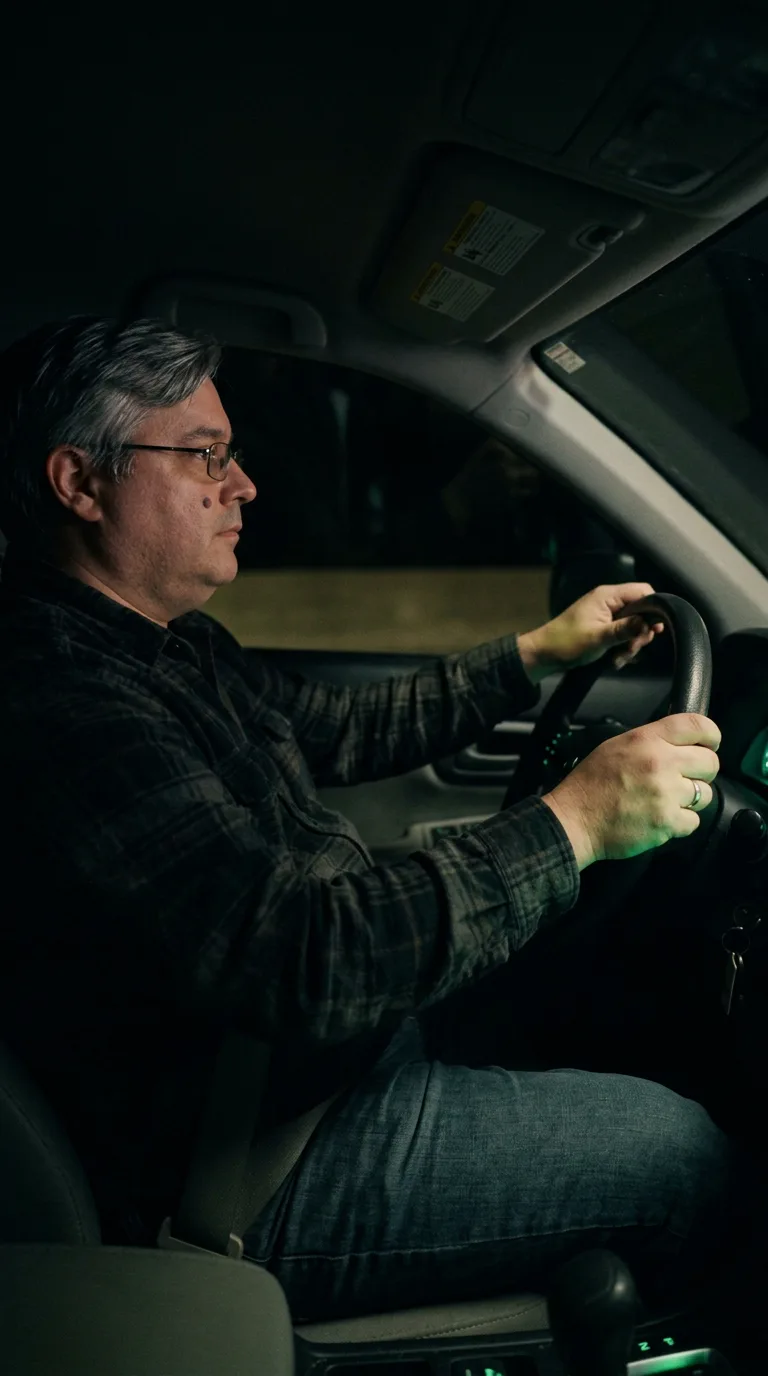
Rarest thing about him: Touches his face — uncommon, 1 in 20
Season 0seed 525629816 · engine v10
Character card
lineage 2NZHHJ
His body-swap story
@colin.hasbrook, wearing Grady Fennimore, rolled the wheel on and woke up as Gary Hutchins, spent under a minute in him, then spun the wheel and woke up as Colton Presnell
Grady Fennimore's hands are twenty years old and they still smell like glazing compound, and you have had them less than a minute when you already know you don't want them. It's the cleft chin in the bathroom mirror doing it — some kid's face, unlined, waiting for a life to happen to it, and you've been in enough faces now to know that a face with nothing on it yet is boring to wear. You want weight. You want a mortgage and a mole and a bad knee. You dry your — his — hands on a paper towel that tears wet, and you go back to the site on your phone with the New York afternoon coming sideways through a window that isn't yours to know the view from, and the wheel is already loading before you've decided anything, which is its own kind of answer.
You spin it. It gives you a man mid-turn.
The seatbelt cuts into a stomach it did not cut into a second ago. That is the first thing — the heaviness low in the gut, the shirt tight where it wasn't, glasses suddenly on a face that wasn't wearing any. Both hands come off the wheel of their own accord — his accord, not yours yet, muscle memory finishing a motion you didn't start — and resettle lower, wider, at eight and four, the way a man drives when he isn't thinking about driving. The dash light is green on thick knuckles. A turn signal is ticking, patient, insisting on a road that peels off toward nothing you recognize. Outside, dark fields. Three miles of dark fields between here and wherever this body was going.
The wedding band is the first thing that talks to you. Cold, then not-cold, worn into a plain groove of skin like it's never once come off, and it opens a door — not wide, just a crack — and there she is: a kitchen with a yellow light over the stove, a woman turning from the sink with flour on her wrist, saying *you're late again, Gary,* not angry, just tired in the specific way of twenty-two years of marriage, and something in your chest that isn't yours yet aches with an old, familiar fondness at it. Then it's gone and you're back in the car, foot easing off the gas because his body already knows this stretch of road better than his mind does.
The steering wheel gives you more. Ten and two, worn smooth in two spots where his palms have sat a thousand evenings running the same commute past the same closed diner with the same dead sign — RUDY'S, unlit since before he can place — under the town's one stoplight, which he has sat at red at for no reason anyone could ever explain, since there is never any cross traffic. The commute itself unspools: fluorescent light over two monitors, a spreadsheet that would not reconcile all afternoon, the particular ache behind the eyes that comes from that light at that age, the small triumph of finding the error at four-forty and going home twenty minutes lighter than he came in.
The flannel shirt against your back brings the morning. Pulling it off a hanger in a room with the blinds still down, buttoning it one-handed while thinking about a name he wasn't supposed to be thinking about — Denise, three months gone from the picture now but not gone from the mornings, not yet, a softness that had felt like being young that he had let himself have and then had to stop having, quietly, the way men in small towns end things, without a scene. Guilt sat under his sternum the whole time he buttoned that shirt. It's still there. It's yours now too, a little, secondhand, the way all of this is secondhand.
His body underneath all of it is heavy in a way that has its own competence — the gut that makes bending down for a dropped pen a small negotiation, the fingertips that go faintly numb some mornings and don't tell him why until the doctor did, the sugar thing he manages with a pillbox and doesn't talk about at the office. Forty-three years old and carrying it like a man who has stopped being surprised by his own maintenance. His hand — his hand now, on the wheel — already knows, without asking, the specific angle it likes to hold, and it rises, unbidden, the way it always does, to touch his own cheek, right at the mole, a habit so old it isn't even a thought.
The car finishes drifting a foot toward the centerline and comes straight in one pull, easy, like nothing happened, because nothing did, not to the car.
You look down. Your — his — hands are on the wheel, ten and two, wide knuckles, the band catching green dash light.
"Almost missed my turn," you say, to no one, in his voice, and you don't take the exit after all — you let the signal click off, and drive on toward the house with the yellow kitchen light, not because you've decided to stay, only because you haven't decided anything else yet.