Colton Presnell
Fictional. Generated by AI — not a real person, and no likeness of one is intended.
28, sanitation worker in Eastern Kentucky · rolled by @colin.hasbrook · card — no film
History
who has worn him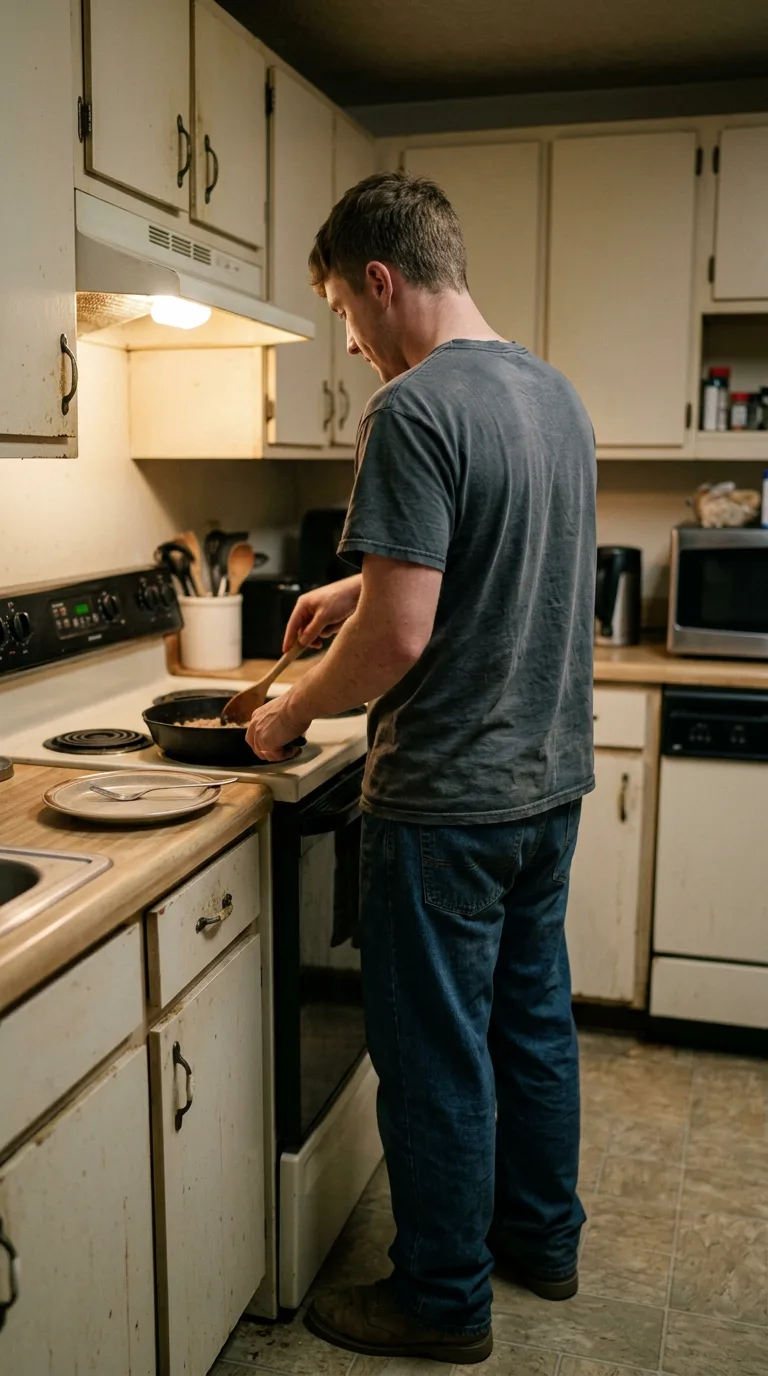
Rarest thing about him: Divorced — rare, 1 in 50
Season 0seed 859279282 · engine v10
Character card
lineage 2NZHHJ
His body-swap story
@colin.hasbrook, wearing Gary Hutchins, rolled the wheel on and woke up as Colton Presnell, spent 1 minute in him, then spun the wheel and woke up as Farhan Alavi
Gary Hutchins's hand aches around the mouse. Two-fifteen on a Monday, and the desk lamp is doing that thing where it flickers if you don't jiggle the cord, and you have decided, sitting in this heavy gray-haired body that isn't yours and never will be, that the ache is the reason. Forty-three years of somebody else's joints. A beauty mark you keep catching in the monitor's reflection like it's an accusation. Less than a minute in him and already you know you're not going to spend the afternoon in it. That's the tell, by now, spin one hundred and eighty-two deep — the wanting doesn't build, it just arrives, fully formed, indistinguishable from boredom, indistinguishable from hunger. You open the site. The wheel is already spinning before you've admitted to yourself that you clicked.
It lands on a kitchen in Eastern Kentucky, on a man with his back to the room.
The stirring stops mid-circle in your wrist. You feel it before you feel anything else — the small motor decision, spoon reversing direction, and your hand just does it, because his hand knows this pan better than you know anything. Steam off ground meat and onion. A radio somewhere low, or maybe it's just the hood fan. Your — his — shoulders are looser than Gary's ever were, younger, and there's a dull hot wire running from the small of the back down through the right hip that has nothing to do with the stove. You salt without tasting. You reach up into the cabinet and your fingers already know which one, third from the sink, and you take down a second plate and it goes down next to the first, ceramic click, before you've decided to do it. You didn't decide. He decided, or the habit did, whichever one of you is left to call it a decision.
The dimples happen even now, at nothing, at the low simmer of the pan — his face defaults to them, some setting under the skin that doesn't ask permission.
Then his life starts coming up through your hands like heat through a floor.
The spoon is wood, worn smooth on one edge where a thumb's rested a thousand times, and it gives you a woman's laugh in this kitchen, an argument in this kitchen, both of them years apart and both of them his. Amber. You get her name off the spoon before you get anything else, the way you sometimes get a man's whole marriage off a doorknob. She used to stand where you're standing and he'd come up behind her and put his chin on her head and she was two inches shorter and it used to make him feel like something was working right in the world. That kitchen and this kitchen are the same kitchen. She's not in it anymore. The second plate isn't for her, exactly — it's for the version of tonight where somebody is.
The shirt gives you more, sleeve by sleeve, because it's the same shirt from this morning, and putting it on comes back to you backward: him tugging the hem down over the waistband at oh-dark-thirty, the cotton already thin at the collar, the smell of it not quite clean because he'd worn it once already this week and told himself it didn't matter, nobody riding the back step of a garbage truck at six a.m. needs to smell like a church pew. The truck. Both hands closing on the cold rail, the diesel cough underneath him, Kentucky hills still black at that hour, green going gray going green as the sun found the ridge line. His knees taking the jump down at every stop, a thousand small shocks a shift, and that's where the ache in the hips lives now, that's the toll on it, and there's a particular contempt he holds for the doctor who told him ibuprofen and stretching like that was a plan and not a joke.
The jeans on his legs remember a church basement, a Wednesday group, him standing at the coffee urn with a nicotine pouch tucked behind his lip because he'd quit drinking two years back and needed his hands and mouth to be doing something during the silences. He believes there is Somebody keeping count, mostly gently. He believes it more on the days the back is bad.
His hand goes to his own knuckles without you, cracks them one after another down the row, an old unconscious tell, and in the cracking you get the wedding itself, quick and wide-angle like a photograph held too close — a fairground gazebo, folding chairs, Amber's cousin playing guitar off-key on purpose because it made everybody laugh — and then the pale stripe of skin on his ring finger gives you the other end of it, the morning he took the band off for good, standing at this exact sink, and didn't cry, just felt the metal go light in his palm like it weighed nothing now that it meant nothing, and put it in a drawer he has not opened since.
None of it — not one photograph, not one Sunday, not the smell of her shampoo still somehow ghosted into a towel he can't throw away — none of it is enough to stop your hand from setting out that second plate. That's the whole tragedy of him, and you didn't write it, you just walked into it wearing his shoulders: he cooks for one and sets for two, every night, on some clock that never got the news.
You look down. His hands, not Gary's — no beauty mark, no softness, knuckles a little swollen at the second joint, a spoon still in the right one, going still.
"Hell," you say, in his voice, low, almost a laugh, looking at the two plates like you've never seen either of them before. "Wrong number of us in here tonight."
You don't know how long you get to be the one deciding that.