Farhan Alavi
Fictional. Generated by AI — not a real person, and no likeness of one is intended.
52, photographer in Seattle · rolled by @colin.hasbrook · card — no film
History
who has worn him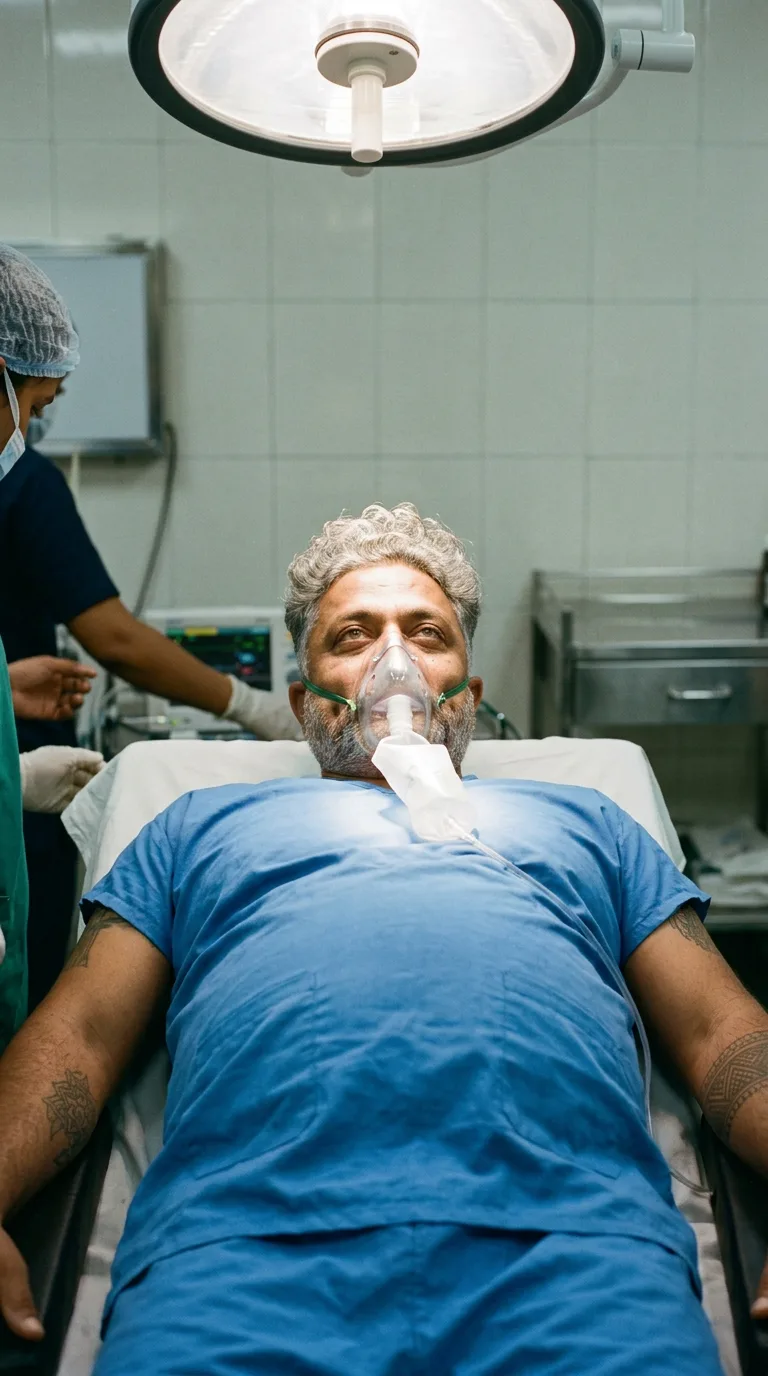
Rarest thing about him: Quitting right now — epic, 1 in 107
Season 0seed 265095627 · engine v10
Character card
lineage 2NZHHJ
His body-swap story
@colin.hasbrook, wearing Colton Presnell, rolled the wheel on and woke up as Farhan Alavi, spent under a minute in him, then spun the wheel and woke up as Cole Fontenot
Colton Presnell's hands smell like the truck's vinyl seat and the coffee he doesn't drink anymore, one minute into being sixty seconds old, sitting in a cab on a gravel pull-off with the AC rattling. You feel the ache already settling into his knees, feel how his shoulders sit low and tired even though nothing has happened to them yet, feel the itch of Kentucky humidity through a windshield. One minute is nothing. One minute is not even a lunch break. You spun for this, waited through however many men to land in a twenty-eight-year-old body that runs routes and empties cans and comes home to a trailer with the television on for company, and it lasted a minute before the boredom arrived faster than the body did, riding in right behind it, familiar as a second skin. You already know the taste of this life — you've had bodies with money, bodies with houses, bodies that mattered to somebody — and this one is a man standing in a ditch. You do not hate him. You simply cannot stand another hour of him. So you take the phone out of the cupholder, thumb it open with a hand not yet fully yours, and go back to the wheel, because the wheel does not care that you just arrived, only that you paid.
It spins.
You are small. That is the first thing — smaller than you've been in a long time, the world sitting higher over you, weight low and soft through the middle, and a plastic mask fogging warm against your mouth with every breath that isn't your own idea to take. A lamp bears down white from above. Someone's gloved hand is at a wrist that is now yours, taping a line. The monitor keeps its steady, unbothered rhythm, the sound of a man they believe is simply asleep. Under closed lids your eyes drag once, left to right, checking a room you cannot yet see. The hand on the table — thick fingers, a working man's hand, no rings — closes and opens, closes and opens, like it's making sure of itself.
It is making sure of itself. That part is you.
The mask is the first thing you're touching and it gives you nothing, rubber and condensation, someone else's out-breath fogging back onto your face. But the tape at the wrist, the gown against your back — thin cotton, hospital-issue, not his — that's not enough either, not till the memory finds a thread of his own things to run along, and it finds one in the gown's tie against his spine, brushing where a camera strap usually sits, and that's the door.
*The vest.* Olive canvas, four pockets, a strap-worn groove at the collarbone from fifteen years of carrying gear on the same shoulder. You feel — not see, feel — the whole weight of a Tuesday morning: standing in front of the mirror in the apartment on Yesler, buttoning it up over the black T-shirt, patting the left breast pocket for the spare battery out of habit before you've even packed the bag. Farhan hums when he dresses. Doesn't know he does it. His mother used to tell him to stop, there were customers in the shop, and he never did stop, forty years later still humming into a collar in a Seattle one-bedroom that smells like the coffee he'll drink black at the shoot and the vest's own mildew-and-lens-oil smell that never quite comes out in the wash.
The camera strap crossing his chest — leather, softened dark with sweat and years — gives you a whole client list without asking: a wedding in Bellingham where the groom cried before the bride even got out of the car, and Farhan got it, got the exact half-second, and the mother of the groom hugged him after like he'd done something holy. A restaurant menu shoot where the chef kept eating the food before he could photograph it, both of them laughing so hard the shot never happened till the second plate. None of these are yours. You feel them the way you'd feel someone else's sunburn — real, undeniable, not yours to have earned.
The dimples come through the mirror-memory too, the way they sit in his face even when he isn't smiling, deep enough that a woman at a bar once told him he looked like he was always about to say something kind. He liked that. He didn't marry her, didn't marry anyone, never quite found the version of settling that fit the hours he keeps — up before dawn for good light, home late from evening events, a CPAP machine humming on the nightstand every night like a second, quieter camera. He tried cigarettes for eleven years and quit them four days ago, and the ghost of that want is still in this borrowed chest, a small animal scratching at a door that's mostly shut.
His hands — you feel them clearly now, resting at his sides on the table, calluses along two fingers of the right from checking focus rings a thousand times a day, a burn scar he doesn't have because you're not allowed to give him one, just weather: the backs of his hands are dry from Seattle's cold damp, knuckles a little swollen the way hands get at fifty-two when they've spent a life gripping things precisely. Under the gown his stomach is soft, low, the dad bod of a man who eats standing up between shoots and sits too much editing after. His knees complain when he kneels for a low angle, always have, and he kneels anyway because the shot is the shot.
He came in this morning — no, midday, you understand now, gray Seattle midday light he'd have wanted for a shoot instead — for something routine, something about the apnea, a procedure to open his airway so the machine could stop working so hard against him. He was calm going under. Something in him trusts machines and light meters and the count of anaesthetic more than he trusts most people, and the number stopped at seven in his mouth and he did not finish it.
He never will. There is no thread leading forward from seven. You are what comes after it.
The hand on the table closes once more, slower, entirely on purpose now, fingers curling in on themselves and opening again like a shutter. You lift it — his hand, small-boned for a man, thick through the palm — and turn it over under the lamp, and it is not the reflex anymore, it is you, looking.
You bring your eyes up off the hand, past the mask fogging at your chin, to the ceiling light, to nothing in particular, and you say, muffled, plastic-wet, around the seven he never got to say —
"Eight."