Cole Fontenot
Fictional. Generated by AI — not a real person, and no likeness of one is intended.
24, nurse in New Orleans · rolled by @colin.hasbrook · card — no film
History
who has worn him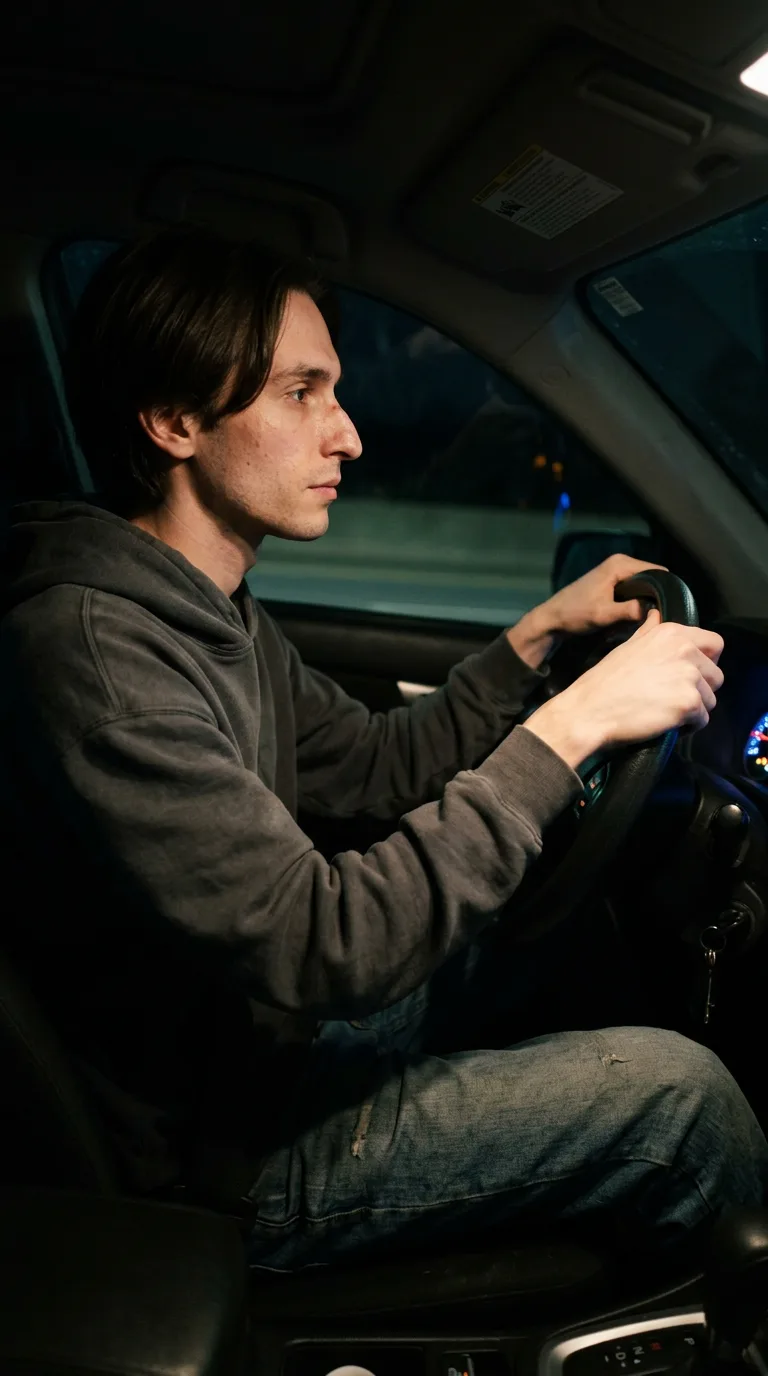
Rarest thing about him: Chronic back or joint pain — rare, 1 in 34
Season 0seed 1581192952 · engine v10
Character card
lineage 2NZHHJ
His body-swap story
@colin.hasbrook, wearing Farhan Alavi, rolled the wheel on and woke up as Cole Fontenot, spent 2 minutes in him, then spun the wheel and woke up as Marcus Theriault
The light in Farhan's kitchen is the flat gray of a Seattle noon, and your knees ache going down the two stairs to the sink the way they have for eleven years, because they are fifty-two and they have carried a camera bag on one shoulder for most of those years, always the same shoulder, and something in there has finally worn smooth. You set his mug down. You have been him less than a minute, decided, and already the wanting is back — not for anything about him, he is fine, dimpled, gentle-eyed, a decent little life of gallery openings and grandkids' birthday photos waiting for him somewhere in this good body's future — but for the specific chemical drop of the wheel deciding for you. You did not come back to escape Farhan. You came back because sitting still in a life that already fits is the one thing you have never learned how to do. You open the laptop already open on the counter, the page already bookmarked, the wheel already spinning before you have finished the thought, and Farhan's dimpled, easy face is the last thing that will ever decide anything again on its own terms.
Three miles from home, both hands come off a wheel that isn't the one you just let go of, and land lower, wider, on a shape you don't know yet — thinner rim, warmer, a crack in the leather under the right thumb. The dash glow is amber instead of blue. Your — his — shoulders are narrower than the ones you arrived in eleven spins ago, narrower than any you remember offhand, and there is a rawness low in the back, a familiar ache in a body that has not had time yet to be familiar to you. The turn signal ticks for an exit that is not his exit, on a road that smells, even through glass, like standing water and cut grass after rain. Steam is already fogging faintly at the bottom of the windshield though the wipers are off. It is afternoon here. It was noon there. Something in you notes the gap the way you'd note a stair you didn't expect, and then it's gone, because the hands on the wheel are pulling the car straight and level with no help from you at all — they already know this road.
The steering wheel gives you the first of it: gripping it too tight on the drive in, three eleven-hour shifts back to back, the particular fatigue that sits behind the eyes like sand. Then the scrub top against your back, damp at the collar with sweat gone cold in the AC, gives you this morning — his hands, not yours, pulling it over his head in a shotgun house one room wide, the ceiling fan turning too slow to do anything, sun already flat and white through the shade. He'd stood in his underwear a minute longer than he needed to, working a thumb into the muscle beside his spine, the old ache that never fully leaves, that he manages now the way you manage a leaky faucet — not fixed, just lived with. He vapes twice before he's even got the pants on, out on the narrow porch, watching a delivery truck idle two doors down, and the taste of it comes to you sweet and false at the back of the throat, a taste you never had in Farhan's mouth or your own.
The badge clipped to the pocket gives you his name — Cole — and with it a hallway of fluorescent light, a nurses' station, the particular sound of a call button three rooms down that never got answered fast enough one bad night in March, and the guilt of that sitting in him still, filed somewhere he doesn't look at often. He is good at the job in the way tired people are good at things: automatic, competent, a little numb to it. He likes the patients who make him laugh and dreads the ones who remind him of his mother, who is fine, who he calls on Sundays, brief calls, both of them relieved when they end.
The crooked nose isn't in reach of a mirror, but the memory of it comes anyway, riding along with the ache in his knuckles as they crack once, twice, against the wheel without him telling them to — a bar fight at twenty, nothing that mattered, a story he doesn't bother finishing when people ask. Nobody's ex. Nobody's anybody. He likes it that way, mostly, except at three in the morning on the drive home, which is where — when — you are.
The wet street outside throws sun back up through the windshield now, steam lifting off the asphalt in ropes, and his body sits in it — skinny, twenty-four, back complaining the way it always does after a double — with no idea yet that ten seconds ago it stopped being only his.
You look down. His hands are pale under the dash light gone daylight-dull, knuckles a little swollen from the habit of cracking them, a callus low on the right palm from gripping a wheel three miles like this one four days a week. You turn the left hand over slowly, the way you always do first, checking the fit of a life against the fit of a hand.
"Not mine," you say, to the empty car, in his voice, and it comes out rougher than Farhan's ever did, "but it'll do."
Somewhere behind you, a wheel keeps turning, and neither of you knows for how long.