Gerald Vantassel
Fictional. Generated by AI — not a real person, and no likeness of one is intended.
61, retired in Miami · rolled by @colin.hasbrook · card — no film
History
who has worn him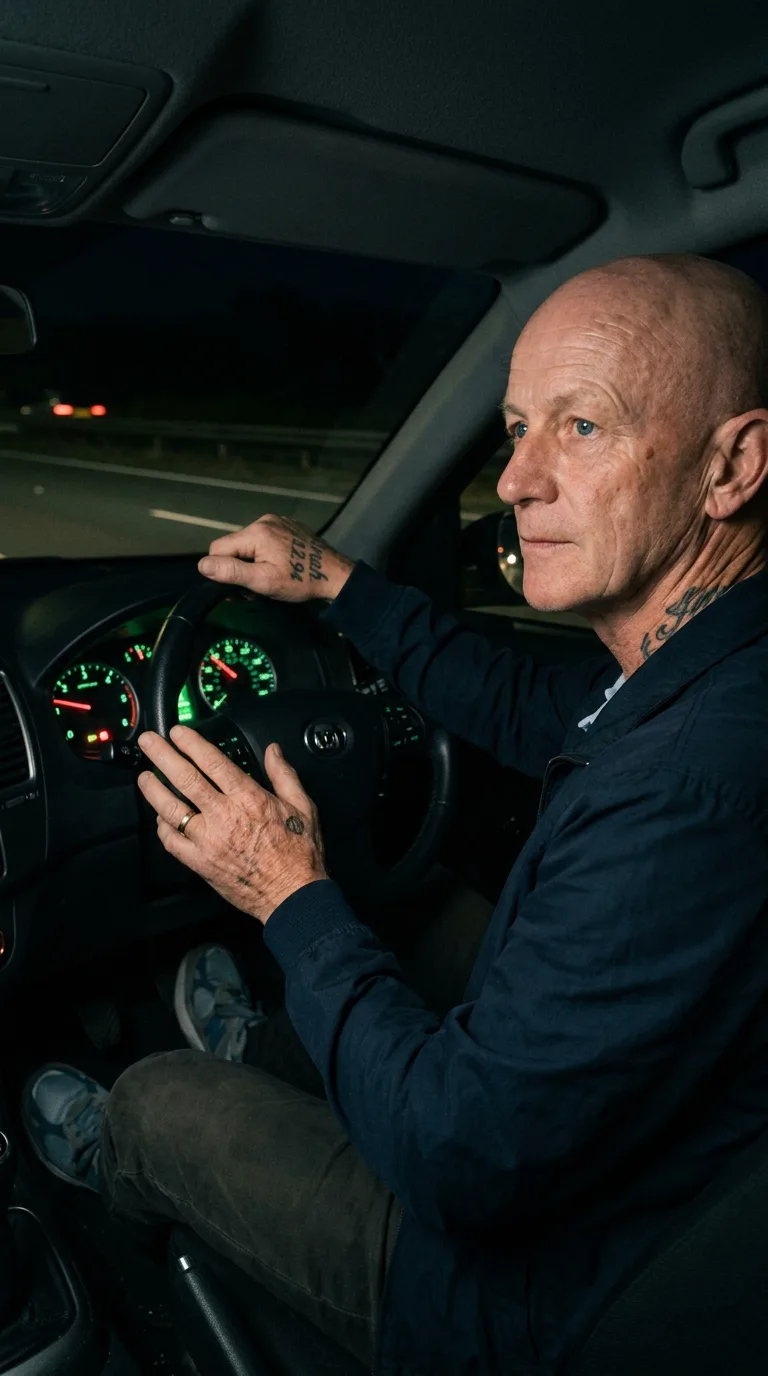
Rarest thing about him: Hand or neck (visible) — epic, 1 in 118
Season 0seed 1258017128 · engine v10
Character card
lineage 2NZHHJ
His body-swap story
@colin.hasbrook, wearing Marcus Ohuoba, rolled the wheel on and woke up as Gerald Vantassel, spent under a minute in him, then spun the wheel and woke up as Kenji Ashida
Marcus Ohuoba's barracks room is dark except for the phone light, and you have been him for four minutes, and already you know this one is a mistake. Nineteen years old, freckled, brown eyes blinking against the glow, standing in socks on a cold Tokyo floor because some other man's choices put him on this side of the world and you inherited the whole weight of it in an instant — the ache in a shoulder he tweaked at PT, the homesickness sitting behind his sternum like a stone, a text thread with a mother he hasn't called in nine days. It isn't yours. None of it is yours. You didn't choose freckles or Tokyo or nineteen, and the wheel doesn't let you choose, and that's exactly the itch of it — you spun once and it handed you a boy's whole unfinished life to wear for four minutes, and you already want out of it the way you want out of a coat that fits somebody else's shoulders. So standing there at — whatever hour this is, deep and black outside the window, everyone in the building asleep — you thumb back to the site with the wheel on it, the way you have six hundred and twenty-six times before, and you pay, and you spin.
The car drifts a foot toward the line and comes straight in one smooth pull. Your hands come off the wheel — his hands, tanned, tattooed, a wedding band catching the dash light — and resettle lower and wider, and the turn signal ticks on for an exit that isn't his. Sixty-one years of muscle and ache arrive around you all at once: the seatbelt tight across a chest that breathes different than the boy's did, wider, older, a low grind of pain sitting in the lower back like it's always been there. Three miles from home. Dark highway. Somewhere behind you, over an ocean and a dateline, it is the middle of a Monday, and here it is deep night, and both of those are true at once and neither of them explain the shape of this new weight settling into a body that was not expecting company.
The tattoos come first, because your hand is right there on the wheel and it is the closest thing to touch you have. Script across the knuckles — a name, Sarah, a date under it — and it opens like a struck match: a hospital room decades gone, fluorescent and too bright, a nurse's voice, a daughter with a full head of black hair already at one day old, and the terror-joy of that, his terror-joy, folding through you sideways because it was never given, it was found. Then more — Sarah at six losing a tooth on a Miami sidewalk, Sarah at twenty-two calling him crying from a city he didn't recognize the area code for, Sarah last Christmas, taller than her mother now, teasing him about the tattoo, *you couldn't have picked a smaller font, Dad.* There are more kids somewhere in there too, a house that used to be loud and now mostly isn't, and under all of it a marriage — a wife, still, this many years in, her voice in the kitchen this very morning telling him drive safe, and beneath *that*, quieter, a woman who is not his wife, someone recent, someone he still turns his phone face-down for out of a guilt that hasn't finished being guilt yet.
The wedding band is cold and plain against your finger and it carries its own separate, smaller weight — a vow said young, kept mostly, bent once or twice, still worn. The collar of the shirt against the back of your neck brings the morning itself: hands — his hands, before they were yours — buttoning this same collar in a bathroom mirror in a pastel building with the balcony door cracked to let the ocean smell in, the polo pale blue because his wife likes him in blue, the jacket zipped because his back was already complaining before nine a.m. His back. It complains now too, low and constant, a familiar ache riding shotgun the way it has for fifteen years, alongside knees that click going down stairs and a shoulder that doesn't love mornings. The seat under you remembers itself as a porch chair, coffee mid-morning, nothing to do and all day to do it in, retirement sitting on him like a coat he's still breaking in. Sober tonight, though most nights aren't — a drink or two, easy, unhurried, never a cigarette, never once, his mother's voice in his head still saying don't you dare. Catholic guilt threading under everything else like a bassline nobody asks to hear but everybody does.
Your face — his face — you can feel it wanting to do the thing it does without being told: fingers drifting up toward the jaw, the cheek, touching his own face the way he always has, some old tic nobody's ever asked him about and he's never once noticed doing. You let it happen. The signal is still ticking for an exit that was never his, some other man's turn taken out of a life that was, until nine seconds ago, entirely his own to steer.
You look down at the hand on the wheel — his hand, weathered, the ink, the ring — and turn it over slowly in the dash glow like you're checking it's real.
"Whose exit was that," you say, out loud, to no one, and you don't put the signal off yet.