Marcus Ohuoba
Fictional. Generated by AI — not a real person, and no likeness of one is intended.
19, soldier in Tokyo · rolled by @colin.hasbrook · card — no film
History
who has worn him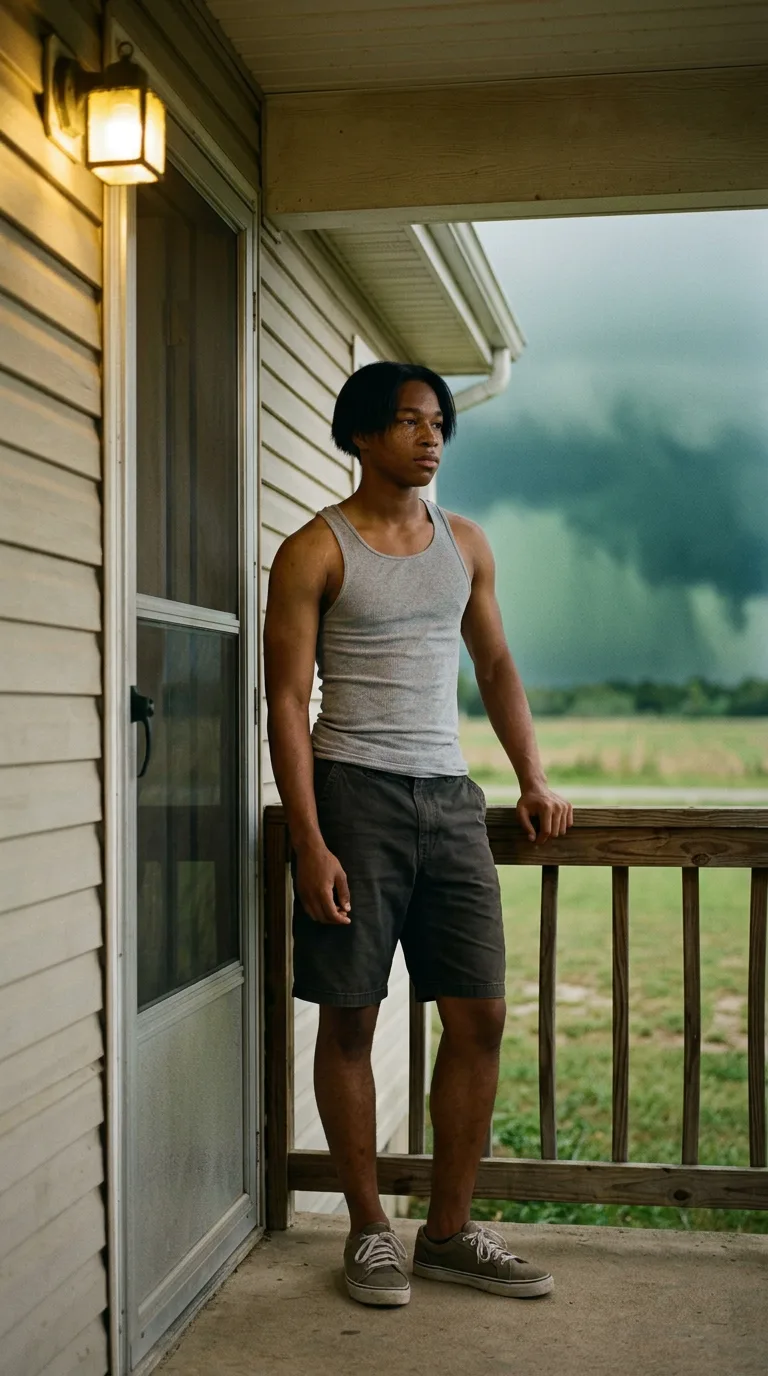
Rarest thing about him: Dyed black — epic, 1 in 94
Season 0seed 562268773 · engine v10
Character card
lineage 2NZHHJ
His body-swap story
@colin.hasbrook, wearing Dennis Kahale, rolled the wheel on and woke up as Marcus Ohuoba, spent 4 minutes in him, then spun the wheel and woke up as Gerald Vantassel
Dennis Kahale's knees ache before his eyes even open all the way, and that is the first thing you notice, again, the way you notice it every morning in him — 57 years of ache stacked up in a body that used to be somebody's idea of strong. The rig calls in forty minutes. You are standing in his kitchen in your — his — boxers, the coffee maker ticking, and you already know you are not going to be here for it. Six hundred and twenty-five men and you still feel this specific thing: not boredom exactly, more like the sound a room makes when you've been in it too long. Dennis's shoulder clicks when he reaches for the mug. Dennis's back has a permanent list to the left from thirty years of leaning into machinery. You like him fine. You are done with him by the time the coffee's ready. You open the laptop on the counter, the wheel already loaded from last night, and you spin before the pot finishes.
The wind stops.
That's the first thing — not a sound, an absence of one, the screen door mid-swing behind you gone still on its hinge, and your bare arms are cold in a way Dennis's never got cold, a young cold, and you are moving, already moving, off the last step of a porch you have never stood on, toward a field you have never seen, chin up, some stranger's gait carrying you like it knows where it's going. Storm light. Green-black wall of cloud stacked over crops. You are 5'8" now, not 5'5", and the ground is closer and further away all at once, the whole geometry of standing recalibrated in half a second, no time lost, no travel — just Dennis's kitchen gone and this instead: humid grass smell, cicadas cutting off with the wind, tank top sticking cold-damp between your shoulder blades.
Except the tank top isn't real. That comes a breath later, when the shirt against your back — actual, present, camouflage, buttoned to the throat, sleeves rolled twice — starts giving you Marcus instead of the field.
Boots on gravel. That's the first flash, boots on cold gravel at 0500, laces already double-knotted, the particular ache of a body nineteen years young that has been standing at something like attention since before the sun. Then more: this shirt, this exact shirt, going on this morning — was it this morning? — over a plain white tee, sleeve by sleeve, his own hands doing the rolling without looking, the cuffs turned twice because that's how the sergeant likes to see them and Marcus stopped questioning why a long time ago. Dog tags cold against his sternum for half a second before they warm. The chain catching a freckle on his collarbone that isn't there, that's just where his skin remembers a chain living.
You are standing outside a barracks now, not a field — the field was Dennis's, was the porch, was somebody else's weather entirely, gone the second his memories stopped arriving and Marcus's began. It is the middle of the night here, everyone asleep, but Marcus's body doesn't know night from morning anymore, hasn't for months; the schedule chewed that distinction up early and what's left is just readiness, a clock in the muscles instead of the sky. Vending machine hums somewhere behind you, throwing blue light across wet asphalt. Quiet lane. No cars. Somewhere past curfew a girl he is dating — Aiko, the name comes with the smell of her shampoo, comes with a memory of her laughing at how his hair never moves, how he dyes it that flat uniform black because his mother liked it long and dark and he keeps it that way without knowing exactly why anymore, an inherited habit worn past the reason for it — is asleep with her phone face-down, waiting for a message he was about to send.
His hands. God, his hands — they've never once been still, not according to him, not according anyone who's watched him wait in a line: tapping the seam of his trousers now, fingers finding the hem and worrying it, a habit so old it isn't nervous anymore, it's just weather. Freckles scatter warm across a nose that's cooler than the rest of his face this time of night. Nineteen-year-old muscle, easy and quick, no ache in it anywhere, not one thing sore, and that alone is its own kind of shock after Dennis — like putting down a bag you'd forgotten you were carrying.
There's a girl. There's a mother somewhere, a church he half-believes in out of habit more than faith. There's nothing in his pockets worth counting. There's a version of him that exists only in the shape his hands already know — rifle strap, mess tray, the way he squares his shoulders before anyone tells him to — none of it yours, all of it coming up through cloth and metal and cold night air like it's been waiting under the surface the whole time.
You look down. The hands are darker than Dennis's, narrower, younger, restless already, one thumb dragging along a beltloop out of pure habit while you stand there in a stranger's body outside a barracks on the other side of the world.
"Not bad," you say, out loud, to nobody, your breath fogging faint in the wet warm dark — and somewhere under that, quiet, not yet a decision, just a fact sitting there the way it always does: you don't know how long this one's for.