Gerald Poehlmann
Fictional. Generated by AI — not a real person, and no likeness of one is intended.
55, farmhand in Los Angeles · rolled by @connor.waskiewicz · card — no film
History
who has worn him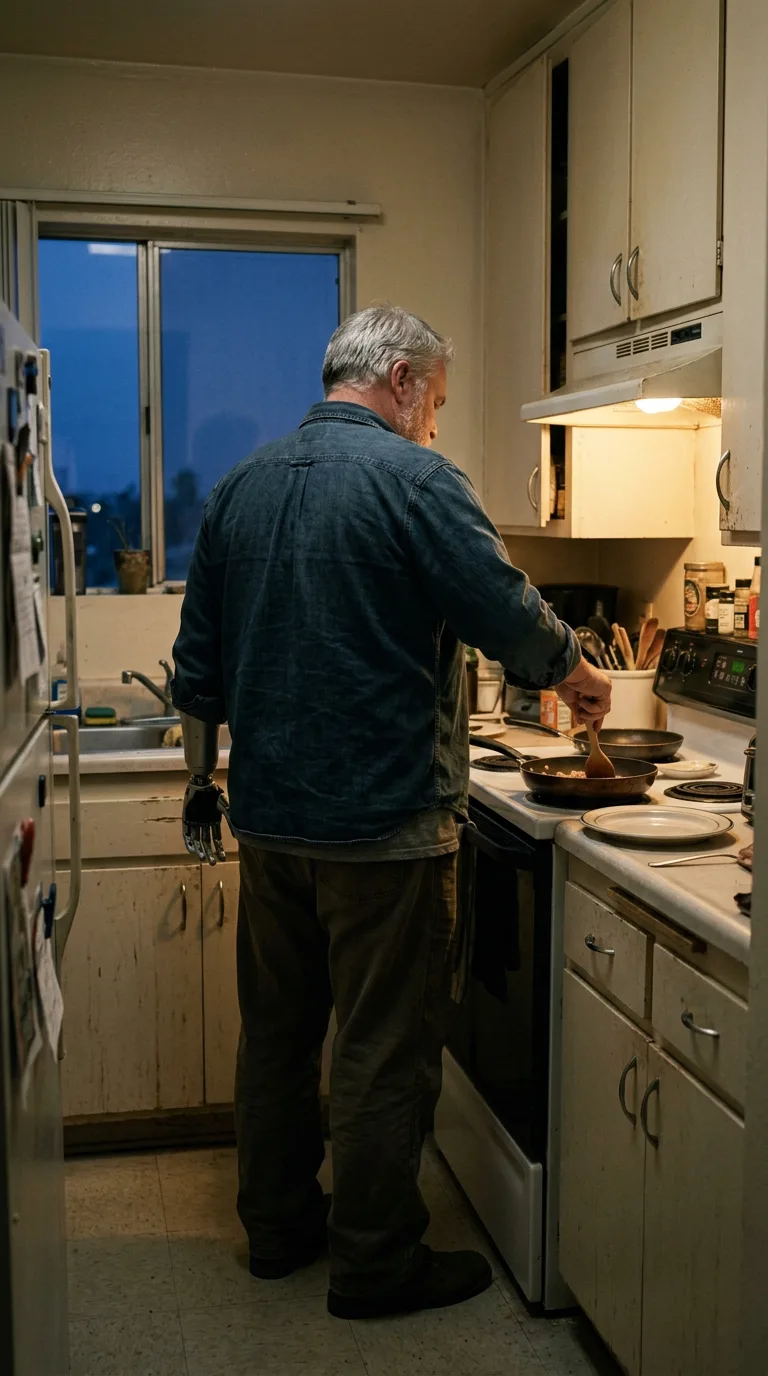
Rarest thing about him: Prosthetic hand or forearm — epic, 1 in 499
Season 1seed 705087236 · engine v11
Character card
lineage 2NZHHJ
His body-swap story
@connor.waskiewicz, wearing Colton Whitfield, rolled the wheel on and woke up as Gerald Poehlmann, spent under a minute in him, then spun the wheel and woke up as Nestor Villagrán
The cruiser seat is cold under Colton Whitfield's thighs, and the laptop is open on the dash showing the little wheel again, and you hate that it still gives you a flutter after nine hundred and sixty-nine spins, like it's new. Less than a minute in this one and already you're doing this — dispatch quiet, the radio hissed down low, some stretch of Route 15 gone black outside the windshield. It isn't boredom exactly. It's that Colton's hands are perfect, twenty-six years old and steady, and there was a girl three spins back who cried when the deputy who loved her turned into somebody who didn't recognize her name, and you've been waiting to see if this one goes the same soft direction, and you don't want to find out. Easier to leave before you can. You put the card down. You spin.
The spoon is already moving when you arrive, and it takes the arm a half-turn to notice it's yours now — onions going translucent in oil, the smell of it thick and close in a kitchen the size of a closet, and outside the window over the sink the sky is that deep after-sundown blue that Los Angeles does, dry palms cut black against it. Your — his — right hand doesn't feel the pan's warmth radiating up at all; the left does, faintly. The stirring stops mid-circle. Starts again the other way. You salt the pan without tasting it, an old habit arriving before you've earned it, and your free hand — his free hand, the flesh one — reaches up into the cabinet and comes down with a second plate, and sets it on the counter next to the first one, click of stoneware on formica, before you understand you've done it or why.
The apron string against your — his — heavy stomach is the first thing that opens, worn cotton, and it gives you a morning eleven years back, tying it for the first time in this same kitchen after a woman named Diane left and you had to learn what a stove was for. Then the shirt. Denim, soft with washing, and it comes up your arms sleeve by sleeve the way it did this morning: the left arm easy, elbow bending without complaint; the right one slower, the way you always do it, guiding the prosthetic's wrist through the cuff with your other hand because it will not do it itself, and the small flat click of the socket seating against what's left of your forearm, a sound that used to make you sick and now doesn't register at all, seventeen years on. A tractor did that. You don't get the whole afternoon, only the noise it made, and a hospital ceiling, and Diane's hand — the real hand — gripping yours so hard it hurt, before either of you knew what the marriage would do without you asking it to.
The ring finger on your left hand carries its own ghost, pale where the sun never reached, and touching it — thumb finding it without meaning to — brings back the day you took the band off for good, sitting on a curb outside a courthouse in Bakersfield with your son already grown and gone to Sacramento for work, the two of you civil now, Christmas cards, a birthday call. You made this recipe for her once, early on, when the kitchen was hers too and the plates matched on purpose instead of by accident. You have made it maybe four hundred times since for just yourself, and every single time you set out one plate, because that is what the truth is now, and you don't examine why some nights you still reach up for two before your mind catches your hand.
Except tonight your hand didn't get caught. It just did it.
The prosthetic doesn't smell the onion, doesn't feel the pan's heat, doesn't feel anything — but the wrist rotates true when you ask it to, seventeen years of asking making it obedient in a way flesh never quite is, and the strength in it, when you flex it just to feel yourself doing it, is more than the other side has, more than this whole soft heavy body has anywhere else. Your knees ache a little, standing. Your lower back has opinions about the hours bent over rows of lettuce that it will express later, in bed, the way it always does. Your feet, in boots you kicked off at the door and didn't put back on, are bare and tired against cool linoleum. Fifty-five years in this body and every one of them is right here at once, sleeve by sleeve, plate by plate, the smell of frying garlic pulling up a hundred Mondays just like this one.
You look down at the hand stirring — the real one, knuckles thick, nails bitten to the quick without your permission the way they always are — and then at the other one, matte and jointed and patient at your side, and you turn it over slow in the stovelight like you've never seen metal before.
"Who set the other plate," you say, out loud, to the empty kitchen, not really asking it of anyone in the room.
Somewhere in Kentucky a cruiser sits empty on a dark road with a laptop open on the dash, and nobody in this kitchen in Los Angeles knows that, or needs to, or ever will — you're just a man standing at his own stove, holding his own hand up to the light, wondering how long tonight is going to last.