Gene Loftin
Fictional. Generated by AI — not a real person, and no likeness of one is intended.
62, paramedic in New Orleans · rolled by @colin.hasbrook · card — no film
History
who has worn him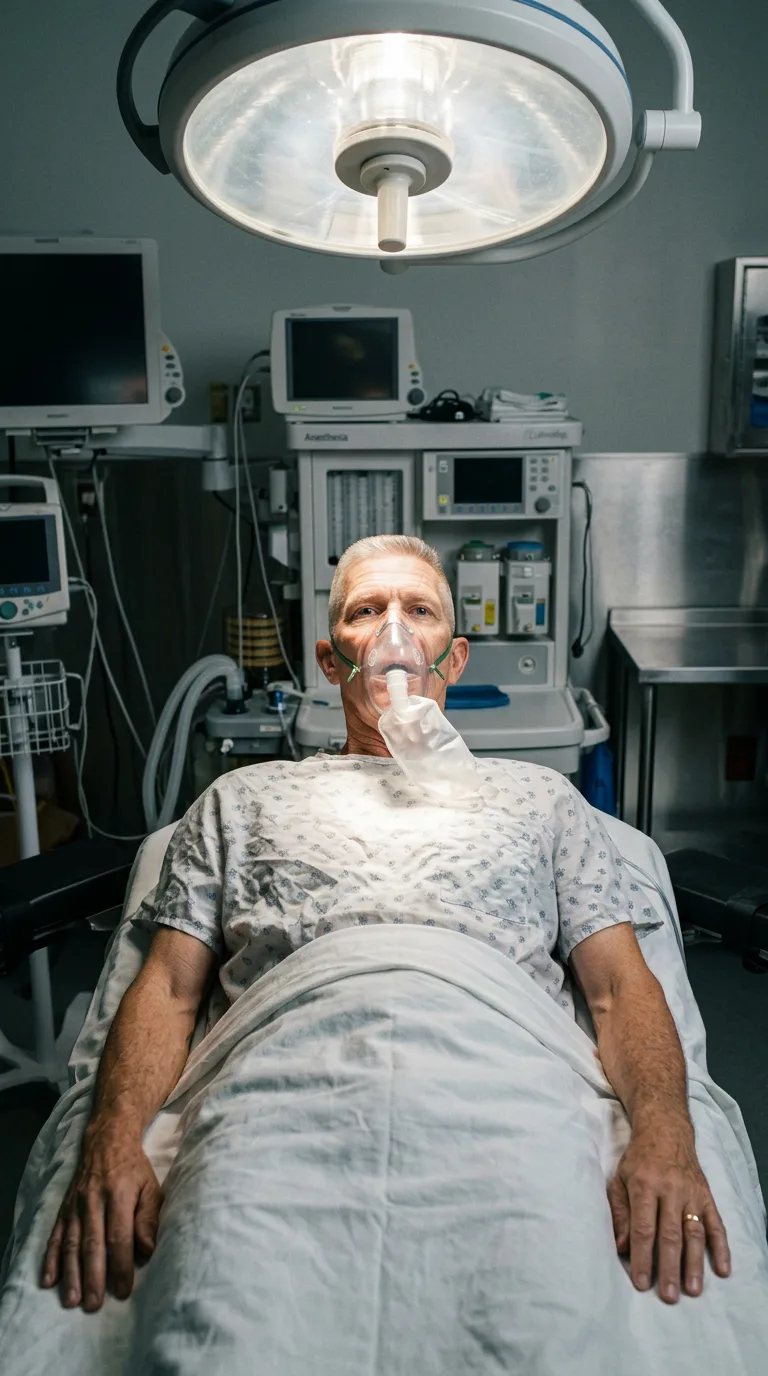
Rarest thing about him: Unitarian or liberal faith — epic, 1 in 99
Season 0seed 2073518066 · engine v10
Character card
lineage 2NZHHJ
His body-swap story
@colin.hasbrook, wearing Marcus Aldridge, rolled the wheel on and woke up as Gene Loftin, spent under a minute in him, then spun the wheel and woke up as Sipho Ndlovu
Marcus Aldridge's apartment is quiet the way a museum is quiet, and you have been standing at his window for eleven months pretending that's enough. He is retired, comfortable, his lazy eye drifting slightly off whatever he looks at, and none of it is the problem. The problem is that nothing in his life asks anything of you anymore. You have made his coffee the same way two hundred times. You have watched his shows. You have slept in his good bed next to nobody, because Marcus never remarried, and some nights the ceiling is the only thing that talks back. Two hundred eighty-one men behind you and this one is the softest landing you've had, and softness, it turns out, is its own kind of hunger. You open the laptop. The wheel is already loaded from last time, like it knew. You spin because a comfortable man is still a man you're bored inside of, and there is a particular flavor to want that has nothing left to want *for*.
The lamp is round and white and enormous, and there is a mask fogging faintly against your — his — mouth, and a voice counting, and on seven the room tips sideways and comes back as this: fluorescent quiet, the smell of iodine and recycled air, a blood pressure cuff biting the left arm, the right hand loose at your side on a thin sheet. Under the lids, before you even have the lids, something in you drags his eyes left, then right, checking the room like it's a rig you've pulled up to. The hand on the table opens. Closes. Opens again. Testing.
It comes in through the fingers first — of course it does, he is a man who has spent forty years reading the world through his hands. The hand closing on nothing gives you the shape of an oxygen mask cupped over some stranger's face on a stretcher in the rain, gives you St. Charles Avenue at 3 a.m. with the streetcar wires ticking overhead, gives you a woman's wrist under two fingers, counting. *Gene.* The name arrives folded into the memory like it was always there, the way his own name always is. Gene Loftin. Thirty-one years on the trucks. The wedding band is still on this hand somewhere on the other side of the anesthesia, and even without touching it you get a flash off the ghost of its weight: Diane in the kitchen of the shotgun house, steam coming up off Dauphine after a rain, her laughing at something he hadn't meant to be funny. Two kids, grown, gone to Houston and to Baton Rouge, phone calls on Sundays.
The gown against his skin gives you the morning before this one — not last night, an ordinary Tuesday morning, because that's the last full day his hands remember dressing themselves. The uniform shirt, navy, the buttons small under blunt fingers that have done this ten thousand times without looking. Collar first. Then the radio mic clipped at the left shoulder, the small click of it seating home, a sound so familiar it isn't a sound anymore, just a fact of the day starting. The belt cinched at a waist that has stayed skinny since he was twenty, food an afterthought on shift, coffee instead, cigarettes for thirty years and then, nine years ago, not — the want for one still surfacing sometimes like a held breath, especially on the bad calls, and there have been bad calls, there have been calls that live behind his sternum still. The trauma shears in the leg pocket, the pen in the chest pocket, the whole quiet armor of a man who goes toward the thing everyone else runs from, every day, for a paycheck that never once matched what it cost him. The knee that clicks going down. The lower back that says something around hour nine of every shift. The leg that bounces under the table at Diane's sister's Thanksgiving, at the cardiologist's office, at his own kitchen table, some motor in him that never fully cut off since the second tour of bad years, the ones the small blue pill in the medicine cabinet and the Wednesday therapist and Diane's hand flat on his knee under the table have mostly, mostly, put back to sleep.
The mattress of the operating table under his shoulder blades gives you nothing — too foreign, no history there — but the mask itself, the plastic cupped at the mouth, gives you the actual last thing: the anesthesiologist's voice, kind, Cajun-accented, saying *count backward from ten for me, Gene,* and Gene doing it, ten, nine, eight, thinking of Diane in the waiting room with her reading glasses pushed up in her hair, thinking it's just the shoulder, thinning about how he'll tell the guys at the station he finally got the rotator cuff looked at, seven —
— and that's where it stops, because that's where he stopped, and there is no eight for him, not ever again, though the monitors don't know that and go on holding their long green rhythm like nothing in the room has changed hands.
The overhead lamp is very bright and very white and it takes both eyes a second to want to focus. You lift the hand off the sheet — his hand, spotted faintly at the knuckle, the wedding band a thin gold line — and you turn it over in the light like you're checking it came back from somewhere. Behind the mask your mouth moves, and a nurse leans in, already frowning, already saying *Mr. Loftin, stay still for me, hon,* and you say it anyway, muffled, plain, not for her:
"Diane's gonna ask why I'm smiling."
You don't know how long you keep that smile. You never do.