Gary Wickstrom
Fictional. Generated by AI — not a real person, and no likeness of one is intended.
59, cashier in Denver · rolled by @colin.hasbrook · card — no film
History
who has worn him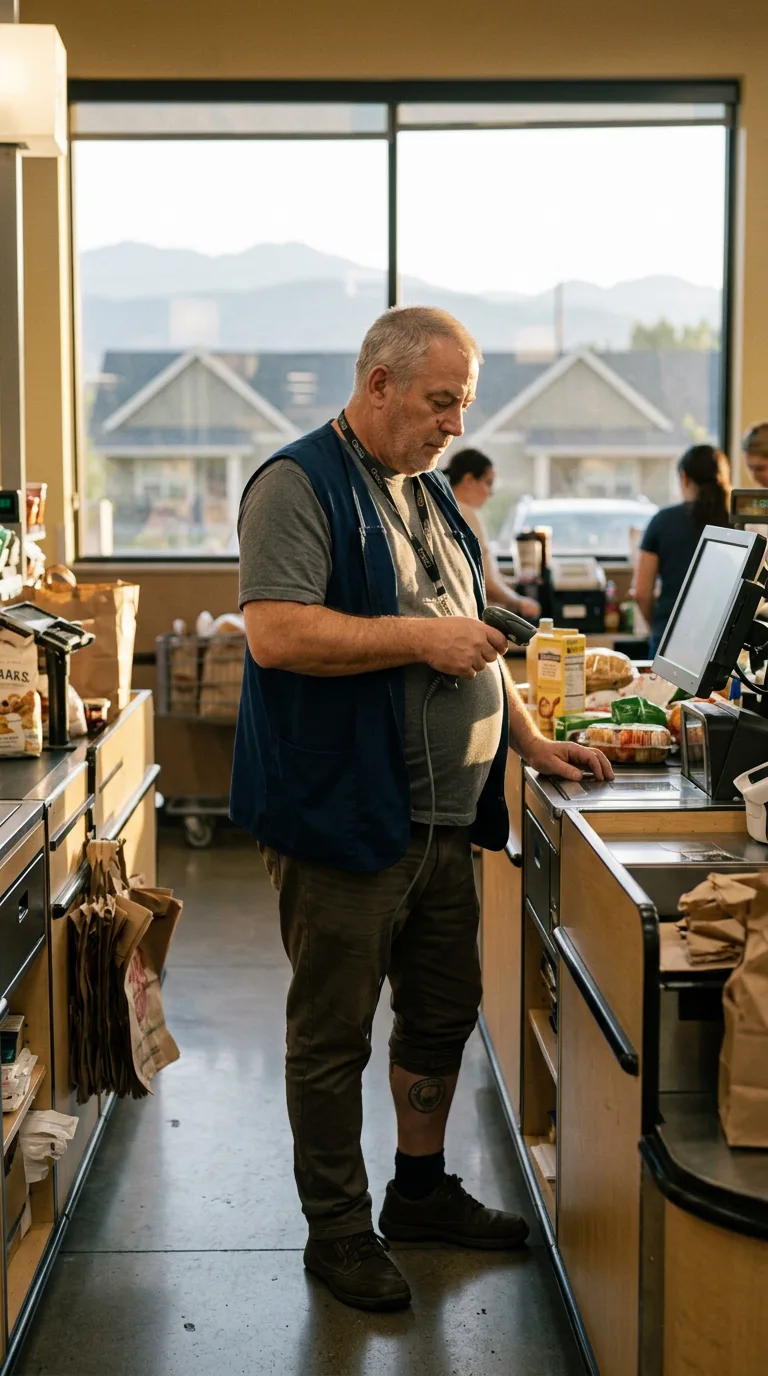
Rarest thing about him: Leg — common, 1 in 54
Season 1seed 136948005 · engine v11
Character card
lineage 2NZHHJ
His body-swap story
@colin.hasbrook, wearing Ernesto Villalva, rolled the wheel on and woke up as Gary Wickstrom, spent 12 minutes in him, then spun the wheel and woke up as Wyatt Stroshane
You are sitting in a kitchen in Rural Texas at eleven in the morning, wearing a dead man's Thursday, and you already know you have to leave it.
Not dead. Just — not yours to keep chewing on. Seven minutes ago you were Rafael, a professor with silver hair and a bad hip and a coffee going cold on his desk, and the wanting had already curdled into something else by the time you got the mug to his mouth. It wasn't him. It was who he thinks about at three in the morning. You saw it in his study, in a folder he keeps in the bottom drawer, in the particular way his jaw sets when he says a certain name to nobody. And you knew — the way you know these things after seven hundred and fifty-seven spins — that the good version of this story wasn't being him. It was standing across from him. So you put the mug down, mid-sip, uncrossed his legs, and let him go. Now you're sitting in the body the wheel gave you before him — Latino, 5'7", an accountant's hands, green eyes — the one you were less than a minute in before you went back for Rafael the first time. This is the one deciding. Comfortable enough. Bored enough. You open the laptop. The wheel is already loaded, like it's been waiting. You spin.
The register beeps under fingers that are not yours yet and already correcting, and for half a second the barcode goes past the scanner too fast, missed, and then again — slow, careful, checked. A carton of eggs. Your — his — hand hovers, and the weight of a gut pressing against the counter's edge announces itself before anything else does: heavy, familiar to no one who has just arrived, unfamiliar to you. The vest strap digs at the back of your neck. Fluorescent light, mountains through the far window going gold-gray with early morning, and somewhere behind you a cart wheel sticking on tile. You are standing in a body 5'3" and built like a barrel, and the scanner is warm from a hand that has held it ten thousand times before this one.
The lanyard is the first thing that gives you anything — plastic against your collarbone, and you feel him before you see him: a name badge, GARY, laughed at once by a coworker for how long he's had this exact photo on it, eleven years now, the same gray in the hair, nothing to update. Then the vest, unzipped, hanging open over the gray shirt — he shrugged into it at 5:40 this morning in a dark bedroom, careful with the zipper pull because Denise stirs if it clicks too loud, and he kissed the back of her shoulder before he left, the two of them having found their rhythm around each other's schedules years ago, comfortable in the way that doesn't need saying anymore. She's not the ex. The ex is a name that still sits in him like a stone in a shoe — Carol, and three kids who are grown now, who call on Sundays, mostly, and a divorce that took four years to stop hurting and never quite finished the job. You feel the specific ache of it arrive through the lanyard cord, absurdly, the plastic clip that used to hold a different badge, a different store, twenty years back, when Carol still packed his lunch.
The scanner in your hand knows the eggs before your eyes confirm the barcode — his hand has done this in its sleep, calluses worn into a shape that doesn't need looking, and under that, deeper, the beltline pressing at the give of his stomach tells you what standing eight hours a day for three decades does to a body: the ache low in both knees, worse on the left, a shoulder that clicks going overhead, feet that found their true shape years ago inside boots that are, at this exact moment, worn comfortable-soft at the sides. You feel fifty-nine in the backs of your thighs.
Bag boy says something behind you — a joke, maybe, about the Broncos — and there's a flicker of the tattoo on your calf under the rolled cuff, a crest inked on badly in your twenties in a friend's garage in England before you ever left for Colorado, Manchester blue, half a joke and half not, the only permanent thing you did before the mortgage and the marriage and the second marriage that isn't a marriage, just Denise, just the porch with the mountains behind it, just enough. A folding chair out there. Zazen some mornings before shift, cross-legged, knees complaining, breath counted to ten and back, the only part of the day that isn't customers.
And there — through the register, through the weight of the register gun, a flash of Rafael. Not this morning. Years back. A conference, a shared cab, an argument about tenure that turned personal, that turned into something neither man ever apologized for, that calcified into the specific pleasure of hating a person you respect. You have stood on both sides of that hate now, worn both coats of it, and it sits differently in this smaller body — lower to the ground, thicker through the middle, less inclined to raise its voice, more inclined to just keep scanning and let the thing rot quietly for another decade.
You look at your hands — his hands, the scanner still cradled in the right one, a faint tremor of arthritis starting in two fingers he hasn't told Denise about yet — and you turn the left one over, badge-callused palm up under the register lights.
"Rafael," you say, to no one, to the mountains through the window, "you'd hate this job."