Wyatt Stroshane
Fictional. Generated by AI — not a real person, and no likeness of one is intended.
30, farmhand in Honolulu · rolled by @colin.hasbrook · card — no film
History
who has worn him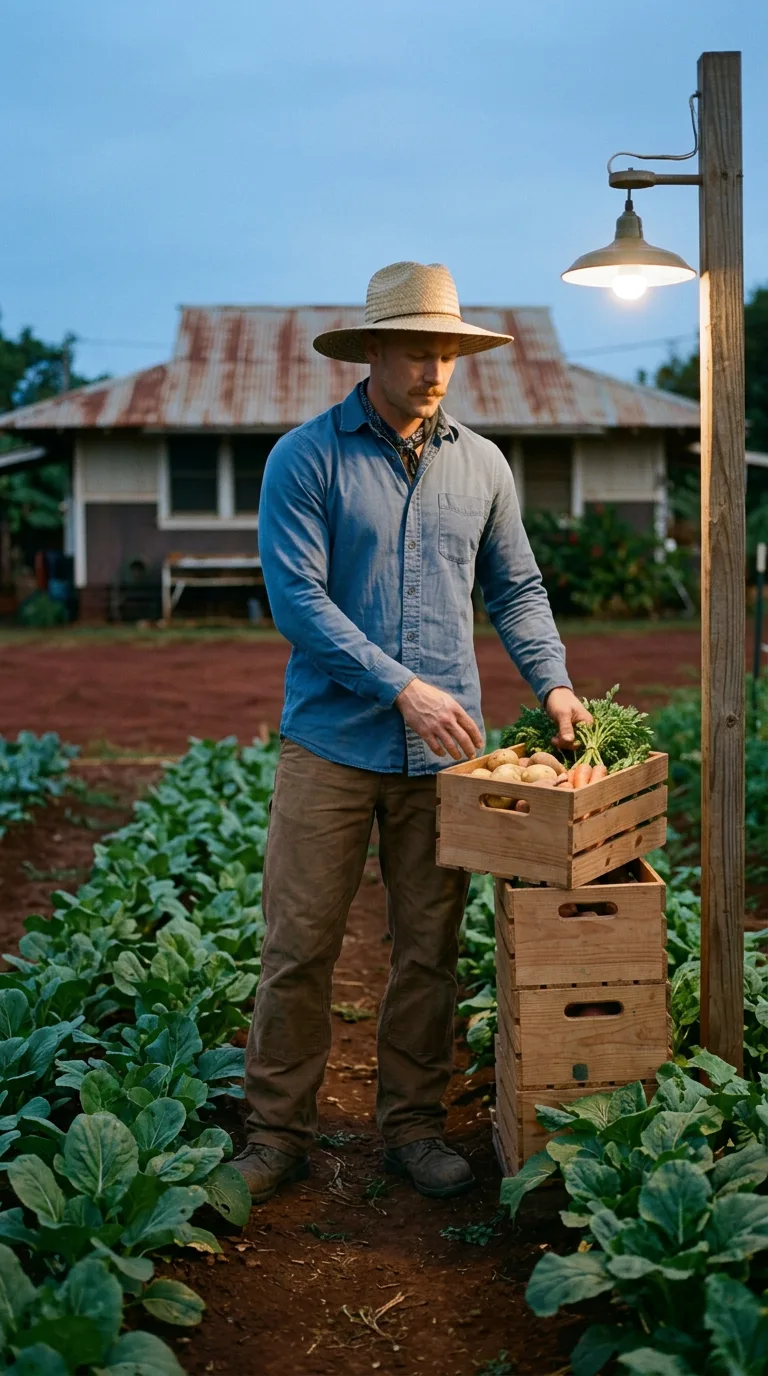
Rarest thing about him: Stutters under pressure — common, 1 in 79
Season 1seed 2143167895 · engine v11
Character card
lineage 2NZHHJ
His body-swap story
@colin.hasbrook, wearing Gary Wickstrom, rolled the wheel on and woke up as Wyatt Stroshane, spent 4 minutes in him, then spun the wheel and woke up as Marcus Enriquez
The register light is the first thing you hate about him. Gary Wickstrom's knees ache standing still, his gut presses the counter edge, and some kid in line is watching him fumble a coupon like it's the funniest thing all week. Twelve minutes. You have been rich men and poor men, a soldier once, a boy of maybe twenty for an afternoon in Tulsa, and none of it ever sits right for long, but this — this soft, tired, embarrassed body under fluorescent light — this you cannot even finish the shift in. You don't clock out. You don't say anything to the woman in line behind you. You just reach for the phone in Gary's shirt pocket, thumb the site open the way you always do, the wheel already spinning in your head before it spins on the screen.
It stops on a picture of a man in a straw hat holding a crate of carrots.
The crate is real before anything else is. Wood, damp, heavier on one side, biting into a palm that is not soft like Gary's — this hand has calluses like leather welts across the base of each finger. Your knees don't ache. Nothing aches. Your back is straight and there is a smell of turned dirt and green leaf-sap and, underneath, the particular mineral smell of Hawaiian red clay at an hour before the sun is fully up. Your hand — his hand — was already moving toward the crate stacked below the one he's holding, and it stutters, sets the crate down crooked, corrects. Sets it down again, square this time. Then does it nine more times exactly right, checking each one like a man counting his own pulse.
The shirt is what opens first. Chambray, soft from a hundred washes, damp already at the small of the back — sweat starting before six a.m. because the trade winds haven't picked up yet. A morning surfaces: buttoning this same shirt in a house on stilts, the tin roof popping as it took the first heat, a woman's voice from the next room that isn't there anymore — Kalena, gone three months now, back to her sister's on the other side of the island, and he still puts his shirt on the same way, right sleeve first, out of a habit that used to be about not waking her. The hat comes with its own memory, straw gone soft and dark at the band: his father's hat, actually, cut down and reshaped, and there's a whole afternoon in that — a man teaching a boy to wet the brim so it would hold a curve, both of them laughing about something lost now to the years between.
The boots know the rows before you do. Muddy leather, cracked at the crease, and his legs — thirty years old, six feet of him, shoulders built by ten thousand mornings of exactly this — carry you three steps down the row without being asked, the body doing what it has always done while the mind that's supposed to be steering it is somewhere else entirely, learning itself. There's a whole year in the muscle of his forearms: the season he worked through a torn thumb ligament because the harvest wouldn't wait for a doctor, the pride afterward that it healed crooked but strong. There's a girl before Kalena, a fight in a pickup truck cab about nothing, about everything, that ended with him driving the coast road alone until 2 a.m. because he needed the ocean sound to think.
And there's this: at a job interview once, a foreman held out papers to sign and Wyatt's hand — steady enough gripping a hoe for eight hours — shook so badly over the pen that the foreman had to hold the clipboard still for him. He never told anyone why. You feel the shame of it arrive with no permission, folded into the same hand now closed easy and sure around a bundle of carrot tops, root-dirt cool between the fingers.
The light over the yard buzzes on its pole, orange and small against a sky just starting to gray at the edges. Crates stacked three high. A whole field still to go before the truck comes at seven.
You look down at his hand. Turn it over — the calluses catching the bulb-light, dirt worked so far into the creases it will never fully wash — and it does not stutter now, not with nothing asked of it.
You lift your eyes to the empty yard as if it were a lens.
"Okay," you say, to no one, in his low unhurried voice. "Let's finish the row."