Gary Vandermeer
Fictional. Generated by AI — not a real person, and no likeness of one is intended.
62, bartender in Los Angeles · rolled by @yusuf.brannick · card — no film
History
who has worn him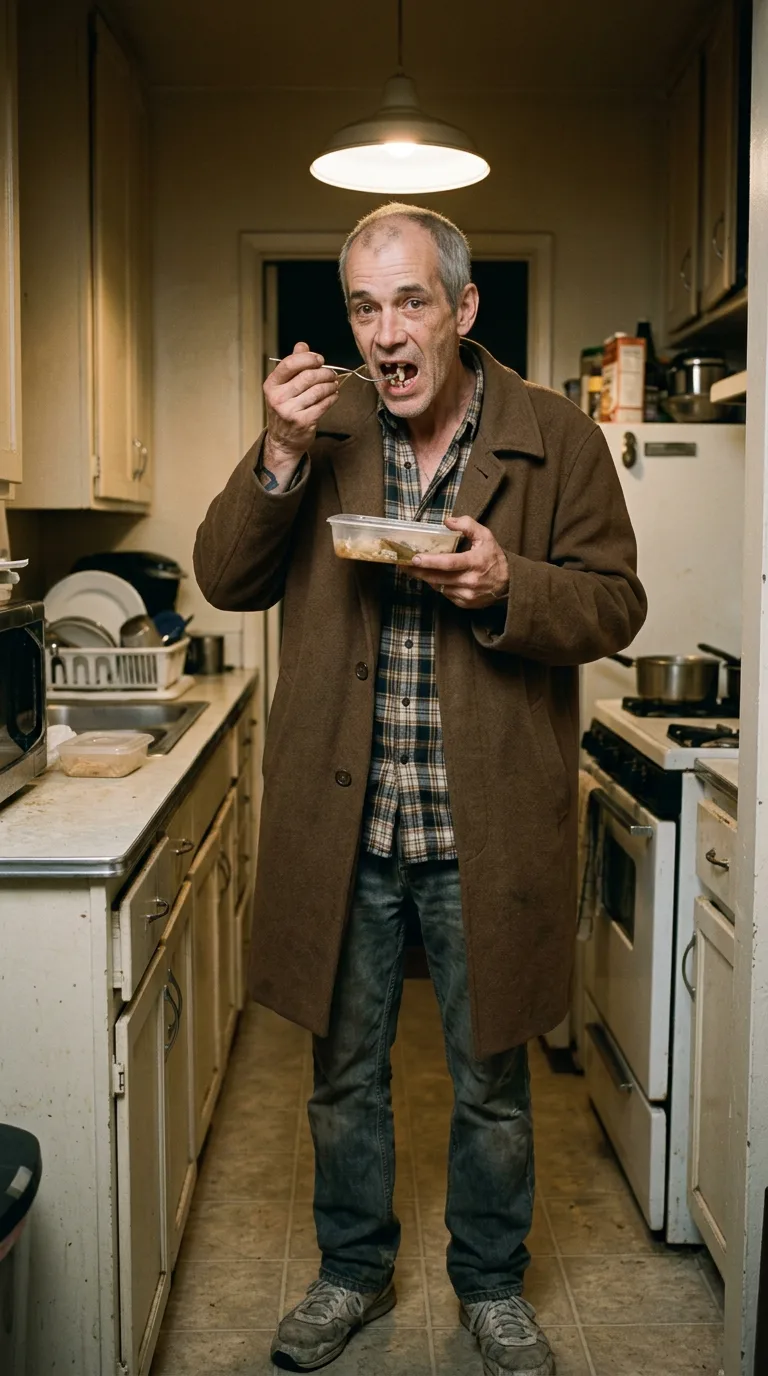
Rarest thing about him: A missing front tooth — epic, 1 in 124
Season 0seed 895042774 · engine v10
Character card
lineage ANU73D
His body-swap story
@yusuf.brannick, wearing Kenji Arakawa, rolled the wheel on and woke up as Gary Vandermeer, spent under a minute in him, then spun the wheel and woke up as Colton Braswell
---
The dust of the site is in your teeth — Kenji's teeth, straight and whole and thirty years younger than the ones you're about to trade them for. You're up on the second floor of a triplex in Highland Park, harness slack, radial saw idling in one gloved hand, and the noise of it is the whole reason you're leaving. Four minutes in this man and already your back — his back — is bright with old strain, a rotator cuff that clicks, a foreman shouting about the header joists downstairs. Kenji Arakawa works for a living in a way you have not had to in two bodies now, and the work does not stop for you just because you are new to it. There is a permit inspection at eleven. There is a wife somewhere in this man's phone you haven't looked at yet and don't want to. You didn't come back to the wheel because this body failed you. It's that it *asks* something of you, every hour, and you spun once for wonder and once for muscle and you find, standing in dust with a saw in your hand, that today you want to not be asked anything at all. You want a body that finishes its day standing still in a kitchen. You take out your phone with Kenji's hand, thumb still print-registered somehow, and you open vessel.cards on a cracked screen, and you spin it one-handed while the saw idles against your hip.
The wheel finds a Tuesday, and a kitchen, and a man already alone in it.
The fork stops an inch from an open mouth. Comes back down. Sets itself on the rim of the plastic container with a small definite click, and the hand that set it there is thin-wristed, spotted, cold at the knuckle in a way Kenji's hand never was. The coat — heavy, wool, wrong for indoors — slides off narrow shoulders because you make it, because something under you already knew to do that before you'd finished arriving. You sit. There's a stool, or there isn't, and your body finds it anyway, muscle ahead of you again, and you eat the rest of the container in even mechanical mouthfuls, looking at nothing in a window that has gone fully dark outside despite the hour, because this man's Tuesday runs backward against the one you left.
It comes in through the fork first. Cheap steel, bent very slightly at the neck from years of scraping pans, and it brings back every version of this same meal eaten standing — beef stew from a container, red beans and rice from a container, whatever didn't sell at the bar and would've gone in the trash otherwise, Gary, take it, don't let it go to waste. Twenty years of a bartender's mercy meals eaten upright because sitting felt like giving the day too much credit.
Then the coat, already off you now, draped on the stool back, and it gives you cold — a walk from the lot where he parks because the good spots by the courtyard fill up early, dry palms clattering thin in a wind that has no business being cold in this city, his breath fogging a little on Sepulveda at an hour so early it might as well be the tail end of the night before. He works nights. Behind the bar until close, then the drive, then this: dinner standing up because sitting down all day was never something the job let him do, and habit outlasts the job's hours by decades. The plaid shirt under the coat is the one he pulled from the hook by the door without looking, the same three shirts in rotation, and putting it on this morning — his morning, a black hour with the courtyard lights still on outside — comes back sleeve by sleeve: left arm first, always, hiding the tattoo out of habit though there's nobody left to hide it from, an eagle inked forty years ago in a shop on Western that isn't there anymore, bold lines gone soft and blue-green with age. Buttoning with fingers that don't quite want to close all the way anymore, top button skipped because it never sat right against his throat, a throat that snores wet and ragged every night into a machine's hiss he refuses to admit he needs on the nights he skips it.
The missing tooth is a tongue's habit before it's anything else — the gap up front you find with the tip of it without meaning to, and behind that gap: a bar fight that wasn't even his fight, 1994, a friend's wedding, a fist meant for somebody else. He never got it fixed. Vanity money went to other things — went, mostly, to the ring that isn't on his hand anymore, pawned or lost or given back, he genuinely can't recall which, the tan line where it sat gone permanent and pale like something scarred over. Two kids' faces surface with the wedding — a boy and a girl, grown now, one of them calls on Sundays and one of them doesn't, and the feeling that comes with that isn't anger, it's just weather, something that rolls in and sits and eventually rolls back out the way it always has since the divorce, since before that even, since the drinking started doing the thing it does to a marriage slowly enough that nobody could point to the day it broke.
The toothpick isn't in your mouth yet and your jaw wants one anyway, working at nothing, an old tell from quitting cigarettes fifteen years back and never quite filling the hole they left. Your shoulders ache in a smaller, older way than Kenji's ever did — not injury, just sixty-two years of standing on mats behind a bar, weight held wrong on skinny legs for decades. Your hands, setting the empty container down now, know a hundred small things without asking you: how to flip a bottle without looking, how to read a drunk's face two seconds before he says something he'll regret, how to wipe a bar top in one clean pull with a rag that's always slung somewhere on you, shoulder or belt, out of habit.
You look at your hands. Thin, spotted, a life's small tremor in them that wasn't there in the body you left running a saw an hour — or was it a lifetime — from now. You turn one over slow in the dead window light, and lift your eyes off it, into the dark glass, which holds your face back at you missing a tooth you didn't lose.
"Didn't even taste that," you say, to the window, to the kitchen, to nobody who is still in here to hear it.