Colton Braswell
Fictional. Generated by AI — not a real person, and no likeness of one is intended.
35, contractor in High-desert Nevada · rolled by @yusuf.brannick · card — no film
History
who has worn him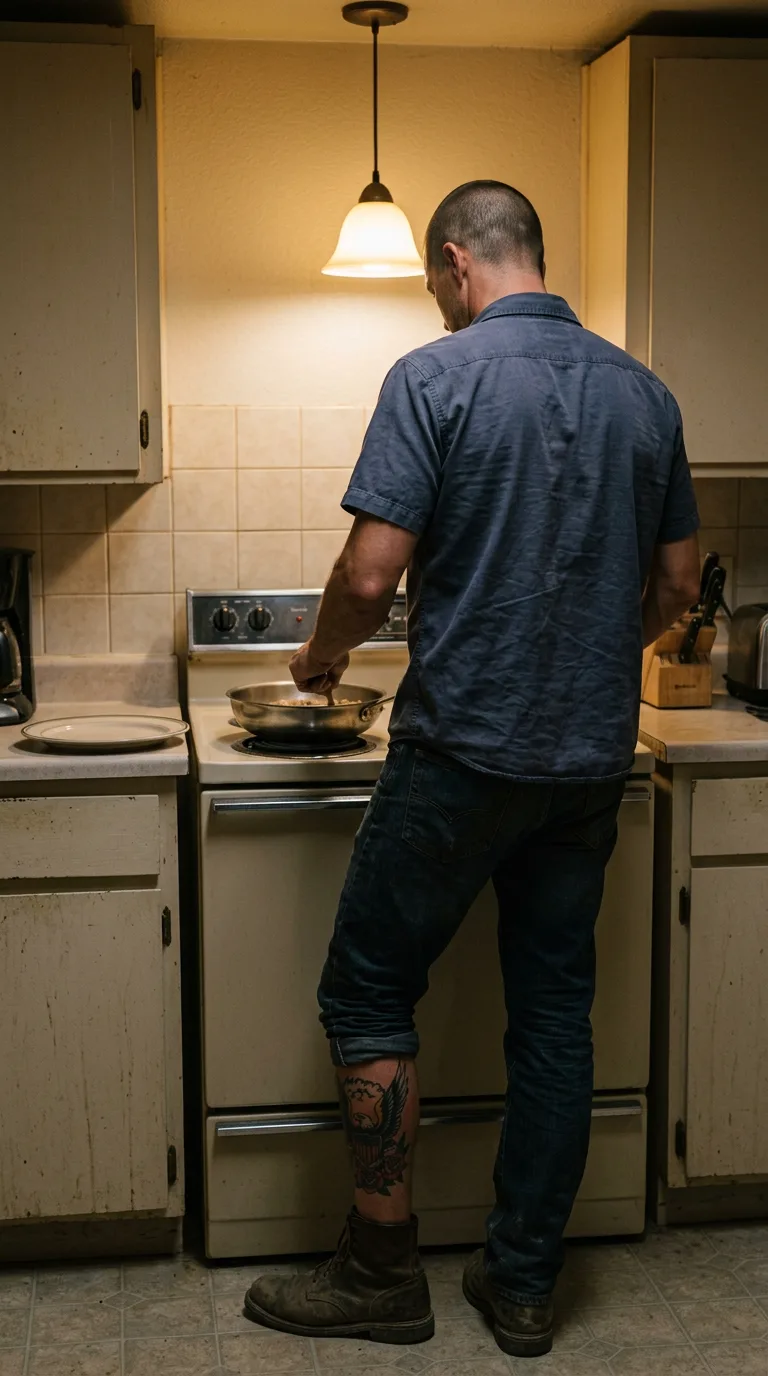
Rarest thing about him: Smokes when he drinks — rare, 1 in 33
Season 0seed 133404611 · engine v10
Character card
lineage ANU73D
His body-swap story
@yusuf.brannick, wearing Gary Vandermeer, rolled the wheel on and woke up as Colton Braswell, spent 3 minutes in him, then spun the wheel and woke up as Gerald Muskie
The bar doesn't open for hours yet, but Gary Vandermeer is already behind it, because Gary Vandermeer is always behind it, wiping down a lacquer top that does not need wiping. Sixty-two years old, gray hair gone the color of cigarette ash, a gap where a front tooth used to be from some fight decades dead. His knees hurt the way they always hurt, standing on a mat that used to be cushioned. This body came from a spin three turns back, and it is a body that knows exactly how many hours are left in a shift and exactly how few dollars are in the register drawer. Somebody else's whole life, worn thin, worn familiar, worn boring. That's the truth of it, the thing not said out loud: three men in and the wanting isn't about escape anymore. It's that this one, this Gary, has nothing left inside him to discover. You've had him a week. You know all his rooms.
So mid-morning, phone propped against the register, you pull up vessel.cards on the bar's ancient tablet, the one they use for card readers, and you spin again with Gary's crooked, arthritic thumb.
The wheel turns. It always turns. And then —
— you are stirring. Your own arm, foreign and thick with muscle you didn't have a second ago, moving a wooden spoon through a skillet, and the circle you were making reverses itself, hitches the other direction, because whatever was steering this arm one way is not what's steering it now. You salt the pan without tasting it — an old reflex firing on nobody's tongue but the tasting doesn't matter to you yet, you don't know this kitchen, you don't know this hand. A cabinet door. A second plate, white, chipped at the rim, and you take it down and set it beside the first one on the counter for no reason you can name, except that some current under your new skin wanted it there.
The shirt is against your back first — chambray, soft from washing, and it gives you a Tuesday morning three weeks ago, buttoning it in a mirror cracked at one corner, the trailer's little bathroom fan grinding, a body that aches getting into clothes that don't ask it to bend much. Then the jeans, worn through you can feel the give at the knee where you kneel on subfloor for a living. Boots at the door you don't have on right now — bare feet on cracked linoleum, cool even in this heat — but the memory of lacing them comes anyway, laces you've relooped so many times you did it half-asleep, out on the step at five-forty with the sky still the color of a bruise, sagebrush smell coming off the flats before the sun turned everything white and merciless.
The pan handle gives you the most. Colton Braswell, thirty-five, cooking for one most nights of his life now, and you get flashes of a kitchen table with two booster seats at it, gone now, folded into a closet somewhere because the girls only come every other weekend and there's no sense keeping chairs out for absences. You get her — the ex, Danielle, her name arriving with the ache in his lower back like they're the same nerve — her voice saying something sharp in a doorway four years gone, and under it, softer, older, her laugh in a truck cab with the windows down, before any of the sharp things. You get the framing crew, the smell of fresh-cut lumber and the particular satisfaction of a wall standing plumb, sawdust settling in his eyelashes, the boss clapping his shoulder. You get a church basement, folding chairs, a youth pastor's voice, the shape of a prayer he still says some nights out of habit more than certainty, because faith is one more thing that's just there, load-bearing, whether or not he examines it. You get a bottle he doesn't buy anymore, and the specific shame of the last time he did, and a cigarette he'll still take if someone offers one over a beer he isn't having. You get his own hand, unbidden, rising to his scalp — buzzed close, stubbled, familiar under his palm the way another man's hand knows his own jaw — a gesture so worn into him it happens now, in your body, without your asking it to.
The tattoo doesn't speak to you here — no hand's on it — but you know its weight is there anyway, low on the calf, eagle and banner and roses laid down half his life ago in some shop that probably doesn't exist anymore, the pain of the needle a memory folded so far under everything else it barely registers as his.
Two plates on the counter. One skillet, going quiet under the flame. His back still aches in that low, structural way that never fully quits — a knee that clicks on stairs, a shoulder that complains in cold weather, thirty-five going on fifty in the joints from a decade of ladders and kneepads and lumber slung overhead. Strong in the forearms, strong across the back, a body that knows how to swing a hammer without thinking and doesn't know, yet, that it's cooking dinner for a man who used to have someone to cook it for.
You look down. Your hands — his hands — scarred at the knuckles, a callus map you didn't earn, salt still clinging to the fingertips.
You turn one hand over, study the lines of it like they might explain something, then lift your eyes toward the window over the sink, toward the white morning light coming low across the sage.
"Didn't think I set two places," you say, to no one, to the empty trailer, to whatever is left listening.
Outside, the desert keeps doing exactly what it was doing. Somewhere behind you, a bartender's body stands empty in Los Angeles, gap-toothed, unremarkable, already forgotten. You don't know how long you'll be Colton. Nobody spins knowing that.