Gary Trembicki
Fictional. Generated by AI — not a real person, and no likeness of one is intended.
42, barber in Small-town Ohio · rolled by @colin.hasbrook · card — no film
History
who has worn him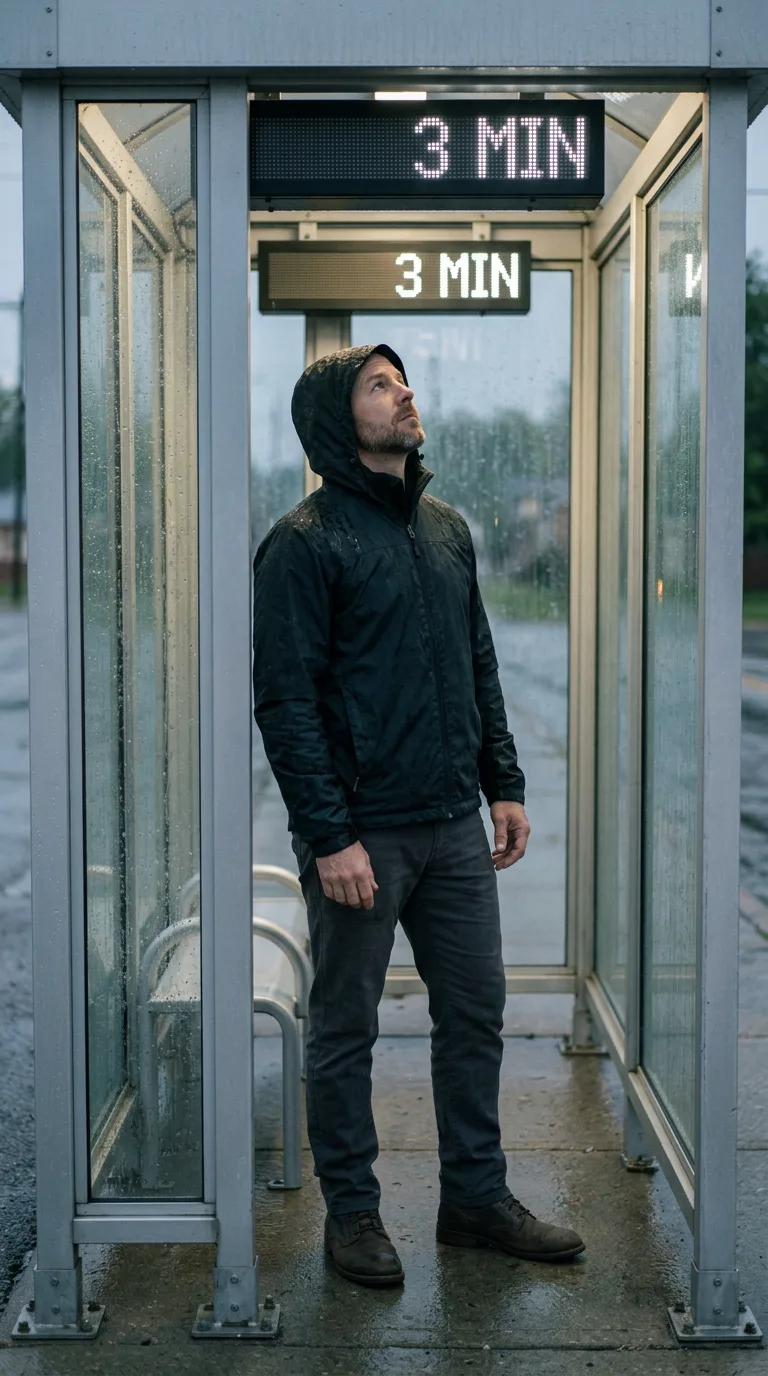
Rarest thing about him: Nicotine pouches — rare, 1 in 33
Season 0seed 1650837024 · engine v10
Character card
lineage 2NZHHJ
His body-swap story
@colin.hasbrook, wearing Rigo Casillas, rolled the wheel on and woke up as Gary Trembicki, spent under a minute in him, then spun the wheel and woke up as Aaron Littlebird
The line cook's name is Rigo Casillas, and you have had him less than a minute, and already you know this was a mistake. Not the body — the body is fine, forty-seven and heavy through the middle and strong in the forearms in the specific way that comes from lifting hotel pans for twenty-five years — but the *job*, the fry station's heat pressing up through his shoes, the ticket rail clattering, somebody named Junior yelling about the eighty-six on the mahi. You spun into a dinner rush. Whoever had this body before you left him standing in it like an unpaid bill. You feel Rigo's shoulder ache when you roll it, an old rotator thing, and you feel how tired he already was before you ever arrived, and you think: not this one, not tonight, and your thumb is already moving to the phone in the apron pocket, to the site, to the wheel, before the first ticket even prints.
The wheel doesn't ask why. It only spins.
Rain. Real rain, cold in a way Miami never gets cold, needling down through a bus shelter roof onto a scalp with no hair on it to slow it down. You are standing with your face turned up into it, hood shoved back off your head, water running in lines down a face that ends, low, in a deep notch of a chin you can feel like a thumbprint pressed into the bone. Your arms hang loose. Somewhere behind your eyes a board reads 3 MIN and has read it for what feels like a long time. You are not shivering. You realize, arriving, that this body was not cold before you got here either — it was doing something else, something like standing under a shower with its eyes closed, and you have stepped into the last half-second of that and it is still going on underneath you.
The jacket is what gives you the first of him — nylon, damp through at the shoulders, a zipper pull worn smooth between two fingers a thousand times without him ever once looking down at it. Cutting hair standing up eight, nine hours a day, and this same gesture at the end of every shift, tugging the zipper to the throat before he steps out into whatever Ohio is doing that evening. His name comes up out of the fabric like a exhale: Gary. Gary Trembicki. Trembicki's, one chair of three, corner of Main and Second, across from the diner that closed in '19 and never reopened, blinds still down, FOR LEASE sign gone gray in the window.
The clippers are not in his hands now but you feel them anyway, phantom-heavy, the specific vibration of the Wahl against his palm, the callus it has raised at the base of his thumb over eleven years. His hands know a fade without him watching them do it — the guard changes, the flick of the wrist, the way he tips a man's chin up with two fingers under it the way you'd want somebody to do to your own. He likes the rhythm of it. He likes, more than he'd ever say out loud, the fifteen minutes where a stranger in the chair tells him something true because a barber is safer than a priest and cheaper than the other thing. He has heard about affairs and dead fathers and one man's diagnosis, delivered flat, over the buzz of a 2 guard, and he has never once repeated any of it.
His back against the shelter's cold glass gives you the shop's back room, the particular smell of Barbicide and burnt coffee, and a year that comes up whole: the year Danielle left. Not dramatically — she didn't slam a door, she just started saying "we" less and then stopped altogether, and one October morning her car wasn't in the driveway and there was a note that was kind, which was somehow worse. He does not think of her every day anymore. He thinks of her on Mondays, for some reason he has never worked out, and today is a Monday, and that is not nothing.
The old ache surfaces next, low in the left hip, a knot of scar tissue nobody but a doctor has ever felt — a break at nineteen that set wrong, a summer job on a roofing crew, a ladder that went sideways. It sends its dull signal up through him every time he's on his feet past the sixth hour, which is every day, and he has stopped mentioning it to anyone because there was never anyone left, after Danielle, whose job it was to ask.
The shirt sleeve, cold and stuck now to his forearm, gives you this morning entire: him standing in front of the mirror in the apartment over the hardware store, pulling a black tee over his head one arm at a time, then the jeans, worn soft at the knee, then working his feet down into boots that already know the shape of him. A nicotine pouch tucked behind his lip before he'd even had coffee. Fingers drumming twice against the bathroom counter, a tic he's had since before he can remember, before he stepped out into a morning that was, at that hour, still dry.
He does not go to church. He has, once or twice, stood outside at night and felt something large and unbothered look back at him from the stars and decided that was enough of an answer for anybody.
He was not waiting for a bus, exactly, in the last second before you got here — the sign said three minutes and he had stepped out from under the shelter's roof anyway, into the runoff, and tipped his face up into it, and let it come down on him, and had not moved. A man who has not been cold in a long time. A man who, for one held breath before the rest of his life resumed, was somewhere else entirely — not thinking about the shop, not thinking about Danielle, not thinking about the ache in his hip, just standing in weather with his eyes shut, which is as close to a prayer as he gets.
You open your eyes into the rain still falling and lift your hand — his hand, blunt-fingered, a small white scar across one knuckle from a clipper guard that slipped once years ago — and turn it over in front of your face, rain running off the heel of it, and you watch the fingers curl and straighten like you're checking they still answer to you.
"Three minutes," you say, out loud, to nobody, watching the board, feeling his voice come out of a throat that isn't yours yet and already is. "Guess I'm not taking it."