Aaron Littlebird
Fictional. Generated by AI — not a real person, and no likeness of one is intended.
28, museum conservator in Anchorage · rolled by @colin.hasbrook · card — no film
History
who has worn him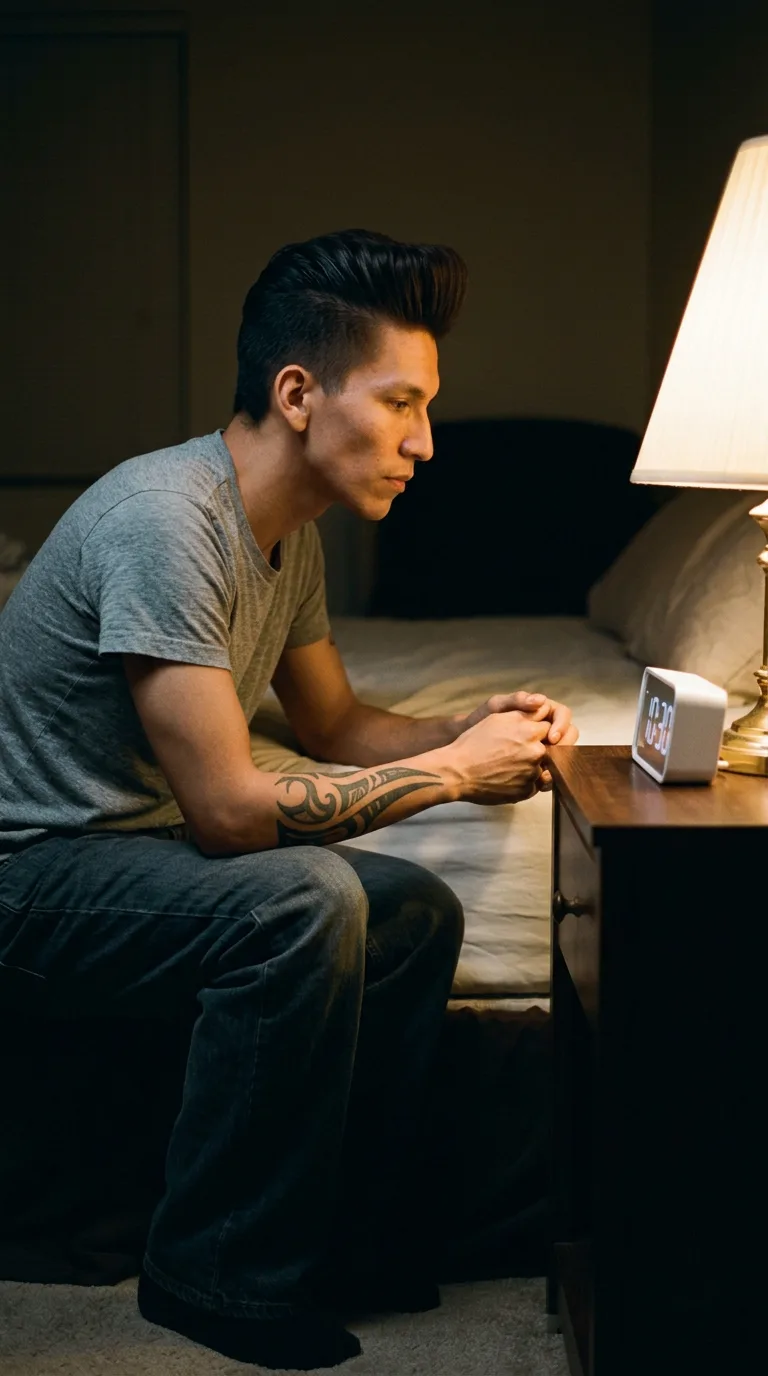
Rarest thing about him: Native American — rare, 1 in 41
Season 0seed 1352468431 · engine v10
Character card
lineage 2NZHHJ
His body-swap story
@colin.hasbrook, wearing Gary Trembicki, rolled the wheel on and woke up as Aaron Littlebird, spent 1 minute in him, then spun the wheel and woke up as Dennis Yamashiro
Gary's shop is closed and swept and the register is counted, and still your hand won't stop working the strop even though there's no blade in it, just the leather going back and forth against your palm because Gary's hands need a job when the day is done and you've had that habit forty-two years even though you've only had it since March. That's the thing nobody warns you about the wheel — you get given the tics too, not just the face. Cleft chin, hazel eyes, a two-chair shop on Main Street with a barber pole that hasn't spun right since Reagan. You have been a good enough Gary. Regulars still come. But this evening a kid paid you in dimes for a fade and called you "sir" like you were something finished, something that had already happened to itself, and something in you that is not Gary and never was went cold and small and said *not this one, not tonight, not the taste of this town again* — and you locked up early and drove to the apartment you don't think of as home and opened the laptop and there it was, vessel.cards, the wheel sitting mid-spin on the loading screen like it had been waiting on you specifically. You did not think about it long. You never do. Three hundred and sixty-three times taught you that thinking about it long is how you talk yourself out of the only thing that has ever made the evenings survivable. You pay. You spin.
The wheel is still going when it isn't anymore — no seam, no drop, no sense of falling, just Gary's cramped apartment gone and instead: carpet under your knees, thin motel-grade carpet, a bedspread rough under your forehead, and your body's weight arranged all wrong, lower, narrower, folded at a joint you weren't folded at half a second ago. Your hands are laced together loosely against a nightstand and there's a lamp too warm for the daylight it's fighting and a digital clock reading a late-morning hour that doesn't belong to any prayer you've ever heard of. You had gotten to the amen. You'd started laughing a little at your own performance of it, halfway up off your knees already — and now you're back down, forehead against cheap floral polyester, and the laugh is gone out of the breath like someone reached in and took it.
The first thing that comes isn't a memory, it's just cold — his knees are cold through his jeans from the floor, and this floor, this room, this whole apartment is his, and the tattoo on his forearm is pressed under his own laced fingers and it opens like a door left unlatched: a shop in Anchorage two years back, needle going, his cousin Denny holding his arm steady and grinning, the design copied out of a book on Tlingit formline that their grandmother owned and never once let leave her house, and the ache afterward that felt earned rather than given. Aaron. The name comes attached to the ink, unmistakably his, the way your own name never once has to be told to you.
The t-shirt against your back gives you the rest of the morning in pieces — you (he) pulled it on an hour ago half-asleep, second-shift hours bent his clock sideways so that "morning" for him is what noon looks like to everyone else, the museum's climate-control humming behind his eyes before he was even dressed, because he came off a night hunched under raking light stabilizing a flaking varnish on a nineteenth-century oil and he'll go back to it this afternoon, gloves and scalpel and the particular held-breath quiet of the conservation lab under those north windows. His hands know that stillness the way Gary's hands knew a strop — a different discipline entirely, patience instead of rhythm, and you feel both now, stacked, his hand steadier than any hand you've worn in months.
The nightstand gives you the clock-radio itself, a gift, and behind the gift a woman — Renata, three years gone, who used to sit where you're kneeling now and laugh at him for praying like he was clocking in, *Aaron, God isn't running a register* — and the sting of that isn't fresh anymore, it's worn smooth like a stone he keeps in a pocket he forgets about until his hand finds it. He prays most nights anyway, unserious the way a person is unserious about a habit they're not ready to call serious. The pills in the bathroom cabinet — you haven't touched them, but the doorframe under your palm a lifetime from now will tell you about the appointment on Thursdays, the low hum some mornings that gloves and brushwork and the patient blankness of restoration help him quiet.
His body is light under you, five-five, no weight to spare on it, a strength in the forearms from close, small, exacting work rather than any weight ever lifted for its own sake. Nothing hurts. Nothing yet has had time to.
You look down and his hands are still laced together, thinner than Gary's, the tattoo dark against skin gone pale from a winter that hasn't let up, and you unlace them slowly like you're the one deciding to, and turn one over into the lamp light.
"Amen," you say, and it isn't unserious at all this time, and you don't know yet how long you get to mean it.