Gary Thistlewood
Fictional. Generated by AI — not a real person, and no likeness of one is intended.
50, nurse in Small-town Ohio · rolled by @colin.hasbrook · card — no film
History
who has worn him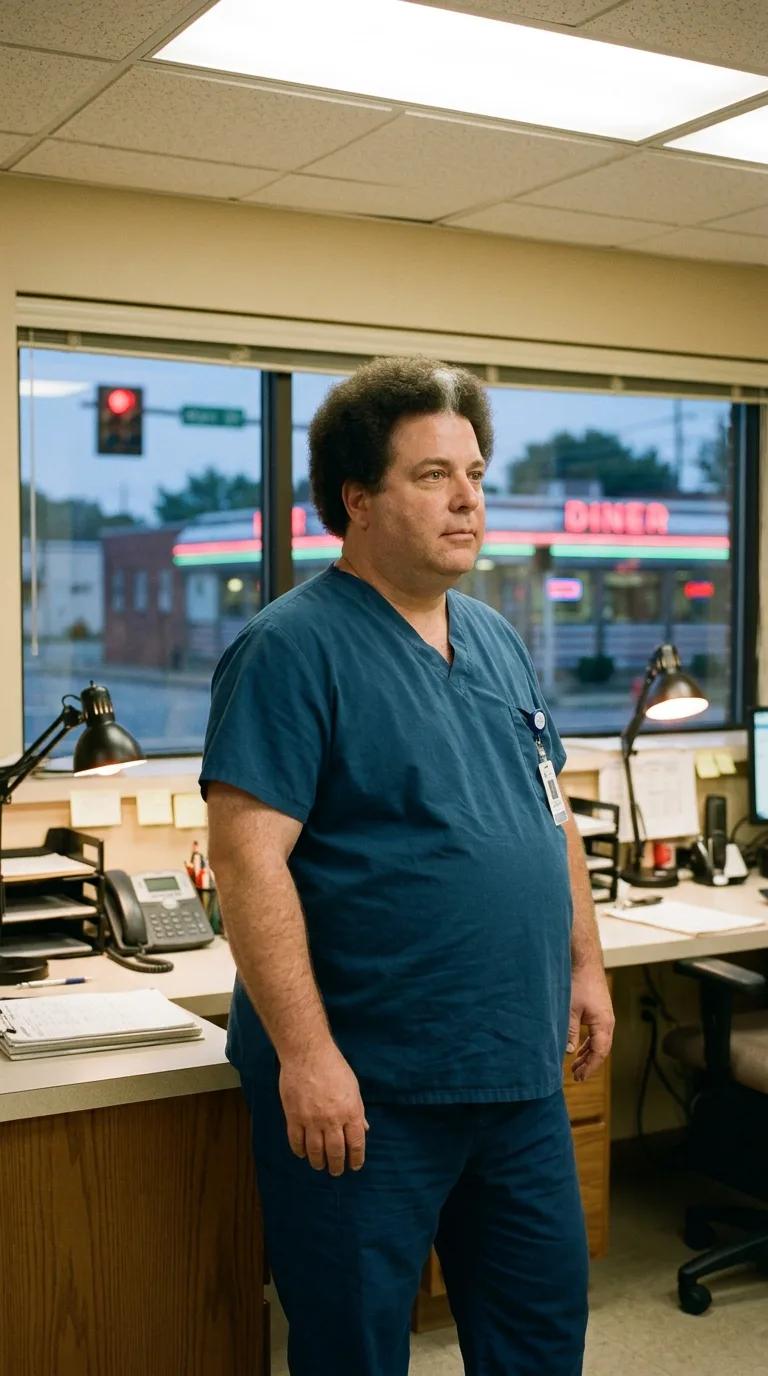
Rarest thing about him: A white streak in the hair — uncommon, 1 in 164
Season 1seed 918800655 · engine v11
Character card
lineage 2NZHHJ
His body-swap story
@colin.hasbrook, wearing Devontae Mosley, rolled the wheel on and woke up as Gary Thistlewood, spent under a minute in him, then spun the wheel and woke up as Danny Okafor-Reyes
The headset is still warm against Devontae's ear when you pull it off for the last time.
Three more calls in the queue and you already know how each one ends — the same rehearsed apology, the same hold music, the same supervisor's voice down the hall reminding everyone about handle-time metrics. You have been him less than a minute and you can feel the whole shape of the shift stretching out ahead like a hallway with no doors, because that is the thing about a body like this: you know it too well already, even brand new. Twenty-eight years old, strong hands, a birthmark he never asked for, a chair that squeaks under him. Somewhere behind his eyes there is a woman he hasn't called back and a lease he's behind on, and none of it is yours to fix. You didn't come back for him. You came back because the wheel is still open on the second monitor, the tab you never closed, and because there is a particular itch that only spinning scratches — not boredom exactly, more like hunger that doesn't wait for the last meal to digest. You set the headset on the desk, open the tab, and put money down before you can talk yourself out of it.
The wheel spins. Somewhere it lands.
You are leaning against a nurses' station counter and your hand is on a pen and the pen is between two fingers of a hand that is not the hand you had a second ago — thicker, heavier, the knuckles wide, the nail beds clean and short. The motion you were mid-way through — signing something, a discharge note, a med count, something automatic — goes wrong, the pen skidding sideways off the line, and you stop, and do it again slow and correct. Fluorescent light overhead. A window off to the side holding blue evening and a red stoplight and the dead neon ghost of a diner sign that isn't lit anymore. Weight in the gut and thighs you don't recognize as home yet. A badge reel retracts with a small plastic click against your chest.
The shirt is what opens first — scrub top, cotton gone soft from a thousand washes, the collar stretched a little from being pulled on over a head of hair too thick for it. It comes with the memory of this morning, sleeve first, right arm through, the ceiling fan in a bedroom turning slow overhead, a dresser missing one drawer pull, the smell of coffee two rooms away that nobody made for him. He dressed alone. He has dressed alone for six years, since Diane took the kids' school photos off the fridge and left the magnets. He still thinks about her more than he'd admit to anyone at church, still catches himself composing texts he doesn't send. The pants know something too — the give at the waistband, the heaviness of him settling into them, the practiced tug that says he stopped fighting his own size somewhere around forty-five and made peace with the elastic instead.
His feet know the floor before you do — rubber-soled shoes that have stood twelve-hour shifts for two decades, the particular ache along the arch that isn't pain anymore so much as a fact, like weather. His hands know the counter, the pen, the shape of a blood pressure cuff, the two fingers automatically finding a wrist that isn't there right now, checking a pulse that exists only in muscle memory. There's a photo taped inside a cabinet door nobody but him opens — his kids, ten and thirteen, at a lake two summers back, squinting at the camera he was holding. He does not see them enough. He tells himself Sundays count. He believes, actually believes, the way you believe a chair will hold you, that things are working out the way they're supposed to, slower than he'd like but working.
The white streak in his hair — you feel that too, obliquely, the way a man feels a thing people mention more than he thinks about himself: a woman at the DMV once told him it made him look distinguished, and he'd laughed it off and thought about it in the mirror for a week after.
Nothing about tonight is unusual to him. It's a Thursday, mid-shift, the diner across the street closed years ago and still lit up out of habit in his mind though the sign's long dark. He has already refilled the coffee pot twice and thought once, briefly, about calling Diane just to talk, and decided against it, again, like always.
You look down. The hand is heavy, pink, freckled at the knuckle, a stranger's hand doing exactly what hands do — turning, palm up, palm down — and you hold it there a second too long, the way you always do, right at the start, before a body becomes a habit instead of a discovery.
"Whole life," you say, out loud, to the window, to the dead diner sign, to nobody, "and I don't even know yet."