Gary Pelletier
Fictional. Generated by AI — not a real person, and no likeness of one is intended.
52, furniture mover in Miami · rolled by @marco.villagrana · card — no film
History
who has worn him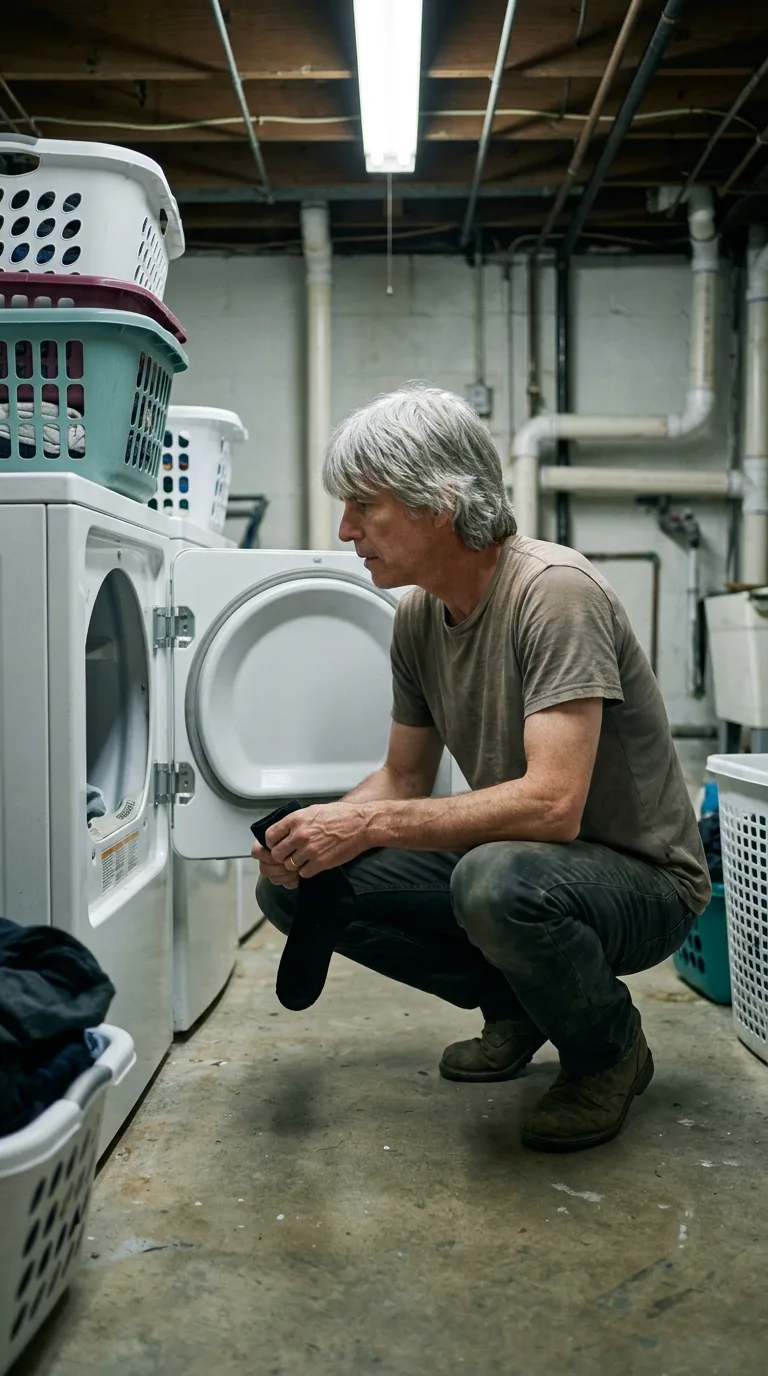
Rarest thing about him: A shag — rare, 1 in 169
Season 0seed 1903136176 · engine v10
Character card
lineage LJL8SV
His body-swap story
@marco.villagrana, wearing Ronald Speight, rolled the wheel on and woke up as Gary Pelletier, spent 3 minutes in him, then spun the wheel and woke up as Dennis Halloran
You have been Ronald Speight for three minutes and it is already not enough. His scrubs still smell like the hospital, his nose sits crooked from some break decades before you arrived, and his knees ache in a way that isn't yours but reports to you anyway, like a tenant complaining to the wrong landlord. Somewhere down the hall of this rented life a television is playing to no one. You spun the wheel from inside a laundromat once, from inside a barn once, from inside a man who cried the whole time you wore him — and now from inside a nurse who has done nothing yet except stand in his own kitchen holding a mug he does not want. Three minutes of him is enough to know he worries about a patient. You did not come here for that. You came here because ninety-eight men were not enough and the ninety-ninth will not be either, and there is a particular flavor of hunger that does not resolve by feeding it, only by feeding it again. You set the mug down un-drunk. You open the site on his phone with his thumb. The wheel spins the way it always spins, cheerful, indifferent, and lands.
The dryer door is warm against your knuckles before you understand you have knuckles again, different ones. A sock is in your hand — his hand, gray-haired knuckles, a plain band on the ring finger — pulled from a load that is still ticking with heat. Fluorescent light hums somewhere close overhead, a tube about to go. You are crouched. Your knees — his knees — take the crouch easily, no complaint at all, which is its own small shock after Ronald's. The basement smells like detergent and old concrete and, underneath that, faintly, like the ocean, though there is no ocean anywhere near a basement. You pull the rest of the load into the basket in one practiced motion your arms already knew how to make before you arrived to make it.
Then it starts coming in, the way it always comes in — through what you're holding, not through anything you did.
The sock: black, ordinary, and behind it a version of this same basement, dozens of times, hundreds, the particular ache of a lower back that has spent thirty years learning couches and armoires and the exact width of a doorway a china cabinet will and will not fit through. Your shoulder — his shoulder — remembers a canvas strap crossing it, remembers the specific grunt of stairs, remembers a curse word he doesn't actually say out loud because a woman down the hall from a house he moved once told him Jesus heard everything and he'd laughed but some of it stuck. Church on Sundays, most Sundays, a folding chair in a room that used to be a Blockbuster. Sweet tea he stopped drinking beer for twenty years ago because he woke up one Tuesday and didn't like the man he saw doing it and just — stopped, no meeting, no chip, just stopped, the way some men do.
The shirt against your back — his shirt, thin, soft from a hundred washes — gives you this morning, sleeve by sleeve: standing in the bedroom while Denise's part of the bed was already made, her side of the closet already gone through for the day, him pulling this shirt over his head and thinking, not for the first time, that he should throw it out, and not throwing it out, because it was hers to hate, not his, some kind of small marital treaty nobody had ever spoken aloud. He'd looked at himself sideways in the mirror. Touched his own face without noticing he was doing it — a thumb along the jaw, checking for something that was never there — and then gone downstairs.
The basket handle gives you the drawer upstairs, eight shirts folded by a man who loved his wife and could not for the life of him square a corner, and Denise's voice, fond and worn thin with twenty-some years of the same joke: *I don't know how you move a whole house and can't fold a shirt.* You feel that joke land in his chest like it always lands, warm, a little sore. There is a daughter somewhere in the folds of this too — a photograph on a dresser upstairs you have not touched yet but can feel the shape of anyway, a graduation gown, a phone call last week that ran long and good.
His body under all of it: fifty-two years old, skinny in the way of men who have spent a life doing physical work and never bulking from it, wrists a little swollen some mornings, a CPAP machine waiting upstairs on his nightstand for the sleep he will fight for later tonight the way he fights for it every night, mouth taped shut sometimes by his own hand because Denise complained once about a snore that could move furniture on its own. His hands know weight. They know how to case a couch through a door frame without your ever having to think it — a whole language living in the forearms that has nothing to do with you and everything to do with him.
You fold the load fast, corners squared, a stack that would make Denise stop in the doorway and ask what got into him.
You look down at the hands doing it — his hands, thin gold band, a thumb that keeps drifting up toward the jaw out of some old habit that isn't yours — and you turn one over like it might have arrived with a return address on it.
You lift your eyes off it into the low humming light and you say, out loud, to no one, in his voice and not Ronald's:
"There you are."