Gary Meloche
Fictional. Generated by AI — not a real person, and no likeness of one is intended.
58, photographer in Boston · rolled by @colin.hasbrook · card — no film
History
who has worn him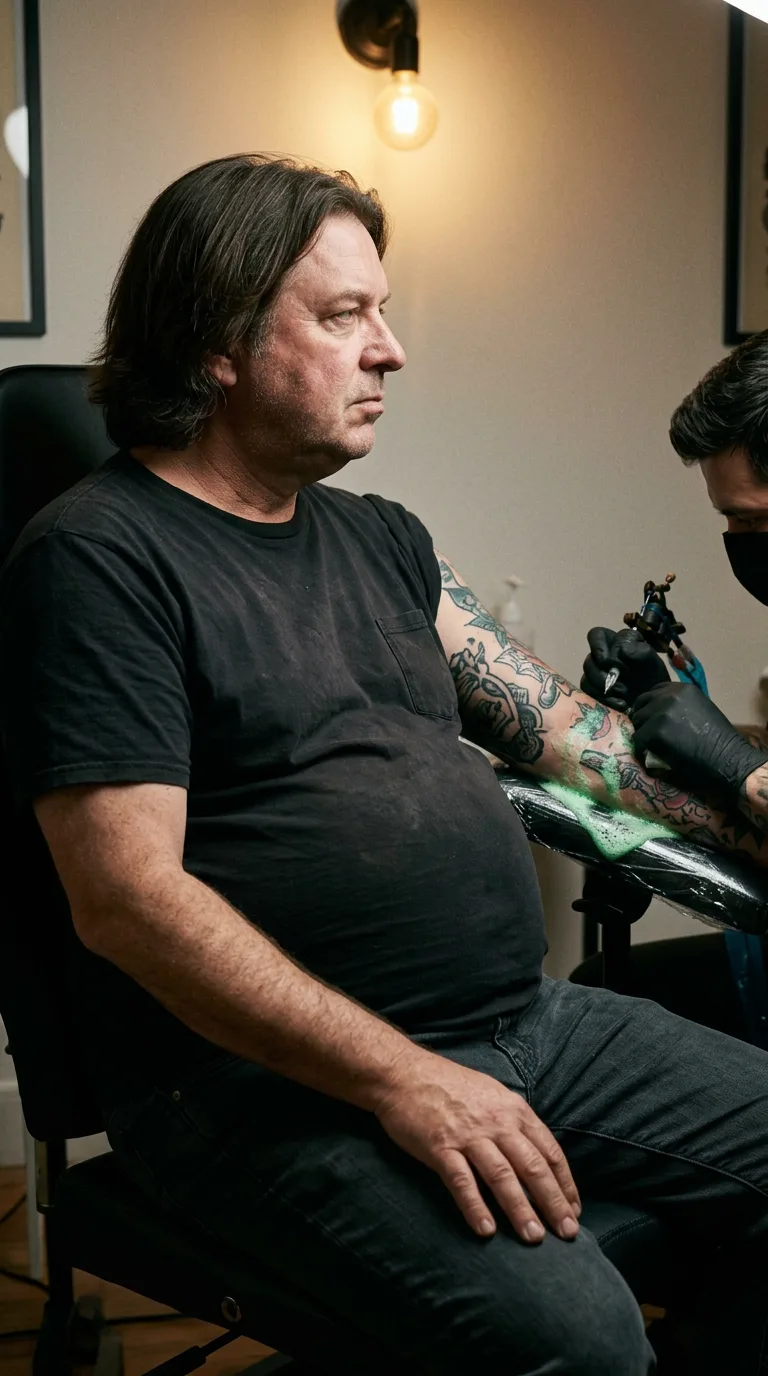
Rarest thing about him: Full sleeve — epic, 1 in 78
Season 0seed 1734490650 · engine v10
Character card
lineage 2NZHHJ
His body-swap story
@colin.hasbrook, wearing Sanjay Meherally, rolled the wheel on and woke up as Gary Meloche, spent under a minute in him, then spun the wheel and woke up as Brendan Ostrowski
The clinic smells like antiseptic and wet dog, and Sanjay Meherally's hands — small, brown, competent — are not doing anything you want them to do at eleven in the morning. You have been him less than a minute and already you know the whole shape of tonight: a spay recheck, a labrador with a hot spot, a fourth coffee he shouldn't drink because of his own blood sugar, which is somebody else's problem now, was always going to be somebody else's problem the second you got tired of it. You are not tired of New Orleans. You are tired of the smallness of him — 5'5", a white streak he is vain about, a practice he built with twenty years of decent choices. Decent choices bore you. You did not come back to the site to leave him for a reason he'd understand. You came back because the wheel is there and it is evening where you are and there is nothing on the schedule that isn't a dog, and thirty seconds from now none of that will be true for anyone.
You pay. You spin. The number climbs past the six hundreds like a joke only you're in on.
The power drops for two seconds in a room you have never seen, and when it comes back you are sitting in a tattoo chair in Boston with a strange weight already settled into you — a gut, a give in the middle, shoulders that go on for a while past where Sanjay's would have quit. The needle is still moving in the arm. It doesn't hurt. It should hurt and it doesn't, because you are not flinching, because whatever was flinching a second ago left the building. Green soap sits in a bright little pool under the machine, catching the one bulb overhead. Your jaw, which was set like a man doing math against pain, goes loose. You watch the needle go into the arm like you're watching TV.
The shirt is the first thing that talks to you — a black tee, soft from washing, a little snug now over a belly that was never going to be flat again and stopped apologizing for it years ago. You feel the morning it went on: Denise handing it to him off the drying rack still warm, saying *wear the old one, don't ruin a good one*, and him grinning because she was right, she was always a little bit right, and that grin is a whole marriage folded into one gesture, seventeen years of her keeping him fed and reasonable and loved past the age when he expected either. The sleeve — right arm, and it is loud even to the touch, raised lines under your fingers where the ink sits thick, a ship, roses, a dagger you can't currently see from this angle but know is there the way you know your own tongue. Twenty-two, twenty-three, some other apartment, a boardwalk shop in Revere with a guy named Iggy who's dead now. Getting this arm has always felt like church to him. That's why he's back in the chair tonight, past midnight, closing up a gap near the elbow that's bothered him for two years — because Denise is asleep, because his daughter texted him something sweet before bed that he hasn't answered yet, because some nights the only thing that settles a man built like this is pain that means something and doesn't cost him anything real.
The chair under you — vinyl, worn soft at the armrest — gives up an afternoon: not this shop, an earlier one, a woman's hand instead of a man's, her laugh through a mask, four years ago, back when it was her chair and her hands and you — he — sat here wanting to be anywhere near her longer than the appointment required. Her name comes up plain and sudden: Carla. The one who got away, except she didn't go anywhere, she just stopped answering, married someone in Providence, and he still thinks of her wrongly, warmly, on nights exactly like this one when he's alone with a needle and his own blood going quiet and thick with sugar he isn't supposed to have. There's a ring he isn't wearing right now — it's in his jacket pocket on the chair beside him, and even not-touching it you get the ghost of the habit: turning it, turning it, when he's nervous, when a client is late, when the light isn't the light he needs for the shot. That habit belongs to somebody else's hands now. Yours, this second.
Reflector against a wall somewhere, a job tomorrow, a kid — a son, older, texts once a week, loves him without needing much from him, which is its own kind of ache Gary carries and doesn't examine. Camera bag by the door of this shop, because he came straight from an evening shoot, still smelling faintly of someone else's living room, someone else's overhead light. Feet flat on the floor in boots that have stood in a hundred backyards for a hundred family portraits. Diabetes sits in him like weather, a thing he manages and resents in equal quiet parts, and under the ink his arm is heavier than it looks, warm from the machine's friction, a low hum of ache starting at the elbow that isn't the needle, that's just fifty-eight years of a body doing its best.
The tattoo artist keeps working, oblivious, green soap going pink at the edges. You lift the untattooed hand off your knee and turn it over slowly in the low light, watching the lines of it like they're somebody else's palm being read.
You look up into the mirror across the room instead of at him, and you say, "Almost done, right?" — easy, like a man who has all night, because for once, God knows how long, you actually might.