Sanjay Meherally
Fictional. Generated by AI — not a real person, and no likeness of one is intended.
49, veterinarian in New Orleans · rolled by @colin.hasbrook · card — no film
History
who has worn him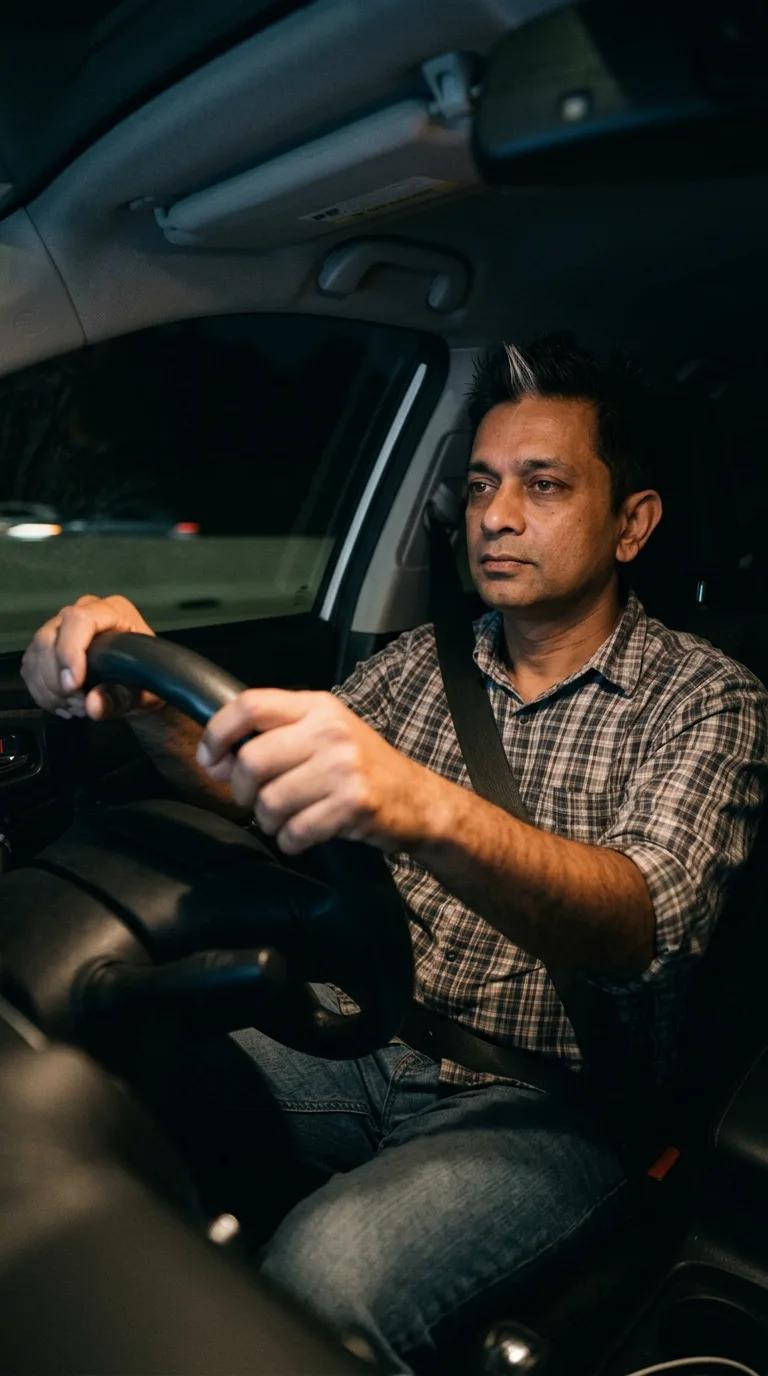
Rarest thing about him: A white streak in the hair — epic, 1 in 98
Season 0seed 449540168 · engine v10
Character card
lineage 2NZHHJ
His body-swap story
@colin.hasbrook, wearing Casey Fontenot, rolled the wheel on and woke up as Sanjay Meherally, spent under a minute in him, then spun the wheel and woke up as Gary Meloche
You are Casey Fontenot four hours and seven minutes into being Casey Fontenot, and the problem is you can feel his heartbeat and it will not stop being twenty-six years old. Firehouse smell still in the walls around you — bleach and diesel and old coffee — a body that runs hot, restless, built for being used, and you have spent four hours pacing a kitchen you have never seen in your life waiting to feel like you own it. You don't. He keeps intruding: a shoulder that wants to laugh at something you don't remember, hands that flex like they're gripping a hose. Casey was a good pull. Athletic, easy, twenty-six forever if you let him be. But something in you — call it appetite, call it the thing that never once in six hundred and eighty-one spins let you sit still with what you had — is already at the laptop, the wheel spinning light across a face that isn't permanently anyone's. You tell yourself it's just to see. It is never just to see.
The wheel lands and there is no seam, no falling — one second you are the ache of wanting more, and the next you are the weight of a man mid-turn: short, compact, forty-nine years of average build settling into you like a coat someone else already broke in. Hands leave a wheel that isn't there. The dash light is gone. Whatever road he was on, it isn't under you anymore. You are standing — no, sitting, seatbelt still buckled diagonally across a chest that breathes slower than the one you left, a highway going dark and silent as the story that made it stops mid-sentence, headlights sliding past a house one room wide.
The shirt is what opens him first — plaid, worn soft at the elbows, and it comes back to you in his hands, not yours: buttoning it this morning in a bathroom with a cracked mirror, humidity already fogging the glass at seven a.m., the small ritual satisfaction of getting the collar to sit right because a woman once told him it never did and some petty, tender part of him has been proving her wrong for six years since. Sarita. Not his ex-girlfriend's actual name reaching you whole, just her weather — laughter that used to fill this exact kind of house, one room wide, the two of them younger, a fight about nothing that was actually about everything, and then the two kids who came after, who now live with her on the other side of the parish and who he sees on weekends that never feel like enough and never feel like too little either, just like the wrong shape entirely.
The stethoscope isn't around your neck now but your fingers remember its weight anyway, remember paws and the specific stillness of an exam table between him and a door, remember a whole day of it — a dog with a tumor he had to explain gently, twice, because the owner didn't want the first explanation to be real. He is good at that gentleness. It costs him. That's where the migraines live, you understand suddenly, behind the eyes, built up hour by hour in rooms with fluorescent light and other people's grief about their animals, and he pays for it every evening with his temple against a cool window and a vape pulled slow, three hits, the throat-catch of it replacing a drink he let go of years ago without much ceremony — just noticed one day he didn't want it anymore, the way you notice a smell has left a room.
Your jeans are stiff at the knee — new-ish, bought because the old pair finally split at a seam he was tired of pretending wasn't there. Weather-hard hands, calluses along the first knuckle from restraining animals twice his size with nothing but grip and calm voice, nails bitten down past the point of pride, a habit he's ashamed of and does anyway, especially driving, especially three miles from a house that is quiet in a way he has stopped fighting. Two kids grown enough now to have their own weekends. A practice worth more than he ever expected a boy from a Baton Rouge pharmacy family to be worth. Enough money that money isn't the ache. The ache is smaller and stranger: driving home to a house one room wide and nobody in any of the rooms.
You look down. His hands are on the wheel that isn't there anymore, then in his lap, then turning over in what dashboard light is left, and they are not your hands, they have never been your hands, and still they answer when you close them.
You say, out loud, to a windshield full of nobody: "Okay. Okay — where am I."