Brendan Ostrowski
Fictional. Generated by AI — not a real person, and no likeness of one is intended.
30, butcher in Pittsburgh · rolled by @colin.hasbrook · card — no film
History
who has worn him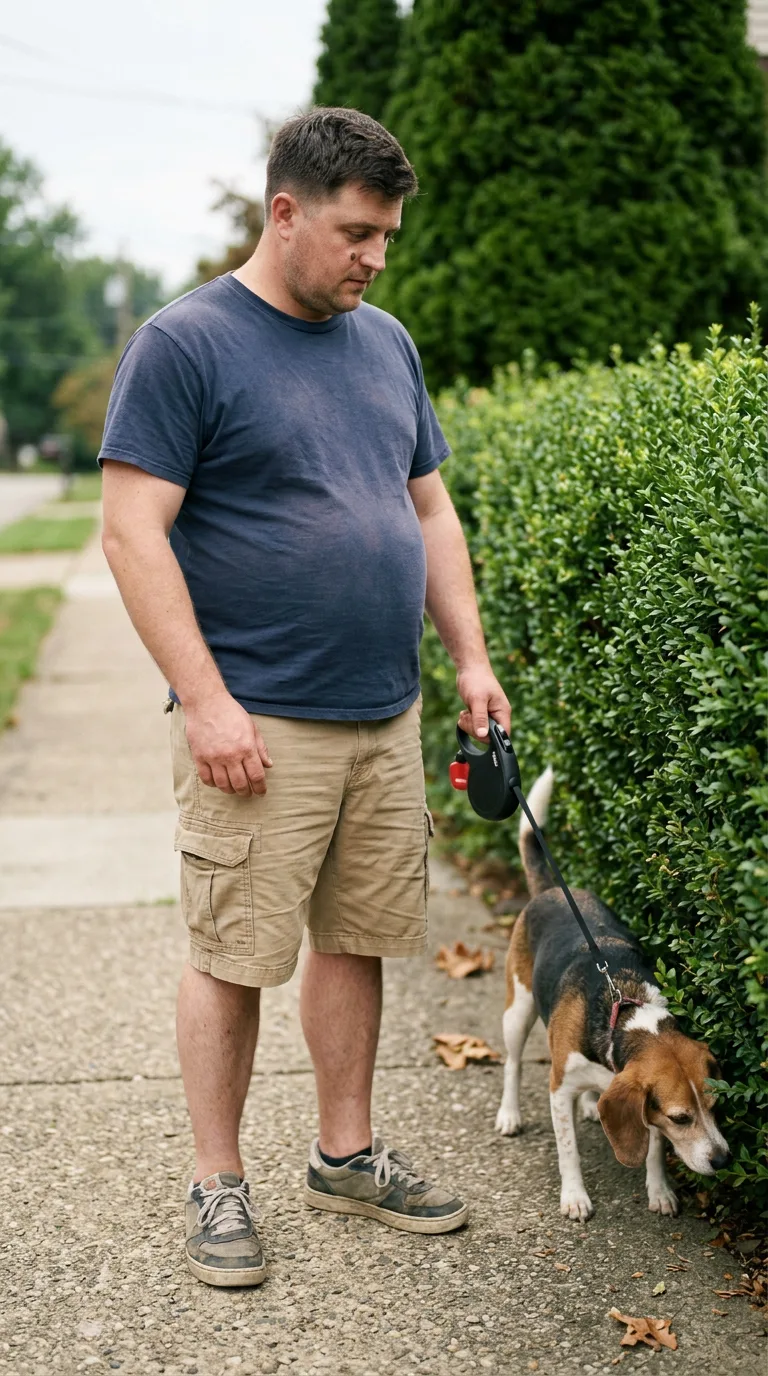
Rarest thing about him: Ex-spouse — rare, 1 in 33
Season 0seed 698536829 · engine v10
Character card
lineage 2NZHHJ
His body-swap story
@colin.hasbrook, wearing Gary Meloche, rolled the wheel on and woke up as Brendan Ostrowski, spent under a minute in him, then spun the wheel and woke up as Ovidio Reséndez
Gary Meloche's apartment smells like fixer even though nothing has been printed in years, and you have been him for less than a minute and already you know you are not staying. That is the thing about this body — it decides fast. Sixty years of somebody else's knees, a light meter on the counter he hasn't touched since the divorce, and the particular loneliness of a man whose whole life is looking at other people's. You did not spin the wheel to become a lens. You want, tonight, to be a man who is tired in a simple way, whose hardest decision is whether the dog has sniffed the hedge long enough. You open the site on Gary's laptop with Gary's tired eyes and you do not think of it as leaving him, because you never do. You spin.
The leash is already in the hand before the hand is yours — a small definite weight, tugging, alive. The dog's ears go back like it heard something arrive that wasn't there a second ago. You are standing on a sidewalk in evening light that has no business being evening light, because where you came from it was almost midnight, and here it is late afternoon going gold at the edges, wet leaves flattened against the concrete from a rain that already happened. The gut of him is heavy and low and familiar in the way another man's body is never familiar, and you let the leash go slack for one more second before your hand — his hand — winds it in twice, on its own, like it's done this a thousand evenings, and starts walking at a pace the dog has to scramble to learn.
It comes in through the leash first. Not a memory so much as a mood: patience, low-grade and permanent, the specific fondness of a man who talks to his dog more than he talks to most people. Then the shirt against your back gives you the morning — him pulling it over his head in a bedroom with one nightstand instead of two, the ceiling fan he never turns off because the silence without it is worse, the cargo shorts because it's warm enough and cool enough is a lie he tells himself every October in Pittsburgh. He dressed without thinking, the way you dress when nobody is going to see you but a beagle named, the leash tells you, Moose — the tag jingling against the plastic housing gives you that whole, entire: a shelter parking lot, an ex-wife in the car not getting out, her voice saying you're the one who wanted a dog, Brendan, so and the door closing soft instead of hard, which was somehow worse.
The apron strap mark on his shoulder — gone right now, but his shoulder remembers it — gives you the shop: fluorescent trays, the quiet after the saw goes off for the night, the particular ache low in his back from standing on concrete since five a.m., a regular named Diane who always asks about his knee. His hands, hanging at his sides between strides, know a hundred small weights he isn't holding — the balance of a boning knife, how a shoulder comes off cleaner if you let the joint do the work instead of the blade. Calluses along the base of his fingers that have nothing to do with a leash.
The mole on his cheek itches faintly, sun on it, and with the itch comes something smaller and sadder: a woman's thumb, once, tracing it, saying she liked it, before she was an ex-wife instead of a wife. He hasn't thought about that in longer than a year. His body thought about it just now, on your behalf, without asking.
His knees complain going down the three steps off the sidewalk toward the next stretch. Dad bod, the wheel would call it, but it's just a body that eats what it wants twice a month and drinks big on the same schedule and otherwise gets up at five whether it wants to or not. Nothing hurts in a way that scares you. Everything hurts in a way that's just true.
You stop walking. The dog stops too, looks back, unbothered, already forgiven you for whatever that pause was.
You turn your free hand over in the low gold light, palm up, like it might have an answer written on it, and you say, out loud, to no one, in his voice, flat with the beginning of a Yinzer vowel he'd deny having, "Okay, Moose. Let's go home, huh."
You don't know yet how long home is going to mean anything.