Gary Lindahl
Fictional. Generated by AI — not a real person, and no likeness of one is intended.
60, manager (mid-level) in San Francisco · rolled by @connor.waskiewicz · card — no film
History
who has worn him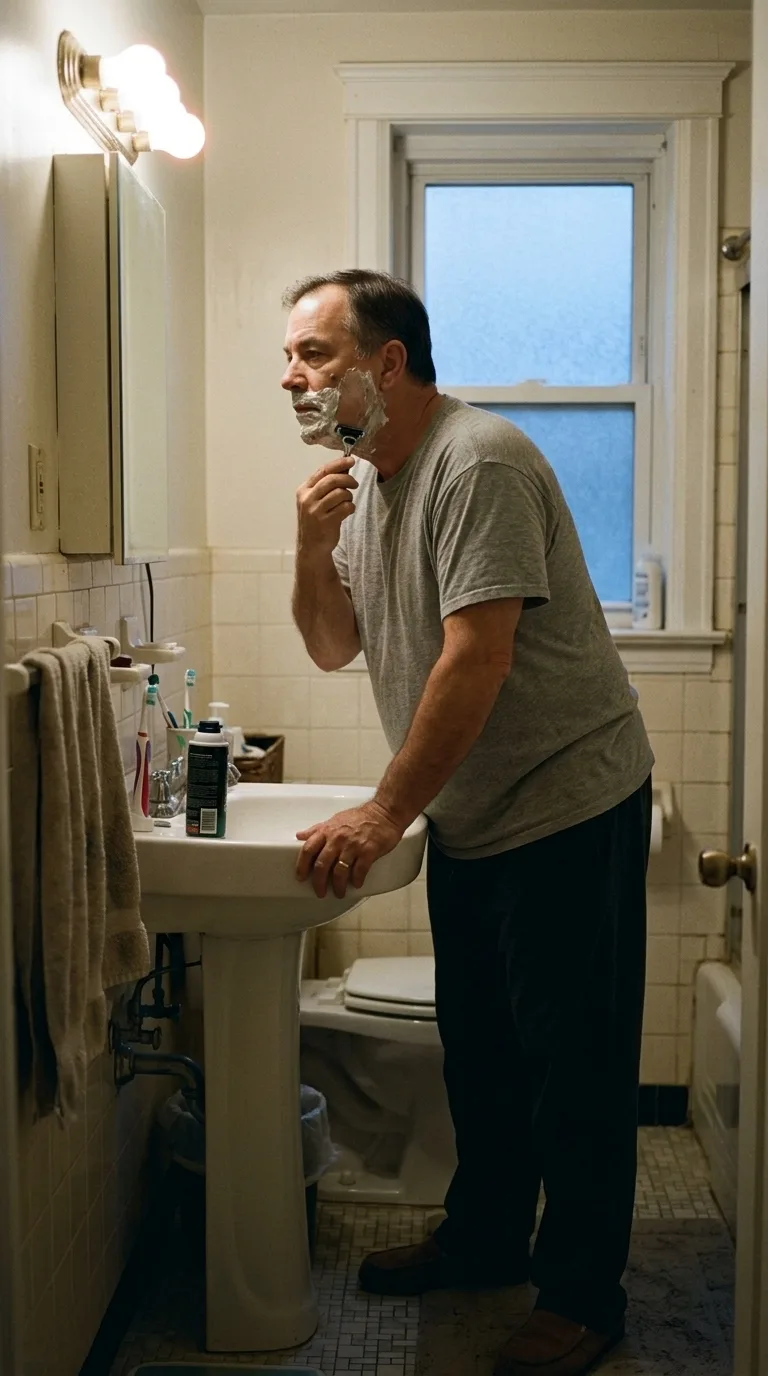
Rarest thing about him: Covers the gray — common, 1 in 34
Season 1seed 1894692245 · engine v11
Character card
lineage 2NZHHJ
His body-swap story
@connor.waskiewicz, wearing Harold Gentry, rolled the wheel on and woke up as Gary Lindahl, spent under a minute in him, then spun the wheel and woke up as Mateo Ybarra
You are standing in a farmhand's kitchen in Atlanta, and the coffee is going cold in Harold Gentry's broken-nosed hands. Nothing is wrong with him. That is the trouble. Sixty-five years of knees and shoulders, and every morning the same ache arrives at the same stair. You have worn him for less than a minute, and you already know how the whole day runs: the fence, the truck, the quiet. You wanted a man with somewhere to be. You wanted a door left open, and a glass room, and someone waiting on an answer. So you set the cup down and open the page with the wheel on it, and the wheel turns.
Cold tile under the soles. Your weight sits forward, a belly against the porcelain edge of a sink, one palm flat on its rim. Foam covers half your face. The razor is stopped against the jaw, and the first half is already done. Light-bulb heat from the left, cold blue window to the right.
The towel on the bar is rough and gray, and when your shoulder brushes it, it comes: a wife's voice from the next room saying *you'll be late*, and his answering *I know*, a small guilty gladness at being known. The shirt against your back is soft from a hundred washes. The shirt gives you the morning: arms through, head through, the hem tugged over the belly he pretends isn't there. Then the other clothes, the ones hanging on the door, the navy polo and the khakis, and the badge he clips on last, because last is when he becomes the manager. The glass office. The open door, which he keeps open so no one thinks he's hiding. Eleven people who bring him their problems like cats bring birds.
The sink rim is cold and wet under your palm. The wedding band clicks on the porcelain. It gives you the wife, thirty-odd years of her, a kitchen, a hospital corridor once, the child's name soft in his chest. Then, from nowhere, a different woman: a girl in a car, long ago, rain on the glass, and a feeling he has never said aloud and never will, a small warm stone he carries and does not turn over.
His right leg wants to bounce. You feel it under you, the restless knee, the tendon wound tight. Your back aches low and honest, a sixty-year-old ache. The scalp is bare at the temples, the cool air on the pushed-back hairline. The mole sits high on the cheek where the razor never goes.
He always hesitates at the corner of the mouth. His hands know it, and you don't. You pull the blade up the jaw against the grain, past the corner, and nothing stops it. The second half goes faster than the first.
You rinse the blade under the tap. Then you lift your right hand out of the water and look at it: the ring, the blunt nails, the pale line where the band has worn the skin. You turn it over. Then you look up into the mirror, into brown eyes that are only yours now.
"Morning," you say, in a voice that is easy and not yours.
Somewhere there is a wheel. You can feel how near it is, the way you feel a tooth. Whether this man lasts a day or four minutes, you don't know yet.