Harold Gentry
Fictional. Generated by AI — not a real person, and no likeness of one is intended.
65, farmhand in Atlanta · rolled by @connor.waskiewicz · card — no film
History
who has worn him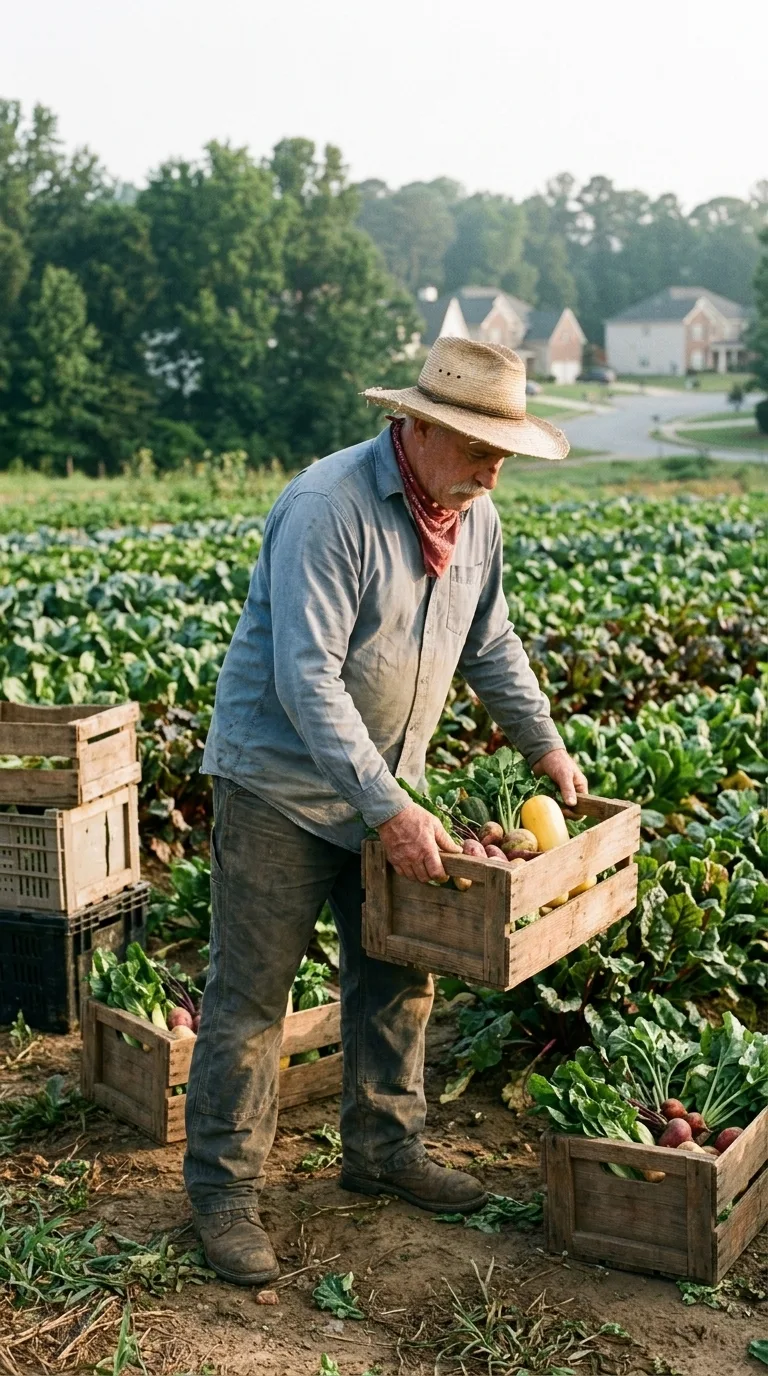
Rarest thing about him: Farmhand — common, 1 in 134
Season 1seed 1307688453 · engine v11
Character card
lineage 2NZHHJ
His body-swap story
@connor.waskiewicz, wearing Curtis Whitmore, rolled the wheel on and woke up as Harold Gentry, spent under a minute in him, then spun the wheel and woke up as Gary Lindahl
You are in Curtis Whitmore's kitchen, and the window over the sink is gray with fog, the way it is before the day has started. He has been yours for less than a minute. You have not even finished the first breath in him.
His knees are good. His belly sits easy over his belt. His nose has an old break in it that you can feel when you inhale. None of it is wrong. All of it is a man's, and none of it is yours, and you stood there with his coffee cup in his hand and understood that the wanting had come back again, quicker than it ever has. You didn't hate him. It was the cup. It was warm, and it had been somebody's warm cup for sixty-three years before you, and you wanted to be someone whose cup you had not already been handed.
So you set it down. The page is open. The wheel is already turning.
Then the fog is gone and the air is thick as a wet towel, and there is a crate in your hands.
It is heavy, it is mid-lift, and your back has already agreed to it. Your hands did one thing wrong a half-second ago, and you feel it in the wrists, a small hitch, a lift started a hair early. You set the crate down and lift it again slowly, correctly. The beets shift. The squash rolls against the slats. You do the next one the same careful way, and the next, ten in a row, each one checked, and you don't know why you're checking.
The wood is rough under your palms, and it is the first thing that opens him.
A truck bed, a different crate, a smaller boy's arms trying to take the other end. *Daddy, I got it.* You get his pride in it, a warm stupid pride that sits in the chest like swallowed sun. The boy did not have it. He let him think so. Then it's gone, and the crate is only wood again.
The shirt comes next, soft and damp against your shoulder blades. It is cotton washed so many times it has gone to cloth like skin. You get the morning in his hands: buttons from the bottom up because his fingers are stiff first thing, cuffs rolled once and then unrolled because the gnats come at the wrists. The red bandana, knotted at the throat, twice, because the first knot is always loose. He stood in a dark hallway doing it, and a house was asleep around him. He moved quietly out of an old habit. Someone used to sleep light in that house, and he still walks like her.
You feel the bare place on your ring finger. The skin is pale there, and your thumb goes to it without your telling it to, rubbing at nothing. A flash: a kitchen, not this one, a woman saying his name flat across a table, *Harold*, and a pen in his hand clicking, clicking, because he could not think of one true thing to say. Your right hand is doing it now around nothing, thumb pressing a pen that is not there. You let it. The grief in it is dull and old, worn smooth, like a step.
The hat's brim is fraying against your forehead. Under your boots the dirt gives, then holds. Smoke comes, absurdly, a ghost of it at the back of the throat, a cigarette on a tailgate twenty years ago, and the craving is a hollow in the roof of your mouth that he gave up and still visits. Your shoulders ache in a good, earned way. Your lower back has an opinion. Your knees know the row. Through the leaves the cul-de-sac sits pale and quiet, with other men's roofs and other men's sleep, and the humidity presses your mustache damp against your lip.
You look at your hands. They are broad, cracked, red at the knuckles, with that pale band on the finger. You turn them over. The palms are creased with dirt like a map of somewhere you have never been.
You lift your eyes and say, to nobody, to the rows, "Well. Hello, Harold."
The crate waits. The day has not started. And under the beets and the borrowed ache, small and already patient, is the question you can't put down: how long before the wanting comes back.