Gary Kowalczyk
Fictional. Generated by AI — not a real person, and no likeness of one is intended.
61, train conductor in Denver · rolled by @justin.moy · card — no film
History
who has worn him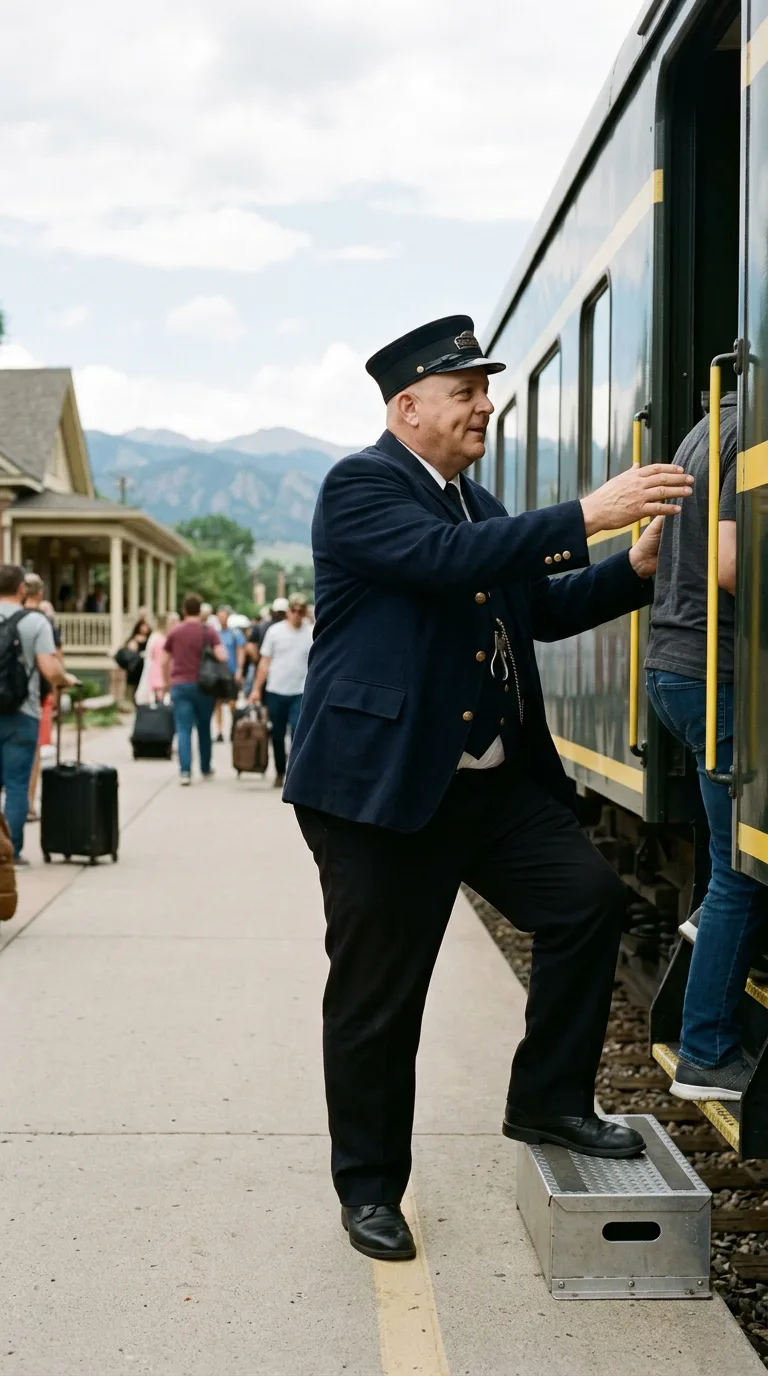
Rarest thing about him: Jehovah's Witness — epic, 1 in 132
Season 0seed 1437167189 · engine v10
Character card
lineage EN1F2L
His body-swap story
@justin.moy, wearing Travis Odom, rolled the wheel on and woke up as Gary Kowalczyk, spent 1 minute in him, then spun the wheel and woke up as Brian Nolletti
Travis Odom's leg is going again, heel drumming the floor mat of the cab like it's got somewhere to be, though the truck's parked and the load's not due till four. Thirty-one, skinny in a way that never filled out no matter what he ate, dark hair getting long over his ears, a beauty mark under one eye that women used to touch like it was a button. You've had a day and twenty hours of him. Long enough to learn the ache that lives behind his left knee from a bad landing off a trailer years before you got here, long enough to learn he skips breakfast out of habit and not virtue. Not long enough to want to stay. The wanting was never really about him — Travis is fine, Travis is a bus you rode partway. It's the wheel. It's the thought of it sitting there on the phone screen, patient, colored like a carnival, and the small ugly hunger of not knowing who's on the other end of the next spin. You tell yourself it's boredom. It's not exactly a lie.
You open the site with his thumb. You spin with his thumb. Somewhere the wheel does what it does, and El Paso, late morning, keeps existing without you in it.
The platform smells like diesel and wet concrete and somebody's coffee going cold three feet away, and your hand is flat against a stranger's back, palm still carrying the shape of the push you were giving him up the step. Halfway through the motion. The hand doesn't finish it — it hesitates, fingers curling oddly, like they've forgotten which way a shoulder blade goes, and then, deliberate, slow, they finish the push correctly. The next passenger you hand up the step you check twice. And the next. Ten of them, each one metered out like you've never done this before, though something under your skin insists you have, ten thousand times, in your sleep, without looking.
You're heavier than you were a breath ago, thick through the middle in a way that settles rather than strains, and there's a cap brim shading your eyes and a stiff collar at your throat and gold buttons under your palm when your hand drops to your vest out of some reflex that isn't yours yet. Your knees complain — not sharp, just old, a low permanent bill that comes due every time you stand from sitting, and you were not sitting, you were standing, so this is just what standing costs now. A tram bell somewhere behind you. Mountains stacked pale over the rooftops past the platform, too big to be real, like a backdrop somebody forgot to take down.
The wedding band is the first thing that talks. Cool metal, worn thin on the underside where a hand rubs against tools and railings all day, and it opens onto her — Diane — the porch light left on for you on nights you come in past dark, her voice saying grace before dinner in a way that used to embarrass you in front of coworkers and now you'd stand in a hailstorm to hear again. Twenty-nine years of her. No kids, and there was a time that hollowed you both out separately before it filled back in with each other, quieter. She still leaves a magazine from the congregation on the kitchen table for you, dog-eared to something she wants you to read, and you always read it, eventually, on the porch, dimples deepening around whatever she's underlined.
The cap band gives you the hat — pressing a faint line into skin that used to have hair to cushion it, decades gone now, shaved smooth on purpose since the hairline started running from him first. The uniform coat, brushed wool warm under the mountain sun, gives you the closet at five this morning: buttoning it in the dark so as not to wake her, vest first, watch chain, the tie knotted by feel because your fingers know the motion better than your eyes do at that hour, the ache in your lower back complaining the way it complains every morning, a low grinding thing that lives between two vertebrae and never fully leaves, that you've stopped mentioning to Diane because there's nothing to be done and no sense worrying her.
The step box under your foot gives you every platform you've ever stood on — decades of them, hands up, hands down, "watch your step," a rhythm so deep in the muscle that when you slipped once, doing it wrong on purpose just now without knowing why, your whole body flinched at the wrongness of it before you'd even decided to fix it.
Somewhere in there, touching nothing, just surfacing on its own the way the oldest things do: a woman who isn't Diane, twenty years gone, a name you don't reach for because some part of him decided long ago not to, and a feeling that arrives anyway — not guilt, not quite, something more like a door left slightly open in a house otherwise locked up tight, closed for the day when he married her and never all the way since.
Your leg starts up on its own before you've told it to, heel bouncing though you're standing still, some circuit in this body that fires whether or not there's anywhere to send the energy. It's been doing that for sixty-one years, apparently, whether he was sitting in church or standing on a platform in the sun. You didn't ask it to. It doesn't care.
You look down at the hand still resting against the last passenger's back, thick fingers, a plain gold band catching the light, dimples set deep in cheeks that haven't decided yet whether to smile.
"Watch your step," you say, and your voice comes out low and easy and entirely unbothered, a voice that has said this ten thousand times and doesn't yet know it's saying it for the first time.