Brian Nolletti
Fictional. Generated by AI — not a real person, and no likeness of one is intended.
38, nurse in Boston · rolled by @justin.moy · card — no film
History
who has worn him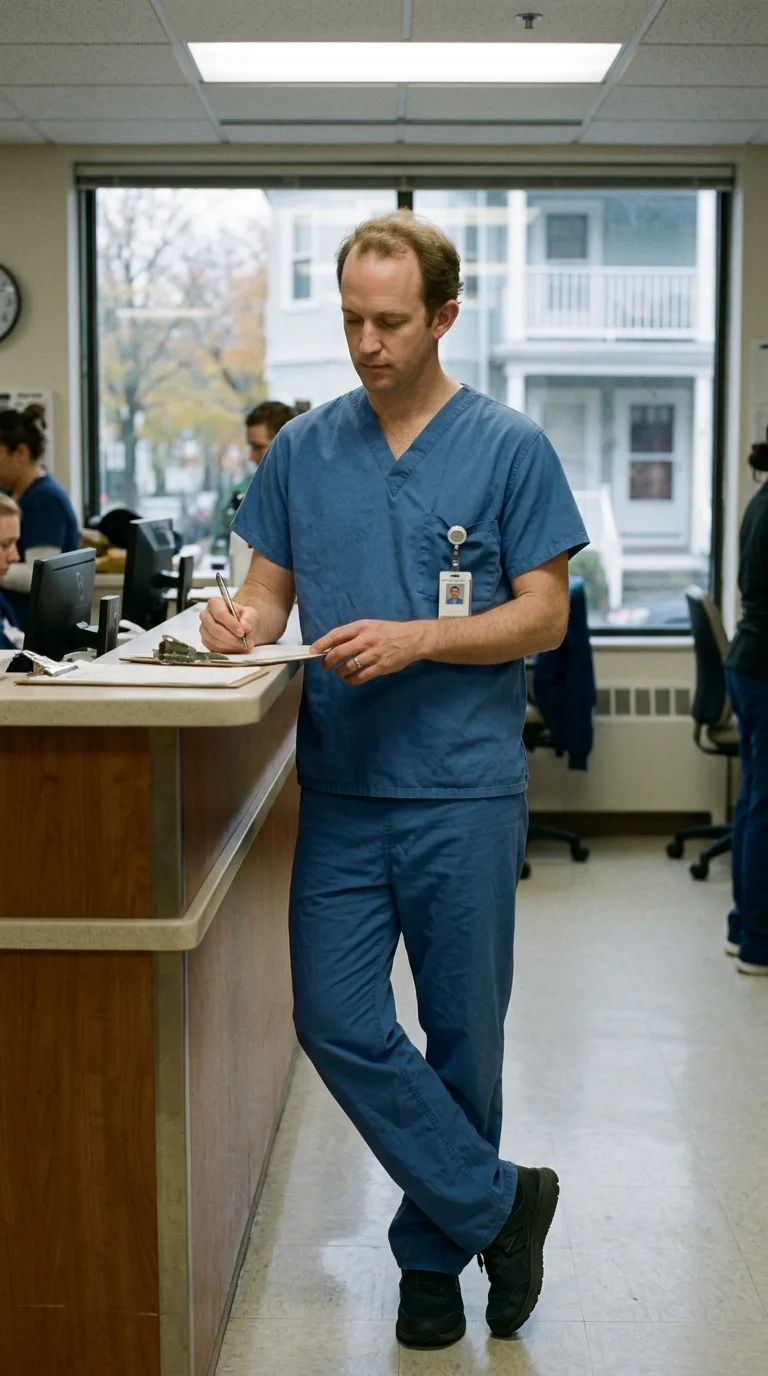
Rarest thing about him: Bisexual — epic, 1 in 29
Season 0seed 655068925 · engine v10
Character card
lineage EN1F2L
His body-swap story
@justin.moy, wearing Gary Kowalczyk, rolled the wheel on and woke up as Brian Nolletti, spent 3 minutes in him, then spun the wheel and woke up as Justin Moy
Gary Kowalczyk's hands are wrong before you even look at them — thick-knuckled, spotted, a conductor's hands, punch-callused from thirty years of the same door on the same train — and you have had them for less than a minute and already you hate the wait for the 11:14 that isn't yours to hate. You spun him up out of boredom the last time, and boredom is exactly what's wrong with him now: the route, the dimples in the mirror that used to be worth something to somebody, the ache in a back that isn't broken yet but is getting there. Denver is bright and stupid outside the cab window. Sixty-one years old and dead on his feet at his own console, you think, *not yet, not today,* and you don't even go home first. You open the site on your phone with Gary's fat thumbs and you spin.
The rhythm breaks for half a second. Your hand — his hand — is halfway through a signature, the pen crossing the T in a name that isn't Gary's and isn't yours, and it drags wrong, a jagged little tail, and then it stops and starts again, slow, correct, deliberate as a man relearning his own handwriting. You feel the weight settle differently: lighter through the shoulders, younger, a body that has run and lifted and slept badly for reasons that have nothing to do with age. Blue fabric against your back. A clipboard under your left hand, a pen in your right, and behind your ribs a headache already sitting there like weather that hasn't broken yet. The ten signatures after this one come out checked, each letter watched like it might betray you, on a hand that has not needed watching in fifteen years.
The pen is what opens first — his pen, chewed faintly at the cap, a habit he swears he doesn't have — and it gives you a hallway smell, antiseptic and burnt coffee, fluorescent tubes humming a half-tone flat. Brian Nolletti. Thirty-eight. You get his name the way you always get their names, sideways, from the ID badge swinging at his own pocket, and then the clothes finish the job: the scrubs remember themselves being put on, four hours ago, in a dark bedroom, one arm and then the other, Danny's breathing steady on the other side of the bed because Danny works days and Brian works this ungodly stretch that eats mornings whole, that has him signing charts at an hour when normal husbands are pouring cereal. The overnight shift does this — steals your daylight and hands it back used. He remembers standing at the dresser doing up the drawstring by feel because turning the lamp on felt like an act of violence against a sleeping house, remembers the wedding band catching on the waistband the way it always does, the small motion of freeing it, twenty years of that same small motion, ever since a beach ceremony with Danny's mother crying happy tears and his own mother's face doing something more complicated, something she has since made peace with, mostly, on holidays.
The clipboard's cardboard edge gives him back a decade of nights like this one — codes called and survived, codes called and not, a boy's face he still sees sometimes when the lights are too bright, a woman named Colleen from residency who he loved first and hardest before he understood what he was, who he still emails on her birthday, whom Danny has met exactly once and liked more than either of them expected. The floor under his shoes — good shoes, black, chosen for a job that is entirely on its feet — gives him the ache that lives permanently in his arches now, thirty-eight going on fifty in the joints, and a memory of his daughter at six asking why his feet smell like a hospital and him laughing so hard he had to sit down. The window behind the nurses' station, triple-decker porches going gray under October cloud, gives him nothing new, just home, just Boston, just a street he's walked ten thousand times not looking at it.
His fingers, when you're not steering them, drift to his own cuticles and pick, an old tell nobody's ever called him on. Somewhere under all of it, quiet and constant as a second pulse, is the migraine building behind his left eye — his body's oldest complaint, patient, unhurried, the same one that will be there in an hour whether you're the one carrying it or not.
You look at the hand. Ring on it, cuticle torn a little at the thumb, pen still gripped like it belongs there because it does, it always has. You lift your eyes off it into the coffee-smelling fluorescent air of a nurses' station that isn't yours yet and might not be for long.
"Sorry — long night," you say, to no one in particular, in his voice, and you don't know if that's true or if it's about to become true again, or when.